The 20th century roots of equity planning, born in Cleveland, are evolving to meet the challenges of the 21st century. Portland provides a case study of that evolution.



Benjamin Schneider writes to further the legacy of Norman Krumholz in centering considerations of equity in urban planning decisions.
A many Planetizen readers know, Krumholz brought an equity agenda to Cleveland while serving as director of planning for Cleveland, starting in 1969. "This philosophy, which came to be known as 'equity planning,' represented a major shift in a profession that had long been focused on technical problems like zoning and road design, as well as finding new ways to stimulate economic growth," writes Schneider.
Today's urban planning milieu requires a re-evaluation of the tools and outcomes of equity planning, according to Schneider. An evaluation of the successes and shortcomings of Krumholz's tenure follows, as well as an introduction to the idea of Portland, Oregon as a contemporary case study of equity planning, as laid out by Lisa K. Bates, a professor of urban planning at Portland State University.
FULL STORY: Bringing equity to the forefront of urban planning


Equitable Transportation Planning Initiative Advances in Northeast Ohio
The Northeast Ohio Areawide Coordinating Agency (NOACA) is moving forward with a groundbreaking policy to consider regional economic inequities when evaluating potential highway projects.
New Layer of Equity Analysis Considered for Regional Planning in Northeast Ohio
The Northeast Ohio Areawide Coordinating Agency (NOACA) is considering a new policy that will add considerations about regional economic inequities when evaluating potential highway projects.
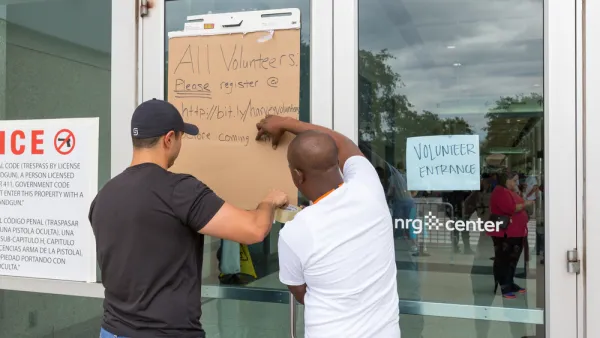
Advocates: Equity Lacking in the New Houston Climate Action Plan
Advocates and local residents are expressing concern about a lack of direct support in the Houston Climate Action Plan for underserved neighborhoods that have already experienced some of the worst effects of climate change.

Planetizen Federal Action Tracker
A weekly monitor of how Trump’s orders and actions are impacting planners and planning in America.

The state-sanctioned urbicide of Austin
People don’t kill cities. Freeways do.

US to reduce Colorado River water deliveries to Mexico
A new Colorado Treaty amendment reduces Mexico’s Colorado River water allocation by 250,000 acre feet.

Brightline West’s future may rely on $6 billion federal loan
The company has until Nov. 2 to make a $400 million equity investment into its proposed high-speed rail line.

LA Metro’s ultimatum: no extra buses for LA28 if federal funding isn’t imminently secured
If Metro does not provide additional buses, LA28 organizers will have to find a new way to manage Olympic traffic. LA28’s budget does not include a line item for transit.

Colorado’s Largest Data Center Could Rise Next to Homes — Without a Public Hearing
The proposed campus would consume 11 times the power of Denver International Airport; as it has across the country, opposition mounts.

FREE Course: Walkable City 1: Why Walkability?
After describing his path towards focusing on walkability as the essence of good planning, Jeff Speck marches through his five principal reasons for making more walkable places.
Reinventing Malls: Planning Alchemy—Turning Gray Fields Into Gold
The course focuses on the opportunities and imperatives that shape reinvention of mall sites.

Eagle County Government
Harvard University Graduate School of Design
Nashville Planning Department
The Architects Foundation
University of Cincinnati Online
The Pocatello Development Authority
The Urban Renewal Agency of the City of Pocatello
Journal of the American Planning Association