Efforts are underway in several Denver suburbs to quantify and respond to growing homelessness.


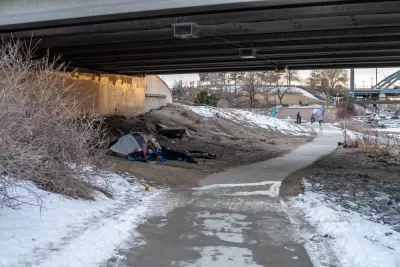
John Aguilar reports on the complex picture of suburban homelessness in Jefferson, Arapahoe, and Adams counties in Colorado.
Multiple suburban communities are grappling with homelessness, which, according to past counts, has been generally declining in the suburbs since 2014.
Officials in these communities, however, know these counts are not capturing the nature and extent of homelessness, and it's not the only narrative to be interpreted from the latest survey. The Metro Denver Homeless Initiative in August released its annual Point in Time survey, showing "homelessness continuing to trend up, with the number of people without a permanent home in the metro area increasing from 5,317 last year to 5,755 this year, or 8%," according to Aguilar.
Also, beyond the numbers, another important factor is clear: homelessness looks different in the suburbs than it does in the city, and that means that suburban homelessness is likely being undercounted.
FULL STORY: Efforts to combat homelessness in Denver’s suburbs intensify as problems persist

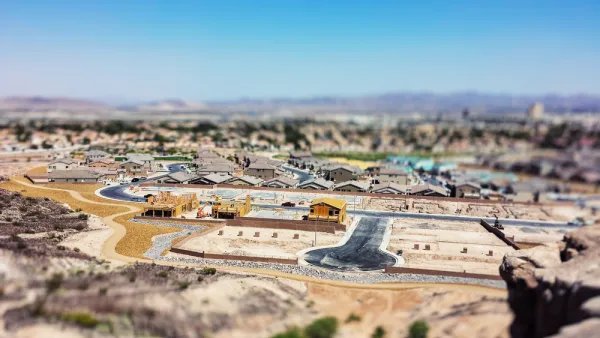
Aggressive Anti-Growth Measure Falls Short of the Ballot in Colorado
Initiative 66, which would have imposed strict development limits around the Front Range, ran out of steam.
Housing Limits Potentially on the Ballot in Colorado
A ballot initiative is moving forward in Colorado that would severely limit housing production in the already housing-constrained Front Range region. We're not talking about urban growth boundaries here.
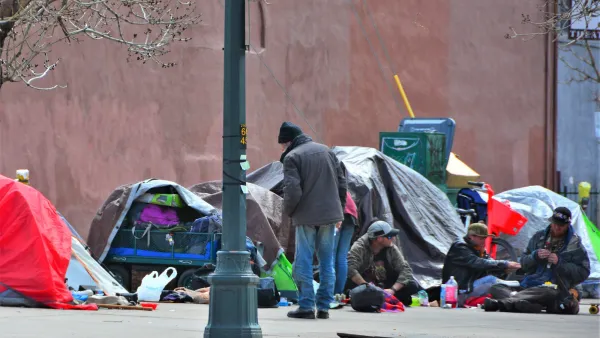
Denver Cut Unsheltered Homelessness Almost in Half Even as Unhoused Population Grows
While the total number of Denver residents without permanent housing is growing, the city has leveraged its resources to quickly create over 1,000 new emergency shelter beds.

Planetizen Federal Action Tracker
A weekly monitor of how Trump’s orders and actions are impacting planners and planning in America.

The state-sanctioned urbicide of Austin
People don’t kill cities. Freeways do.

US to reduce Colorado River water deliveries to Mexico
A new Colorado Treaty amendment reduces Mexico’s Colorado River water allocation by 250,000 acre feet.

Airbnb launches $250 million 'last-dollar financing' housing accelerator, makes first investment in Austin
The company will put $6.4 million towards affordable housing development in Texas’ capital.

Guerilla urbanists are building DIY bus stop benches in Chicago
A before-and-after of one of the bus stops with a new bench. The new benches are not officially sanctioned or permitted, but the residents who placed them hope they will be the start of a network of DIY benches across the city.

Mamdani overhauls NYC's Vision Zero plan with 100 new policy goals
The overhaul aims to reduce traffic deaths and make streets safer for pedestrians, cyclists and drivers through lower speed limits, new safety infrastructure and more.

FREE Course: Walkable City 1: Why Walkability?
After describing his path towards focusing on walkability as the essence of good planning, Jeff Speck marches through his five principal reasons for making more walkable places.
Reinventing Malls: Planning Alchemy—Turning Gray Fields Into Gold
The course focuses on the opportunities and imperatives that shape reinvention of mall sites.

Eagle County Government
Harvard University Graduate School of Design
Nashville Planning Department
The Architects Foundation
University of Cincinnati Online
The Pocatello Development Authority
The Urban Renewal Agency of the City of Pocatello
Journal of the American Planning Association