A rational consumer might have anticipated the anxieties brought on by such small, expensive portable devices. Now the public is paying the price in the.


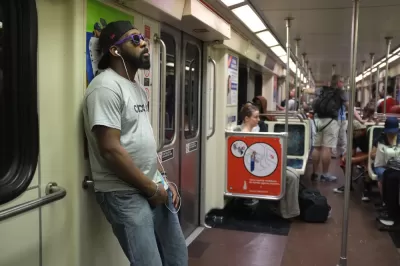
"The MTA has to deal with a lot of annoying behavior from straphangers—subway surfing, people smashing their ad screens, children with recorders—but there is one thing that has been really getting to them lately," writes Ben Yakas. "[T]he current annoying trend is all the people dropping their AirPods, and then either trying to get them themselves or getting MTA employees to jump onto the tracks to retrieve them.
Yakas isn't the first journalist to report on the annoying trend. Rachel Feintzeig reported on the tendency of these objects to depart their owners' possession for a Wall Street Journal article that is behind a paywall. Georgett Roberts and David Meyer wrote on the same theme for the New York Post.
To retrieve Air Pods on subway tracks, MTA employees (who might have other, better things to do) have to use a long pole to reach and retrieve the lost items. "Transit workers have apparently been fielding tons of requests for AirPod rescues since March, when Apple released a new version," according to Yakas.
"It's gotten so annoying, a spokesperson told the Journal the MTA is apparently considering whether to launch a public service announcement campaign urging commuters to refrain from taking AirPods on or off while entering or exiting trains."
FULL STORY: The MTA Is Getting Tired Of Having To Retrieve AirPods From Subway Tracks

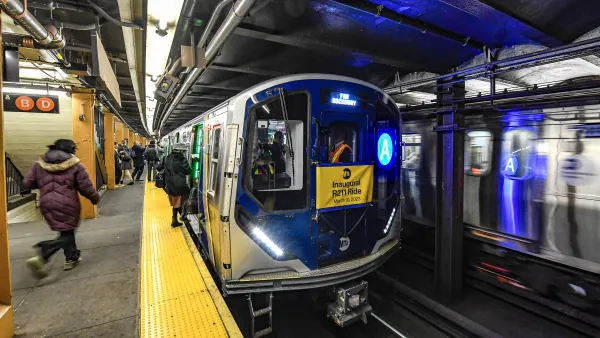
Fancy New Subway Cars Join the New York Subway System
New York has been planning on adding these new subway cars for years, finally achieving their goal in March 2023. More than a thousand of the new R211 trains will be running in New York within two years if all goes according to plan.
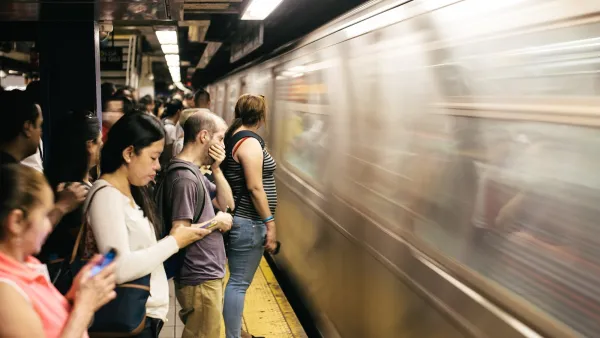
New York Subway Will Pilot Platform Barriers To Improve Rider Safety
After a shocking death and an overall rise in violent crime at its stations, New York City's transit authority will install platform barriers to prevent intentional or accidental falls onto tracks.
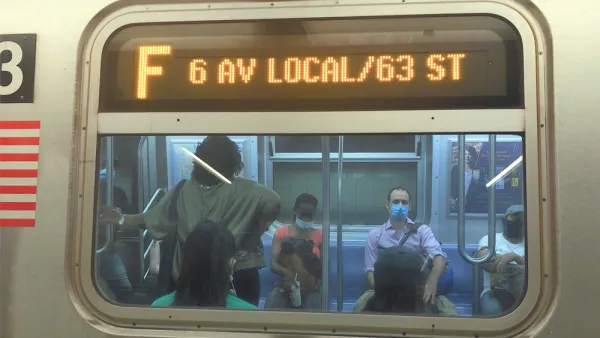
Subway Ridership on a Post-Omicron Rebound in New York City
Checking in with the New York transit system amid a period of relative recovery.

Planetizen Federal Action Tracker
A weekly monitor of how Trump’s orders and actions are impacting planners and planning in America.

The state-sanctioned urbicide of Austin
People don’t kill cities. Freeways do.

US to reduce Colorado River water deliveries to Mexico
A new Colorado Treaty amendment reduces Mexico’s Colorado River water allocation by 250,000 acre feet.

5 New England states march closer to 800 megawatt wind energy project
Securing federal approval for the project may be complicated under the Trump administration, which has historically been hostile towards domestic wind power.

Baltimore to break ground on $50 million Transit Priority Project
The project will bring faster bus trips, safer streets and better bike connections to Baltimore.

Airbnb launches $250 million 'last-dollar financing' housing accelerator, makes first investment in Austin
The company will put $6.4 million towards affordable housing development in Texas’ capital.

FREE Course: Walkable City 1: Why Walkability?
After describing his path towards focusing on walkability as the essence of good planning, Jeff Speck marches through his five principal reasons for making more walkable places.
Reinventing Malls: Planning Alchemy—Turning Gray Fields Into Gold
The course focuses on the opportunities and imperatives that shape reinvention of mall sites.

Eagle County Government
Harvard University Graduate School of Design
Nashville Planning Department
The Architects Foundation
University of Cincinnati Online
The Pocatello Development Authority
The Urban Renewal Agency of the City of Pocatello
Journal of the American Planning Association