The prosecution rests.


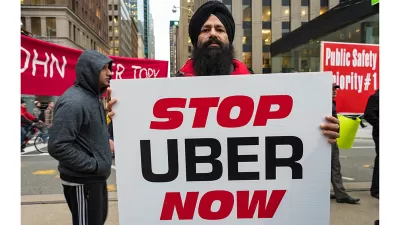
Angie Schmitt surveys the growing body evidence of the destructive effects of ride-hailing companies—the most recent anecdote pulled from the headlines last week when the news broke that Uber lost $5.2 billion in the last quarter alone.
There's also evidence that Uber increases traffic, cannibalizes public transit, and exploits laborers, as listed by Schmitt.
Schmitt doesn't just the ills created by ride-hailing companies—there's also a prescription:
It’s not up to Uber and Lyft to fix that problem — it’s up to our leaders to give their constituents more options for cheap, safe commuting. Unlike Uber and Lyft, mass transit does not need to make a profit, so mayors and governors should invest public money on the greatest public good: public transit.
FULL STORY: Uber is a Slow-Motion Tragedy

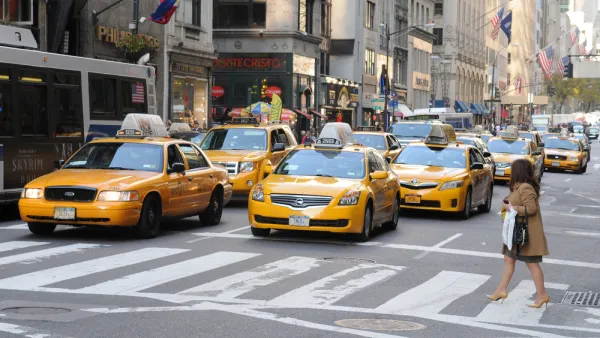
Ride-Hailing Prices Skyrocket as the U.S. Emerges From the Pandemic
A shortage of drivers and spiking demand are driving Uber and Lyft prices higher than ever as the companies struggle to achieve profitability.
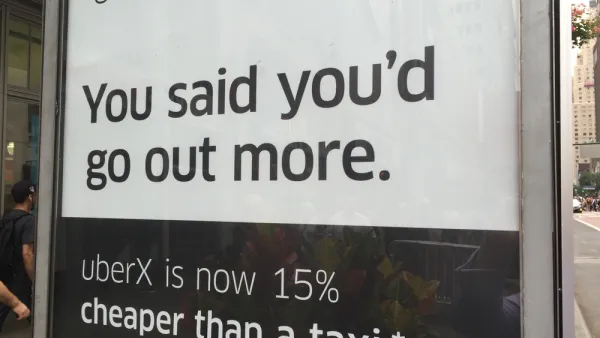
Report: Ride-Hailing Drastically Increases Vehicle Miles Traveled
New research published in Transport Policy finds that ride-hailing companies increase vehicle miles traveled of users by 97 percent in Chicago, 114 percent in New York City, and 118 percent in San Francisco.

Ride-Hailing Industry Induces Car Ownership, Research Says
New research from researchers at Carnegie Mellon University finds that instead of setting people free from cars, more people are buying and using cars than ever before.

Planetizen Federal Action Tracker
A weekly monitor of how Trump’s orders and actions are impacting planners and planning in America.

The state-sanctioned urbicide of Austin
People don’t kill cities. Freeways do.

US to reduce Colorado River water deliveries to Mexico
A new Colorado Treaty amendment reduces Mexico’s Colorado River water allocation by 250,000 acre feet.

Mamdani overhauls NYC's Vision Zero plan with 100 new policy goals
The overhaul aims to reduce traffic deaths and make streets safer for pedestrians, cyclists and drivers through lower speed limits, new safety infrastructure and more.

Amtrak not solely to blame for New Jersey commuter rail's unreliability, report finds
A new study from the Garden State Initiative found that NJ Transit’s budget grew 20% across a 4 year period, but reliability declined significantly over the same period.

EPA erases limits on planet-warming pollution from power plants
Under Monday’s plan, power plants would still have some limits on how much mercury, arsenic and other contaminants they can emit.

FREE Course: Walkable City 1: Why Walkability?
After describing his path towards focusing on walkability as the essence of good planning, Jeff Speck marches through his five principal reasons for making more walkable places.
Reinventing Malls: Planning Alchemy—Turning Gray Fields Into Gold
The course focuses on the opportunities and imperatives that shape reinvention of mall sites.

Eagle County Government
Harvard University Graduate School of Design
Nashville Planning Department
The Architects Foundation
University of Cincinnati Online
The Pocatello Development Authority
The Urban Renewal Agency of the City of Pocatello
Journal of the American Planning Association