Urban strategist Michele Reeves writes about the of third places importance in the urban fabric.


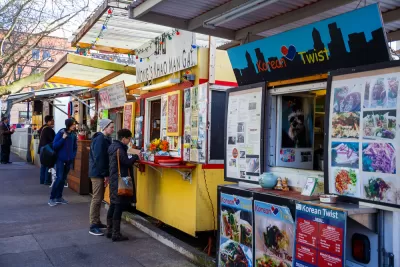
“Third places” was a term coined by Ray Oldenburg in a seminal 1989 book about placemaking, The Great Good Place. According to Oldenburg, "first places" are homes, "second places" are for work, and "third places" are practically every other place people in a community when they weren’t at home or at work, e.g., churches, parks, cafes, etc. Michele Reeves, an urban strategist for Civilis in Portland Oregon, is a self-professed food-oriented third place devotee. In a heart-felt piece, Reeves writes about the serendipitous, and often random, way these third places can lead to new adventures, discoveries, and friends. Portland is a city with a wealth of third places—especially of the café, bakery, brew pub, and restaurant variety. Of those beloved third places, Reeves writes:
. . . these spots have a few things in common: easy to walk to, busy, amazing natural light, and great core food products — either baked goods or coffee. For me though, they are at their best as citizens of the street. In other words, they blur the line between interior and exterior.
For more of Reeves’s favorite third place experiences in Portland, please read the source article.
Read the full story: Cool Freaking Shoes, Publishing, & Third Places

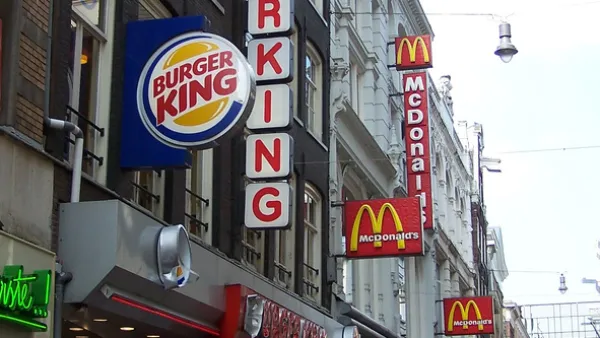
Customers Seeking "Third Places" Give McDonald's a Second Thought
Climate controlled public places where the elderly, cost-conscious and indigent are welcome to spend a few hours are hard to find. Tensions have erupted at McDonald’s restaurants in NYC between customers seeking a refuge and business interests.
To Create a Great 'Third Place', Get Out of the Way
For far too long, the shaping of public spaces has been left to architects and urban planners, who plan from the top down. The most successful projects involve people directly in deciding how their public spaces will look, feel, and operate.
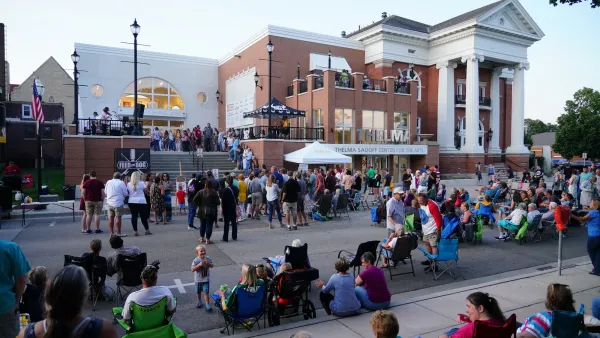
How Placemaking Lost its Way — And How it Can Get Back on Track
The term has often become diluted, getting attached to projects that don’t live up to its lofty aspirations.

Planetizen Federal Action Tracker
A weekly monitor of how Trump’s orders and actions are impacting planners and planning in America.

California plans to bury El Niño’s downpour
If the state plays its cards right, it may be able to store a billion acre-feet of El Niño’s water in aquifers.

Chicago breaks ground on $3 billion megadevelopment
The new neighborhood, titled Foundry Park, will one day host 3,700 residences.

Satanic Place Names
From streams and lakes to valleys and canyons, I mapped more than 1,000 places named after the Devil.

California High-Speed Rail Authority CEO resigns after $600,000 scandal
Under Ian Choudri, the authority used taxpayer dollars to fund first class flights and trips to nightclubs.

Want to study the Missouri River? Soon, you may need unanimous approval from 10 states
Legislation would require 10 governors’ permission to study or build projects moving water outside the basin.

FREE Course: Walkable City 1: Why Walkability?
After describing his path towards focusing on walkability as the essence of good planning, Jeff Speck marches through his five principal reasons for making more walkable places.
Reinventing Malls: Planning Alchemy—Turning Gray Fields Into Gold
The course focuses on the opportunities and imperatives that shape reinvention of mall sites.

City of Rosemead
Rutgers University, Edward J. Bloustein School of Planning and Public Policy
One Hundred Miles
Hunter College, City University of New York (CUNY)
The Architects Foundation
University of Cincinnati Online
City of Cambridge
Montrose County
The Pocatello Development Authority