Some cities, like Nashville, have been keeping pace with the economic growth of more internationally renowned cities like San Francisco and Seattle.


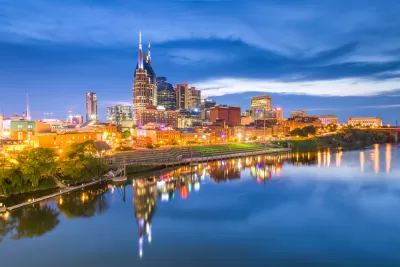
Writing for Reuters, Howard Schneider cites Nashville as its case study in an examination of the economic performance of cities in an era defined by haves and have-nots.
According to article Nashville is an example of how some winners in the post-recession economic landscape have emerged from a new list of cities, not including familiar superstar cities like San Francisco or New York. The problems are that the reasons behind Nashville's success can't necessarily be duplicated (i.e., there was luck involved with Nashville's winning) and many cities are increasingly left behind the cities that are basking in success.
The divide between experiences in U.S. cities (a divide documented between urban and rural settings as well) helped elevate Donald Trump the White House, according to the article, and the continuing trend worries bankers and economists about the long-term prospects for recovery in some parts of the country.
FULL STORY: As U.S. 'superstar' cities thrive, weaker ones get left behind

The Superstar Metro Argument... And Why It Fails
One argument against solving the housing shortage in large, expensive cities is that growth in those cities will drain people and wealth from declining areas. Data does not agree.

How Planning Fails to Solve Congestion
Solutions for congestion are never as simple and easy as armchair planners and engineers would like you to believe—especially those who suggest that congestion can be solved by forever building more roadway capacity.
Planning and the Complicated Causes and Effects of Congestion
What do planners know about congestion, and what can they do about it? Explanations and solutions are less obvious than they seem (part one of a three-part series).

Planetizen Federal Action Tracker
A weekly monitor of how Trump’s orders and actions are impacting planners and planning in America.

The state-sanctioned urbicide of Austin
People don’t kill cities. Freeways do.

US to reduce Colorado River water deliveries to Mexico
A new Colorado Treaty amendment reduces Mexico’s Colorado River water allocation by 250,000 acre feet.

5 New England states march closer to 800 megawatt wind energy project
Securing federal approval for the project may be complicated under the Trump administration, which has historically been hostile towards domestic wind power.

Baltimore to break ground on $50 million Transit Priority Project
The project will bring faster bus trips, safer streets and better bike connections to Baltimore.

Airbnb launches $250 million 'last-dollar financing' housing accelerator, makes first investment in Austin
The company will put $6.4 million towards affordable housing development in Texas’ capital.

FREE Course: Walkable City 1: Why Walkability?
After describing his path towards focusing on walkability as the essence of good planning, Jeff Speck marches through his five principal reasons for making more walkable places.
Reinventing Malls: Planning Alchemy—Turning Gray Fields Into Gold
The course focuses on the opportunities and imperatives that shape reinvention of mall sites.

Eagle County Government
Harvard University Graduate School of Design
Nashville Planning Department
The Architects Foundation
University of Cincinnati Online
The Pocatello Development Authority
The Urban Renewal Agency of the City of Pocatello
Journal of the American Planning Association