A large, powerful coalition of advocacy groups, local universities, and other organizations sent a letter to Chicago Mayor Lori Lightfoot to consider congestion pricing for single-occupant automobile trips in the city's core.


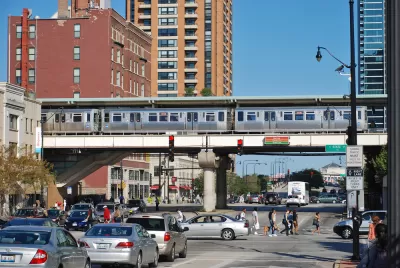
"Transit advocates and public policy groups are asking Mayor Lori Lightfoot to consider imposing 'congestion pricing' fees to help cut traffic in busy areas during rush hour," according to an article by Mary Wisniewski.
Making the case for congestion pricing in Chicago: a letter signed by representatives of the Active Transportation Alliance, the Metropolitan Planning Council, the Center for Neighborhood Technology, the Shared-Use Mobility Center, transportation experts from DePaul University and the University of Illinois at Chicago, the Chicago Council on Global Affairs, and the Via ride-share service.
"The letter recommends that single-passenger trips that start and finish in transit-rich areas during rush hour should come with a high fee, while shared trips to and from 'transit deserts' and low-income areas should be exempted or have a much lower fee," according to Wisniewski.
On the receiving end, Mayor Lightfoot's administration has shown a willingness to experiment with new funding mechanisms for transportation, though it hasn't shown specific support for congestion pricing, yet.
Read the full story: Why a rush-hour commute could cost more. Transportation groups ask Lightfoot to consider ‘congestion pricing’

Since NYC Congestion Pricing, Chicago now has Nation’s Worst Traffic
Chicago overtook New York for the worst traffic of any major U.S. city as NYC saw traffic decline after congestion pricing went into effect.
Study: Road Pricing Could Boost Chicago Transit
A combination of road pricing and adjustments to transit service could let the CTA lower fares to ‘next to nothing.’

‘We Will Chicago’ Plan Adopted in the Windy City
Chicago has its first “comprehensive plan” since the 1960s, but without a land use map, the “We Will Chicago” plan is devoted more to laying out the issues and challenges facing the city than setting new policies.

Planetizen Federal Action Tracker
A weekly monitor of how Trump’s orders and actions are impacting planners and planning in America.

California plans to bury El Niño’s downpour
If the state plays its cards right, it may be able to store a billion acre-feet of El Niño’s water in aquifers.

Desperate measures: Advocates weigh draining Lake Powell to fill Colorado River
Draining the reservoir could reduce evaporation losses by a couple hundred thousand acre-feet.

In Texas, data centers are swallowing promised parkland
Residents who moved to Taylor, Texas for a rural community now have to contend with three data centers in their backyard.

How a Chicago-sized wind farm beat the odds and powered on
The project spanned five presidential administrations and a standoff with a U.S. military base.

MTA gives itself 30 days to transform pit into basketball court
The site has been under construction since 2022; the city originally estimated it would finish the court in 2024.

FREE Course: Walkable City 1: Why Walkability?
After describing his path towards focusing on walkability as the essence of good planning, Jeff Speck marches through his five principal reasons for making more walkable places.
Reinventing Malls: Planning Alchemy—Turning Gray Fields Into Gold
The course focuses on the opportunities and imperatives that shape reinvention of mall sites.

City of Rosemead
Rutgers University, Edward J. Bloustein School of Planning and Public Policy
One Hundred Miles
Hunter College, City University of New York (CUNY)
The Architects Foundation
University of Cincinnati Online
City of Cambridge
Montrose County
The Pocatello Development Authority