San Francisco and New York City made a theme of this year's Earth Day: mandating emissions reductions from buildings.



"San Francisco could become the first city in the nation to require large commercial property owners to switch their buildings to 100% renewable energy," reports Dominic Fracassa.
San Francisco officials released the renewable energy mandates on Earth Day, as a step toward the city's goal of achieving carbon neutrality by 2050.
"San Francisco’s new plan for commercial buildings would roll out in phases, but the biggest structures are first in line. The 50 buildings in the city 500,000 square feet or larger must switch to 100% renewable electricity by 2022. Buildings between 250,000 and 499,000 square feet have to switch by 2024, and anything 50,000 square feet or larger has to switch by 2030," according to Fracassa.
Late last week, New York City announced its Climate Mobilization Act, which requires to buildings in the city to reduce emissions, also to commemorate Earth Day.
FULL STORY: SF’s big buildings to take big step in reducing city’s emissions


A Year of Climate Action for Cities
The Trump administration might have dealt numerous setbacks in the fight to reduce greenhouse gas emissions, but climate action in 2020 went local, with cities all over the country finding new ways to reduce emissions.
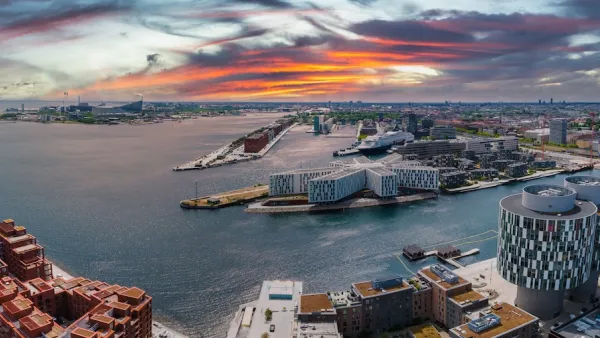
Retrofitting Old Cities for Sustainability
Explore strategies for retrofitting old cities to enhance sustainability while preserving historical integrity and managing logistical challenges.
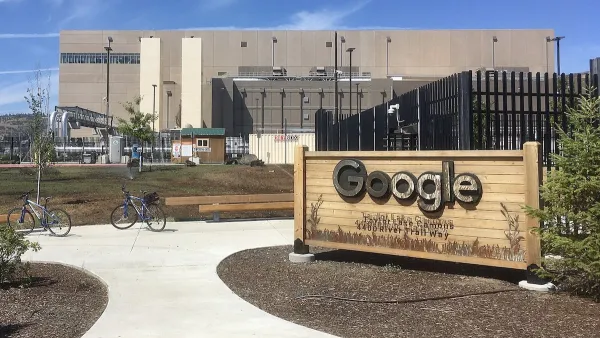
Michigan Proposal to Attract Data Centers Garners Criticism
The state legislature is poised to pass a law that would bring more data centers to the state, but critics say the move would threaten the state’s climate goals.

Planetizen Federal Action Tracker
A weekly monitor of how Trump’s orders and actions are impacting planners and planning in America.

The state-sanctioned urbicide of Austin
People don’t kill cities. Freeways do.

US to reduce Colorado River water deliveries to Mexico
A new Colorado Treaty amendment reduces Mexico’s Colorado River water allocation by 250,000 acre feet.

5 New England states march closer to 800 megawatt wind energy project
Securing federal approval for the project may be complicated under the Trump administration, which has historically been hostile towards domestic wind power.

Baltimore to break ground on $50 million Transit Priority Project
The project will bring faster bus trips, safer streets and better bike connections to Baltimore.

Airbnb launches $250 million 'last-dollar financing' housing accelerator, makes first investment in Austin
The company will put $6.4 million towards affordable housing development in Texas’ capital.

FREE Course: Walkable City 1: Why Walkability?
After describing his path towards focusing on walkability as the essence of good planning, Jeff Speck marches through his five principal reasons for making more walkable places.
Reinventing Malls: Planning Alchemy—Turning Gray Fields Into Gold
The course focuses on the opportunities and imperatives that shape reinvention of mall sites.

Eagle County Government
Harvard University Graduate School of Design
Nashville Planning Department
The Architects Foundation
University of Cincinnati Online
The Pocatello Development Authority
The Urban Renewal Agency of the City of Pocatello
Journal of the American Planning Association