Minneapolis is realigning its affordable housing practices as the nationwide as the pressures of the housing affordability crisis increase.



"The Minneapolis City Council is trying to assert more control of the city’s public housing authority in response to the agency’s plans to change the ownership structure of its housing and privatize some of its oldest units," reports Jessica Lee.
The City Council is considering a Memorandum of Understanding (MOU) that calls on the Minneapolis Public Housing Authority (MPHA) to "disclose when it makes new property deals that could force residents to move into new homes, either temporarily or permanently."
The City Council considers the MOU to be a necessary measure for protecting existing affordable housing in the city.
Adding context is a proposal by the MPHA to privatize the Elliot Twins high-rise buildings in downtown Minneapolis. "The authority argues it needs to attract private investors to help pay for necessary repairs to the buildings, including new windows and roofs," reports Lee. "Through a federal program called Rental Assistance Demonstration (RAD), private developers would receive tax credits in exchange for paying for the renovations. After 15 years (or in some cases, sooner), full ownership of the buildings will revert to MPHA…"
"In addition to Elliot Twins, MPHA is preparing to change ownership of its entire stock of single-family homes — totaling some 650 units — to free up more federal funding for repairs and renovations. Control of the houses will be under a nonprofit the authority runs," adds Lee.
The MPHA claims these changes are necessary to ensure its long-term fiscal sustainability.
Read the full story: The Minneapolis Public Housing Authority is changing the way it does business, and some city council members are worried about i

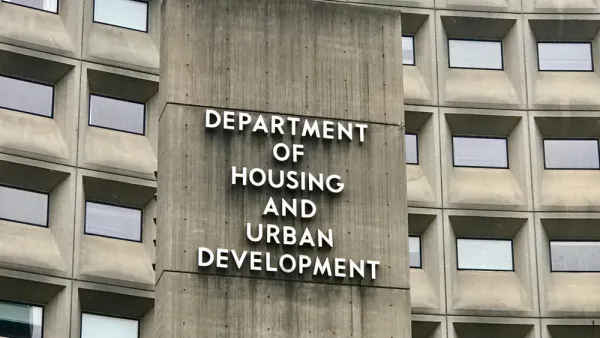
HUD Updates Fair Market Rate Definition
The U.S. Department of Housing and Urban Development announced two actions last week intended to expand the reach of federal housing voucher programs.
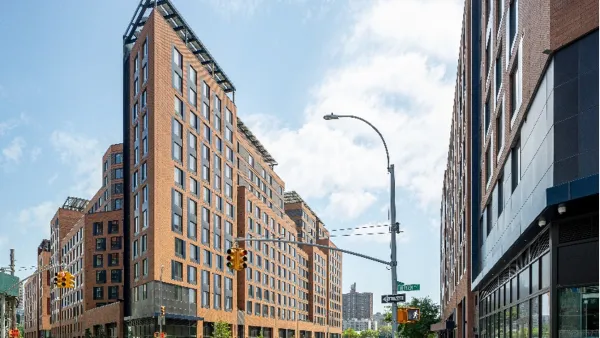
Vital Communities: Housing Quality for Social Equality
Transit-rich, “inner ring” neighborhoods with multi-family, mid- and high-rise housing (going beyond the limits of missing middle housing) will be necessary to deliver access to high-quality, safe, and affordable housing.

New Washington State Law Lets Cities Give Social Housing Developers City-owned Land
In its current form, HB 1687, which authorizes local governments to assist social housing agencies with land or other resources, only applies to Seattle.

Planetizen Federal Action Tracker
A weekly monitor of how Trump’s orders and actions are impacting planners and planning in America.

California plans to bury El Niño’s downpour
If the state plays its cards right, it may be able to store a billion acre-feet of El Niño’s water in aquifers.

Chicago breaks ground on $3 billion megadevelopment
The new neighborhood, titled Foundry Park, will one day host 3,700 residences.

California High-Speed Rail Authority CEO resigns after $600,000 scandal
Under Ian Choudri, the authority used taxpayer dollars to fund first class flights and trips to nightclubs.

Want to study the Missouri River? Soon, you may need unanimous approval from 10 states
Legislation would require 10 governors’ permission to study or build projects moving water outside the basin.

Desperate measures: Advocates weigh draining Lake Powell to fill Colorado River
Draining the reservoir could reduce evaporation losses by a couple hundred thousand acre-feet.

FREE Course: Walkable City 1: Why Walkability?
After describing his path towards focusing on walkability as the essence of good planning, Jeff Speck marches through his five principal reasons for making more walkable places.
Reinventing Malls: Planning Alchemy—Turning Gray Fields Into Gold
The course focuses on the opportunities and imperatives that shape reinvention of mall sites.

City of Rosemead
Rutgers University, Edward J. Bloustein School of Planning and Public Policy
One Hundred Miles
Hunter College, City University of New York (CUNY)
The Architects Foundation
University of Cincinnati Online
City of Cambridge
Montrose County
The Pocatello Development Authority