Fiat Chrysler’s plan for a new Jeep plant in Detroit is off to a rocky start.


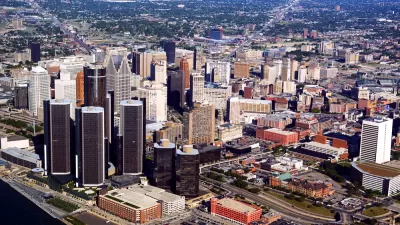
Representatives from Fiat Chrysler and the city held the first public meeting related to a proposed Jeep plant that would bring billions of dollars in investment and thousands of jobs to Detroit. The meeting was part of the city's Community Benefit Ordinance, reports John Gallagher:
The ordinance requires that any major project must negotiate a package of benefits with the surrounding neighbors before City Council signs off on it. Typical benefits paid by the developer would include money for schools and recreation centers, limits on truck traffic and pollution, and other good stuff.
Gallagher says it was a "sometimes raucous meeting," with residents raising a host of concerns about the role of the neighborhood advisory committee, employment opportunities for neighborhood residents, and heavy truck traffic in the area. "Given the long history of corporations either abandoning Detroit or steamrolling residents with new projects like the General Motors Hamtramck Assembly plant in the 1980s, the skepticism was entirely reasonable."
New York's experience with Amazon—and a planning process that lacked transparency and community involvement—offers important lessons for Detroit, adds Gallagher. "Even projects that sound wonderful when announced carry burdens for the local host community. And the voices of the local community are too often ignored as the deals are being negotiated in secret."
Read the full story: It's understandable Detroiters are skeptical about new Jeep plant

Dormant Michigan State Fairground Site to Make Way for Amazon Distribution Center
Detroit officials have been trying to find a new life for the former site of the Michigan State Fair for a long time. Amazon will fill the void, according to a redevelopment proposal announced last week.
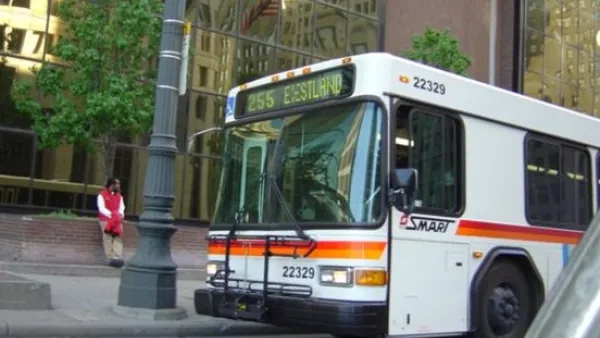
Detroit Transit Expansion on the Table
Bidding for the second Amazon headquarters got the creative juices flowing in Detroit, and one outcome is a new regional transit plan
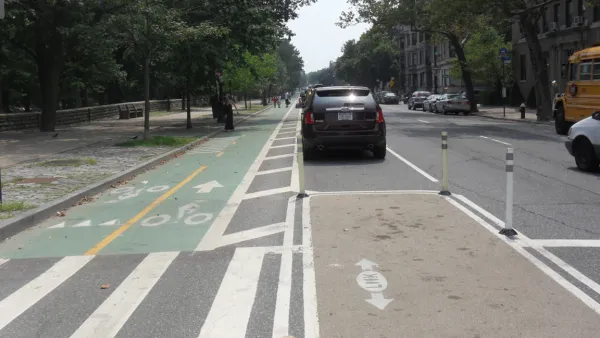
More Bicycle Infrastructure Equals More Riders
Analysis of Census data shows that, while still small in number, more Americans are taking to two-wheels as part of their daily commute.

Planetizen Federal Action Tracker
A weekly monitor of how Trump’s orders and actions are impacting planners and planning in America.

California plans to bury El Niño’s downpour
If the state plays its cards right, it may be able to store a billion acre-feet of El Niño’s water in aquifers.

Desperate measures: Advocates weigh draining Lake Powell to fill Colorado River
Draining the reservoir could reduce evaporation losses by a couple hundred thousand acre-feet.

Mamdani’s pied-à-terre tax survives legal challenge
A panel of judges found that the plaintiffs failed to demonstrate injury as a result of New York City's implementation of the tax.

Eastern Nebraska is running out of electricity
Data centers and electrification are straining eastern Nebraska’s grid, throttling economic development.

Seattle passes record-breaking transit services expansion
Proposition 1 will double the city’s transit tax to add 95,000 more bus trips and preserve 180,000 bus trips annually.

FREE Course: Walkable City 1: Why Walkability?
After describing his path towards focusing on walkability as the essence of good planning, Jeff Speck marches through his five principal reasons for making more walkable places.
Reinventing Malls: Planning Alchemy—Turning Gray Fields Into Gold
The course focuses on the opportunities and imperatives that shape reinvention of mall sites.

City of Rosemead
Rutgers University, Edward J. Bloustein School of Planning and Public Policy
One Hundred Miles
University of Michigan School for Environment and Sustainability (SEAS)
Hunter College, City University of New York (CUNY)
The Architects Foundation
City of Cambridge
Montrose County
The Pocatello Development Authority