All of the country’s buses, trains, and trams will be free starting next year in a move to help residents struggling with the cost of living.


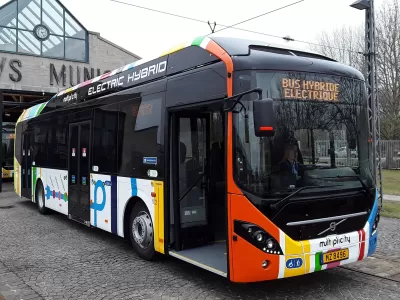
Marc Auxenfants takes a closer look at Luxembourg’s free public transit plan, slated to start in March 2020. While most of the country’s commuters drive to work, government officials say the measure is less about environmental and congestion issues and more about addressing economic inequality.
Luxembourg is a wealthy nation, but poverty is on the rise. "Free public transport is one of several pieces of social legislation the recently re-elected government is keen to pass in 2019, including raising the minimum wage, pension adjustments and financial aid for higher education," reports Auxenfants.
The cost of providing free transit is relatively minimal since the network is already heavily subsidized. Supporters say lifting the burden of travel costs will help low-income residents. But critics argue the support is misplaced and policies should instead focus on high housing costs in Luxembourg.
Read the full story: The cost of Luxembourg’s free public transport plan

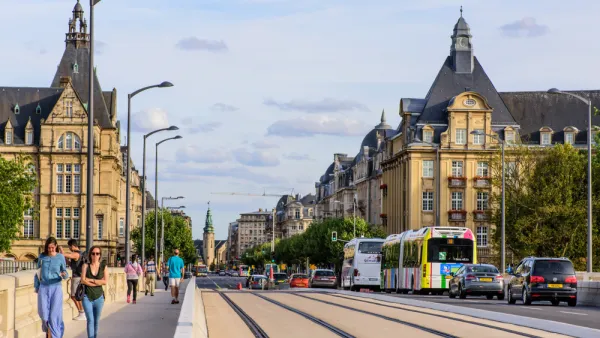
Watch: Public Transit Goes Fare-Free in Luxembourg, Starting March 1
On March 1, Luxembourg will be the first country in the world to make all its public transit free to ride.
LA’s ‘Universal Basic Mobility’ Pilot, Eight Months In
The program issued ‘mobility wallets’ to 1,000 residents who took over 67,000 trips.
Free Transit for All in Luxembourg
Luxembourg will put their money where their mouth is when it comes to cleaning the environment and providing an alternative to congested car commutes.

Planetizen Federal Action Tracker
A weekly monitor of how Trump’s orders and actions are impacting planners and planning in America.

California plans to bury El Niño’s downpour
If the state plays its cards right, it may be able to store a billion acre-feet of El Niño’s water in aquifers.

Chicago breaks ground on $3 billion megadevelopment
The new neighborhood, titled Foundry Park, will one day host 3,700 residences.

California High-Speed Rail Authority CEO resigns after $600,000 scandal
Under Ian Choudri, the authority used taxpayer dollars to fund first class flights and trips to nightclubs.

Want to study the Missouri River? Soon, you may need unanimous approval from 10 states
Legislation would require 10 governors’ permission to study or build projects moving water outside the basin.

Desperate measures: Advocates weigh draining Lake Powell to fill Colorado River
Draining the reservoir could reduce evaporation losses by a couple hundred thousand acre-feet.

FREE Course: Walkable City 1: Why Walkability?
After describing his path towards focusing on walkability as the essence of good planning, Jeff Speck marches through his five principal reasons for making more walkable places.
Reinventing Malls: Planning Alchemy—Turning Gray Fields Into Gold
The course focuses on the opportunities and imperatives that shape reinvention of mall sites.


City of Rosemead
Rutgers University, Edward J. Bloustein School of Planning and Public Policy
One Hundred Miles
Hunter College, City University of New York (CUNY)
The Architects Foundation
University of Cincinnati Online
City of Cambridge
Montrose County
The Pocatello Development Authority