MassDOT and cycling advocates don’t agree on what should happen to the Longfellow Bridge’s bike lane in the coming months.


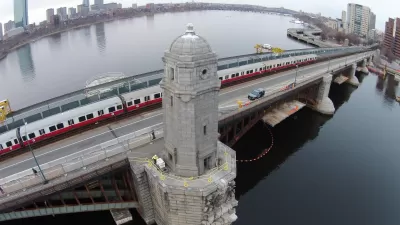
The Massachusetts Department of Transportation and Cambridge and Boston bicycle advocates are at odds over the agency’s plan to remove bollards on the Longfellow Bridge this winter. The bollards were put into place to create a protected bike lane, part of five years of work on the bridge, which reopened in June.
MassDOT says it needs to take out the bollards to provide access to all the bridge’s lanes for effective snow removal. But critics say that cyclists will be less safe without the bike lane and that transportation officials had promised it would not be removed during the winter months.
Advocates argue that MassDOT could widen the separated lane to make room for snowplows. In addition, they say that Boston Public Works purchased smaller snowplows that could be used to clear the bridge’s bike lane.
FULL STORY: Cyclists want MassDOT to keep separated bike lane on Longfellow Bridge through the winter

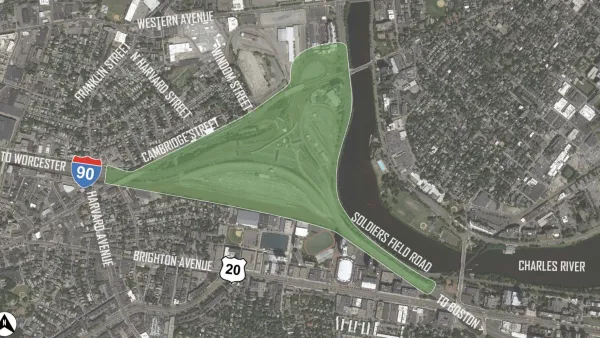
Imagining Alternatives to an Enlarged I-90 Viaduct in Boston
Massachusetts Department of Transportation plans to heighten and widen the Allston section of I-90 viaduct do not align with the community's desire for an environmentally friendly and pedestrian- and cycling-oriented new solution.
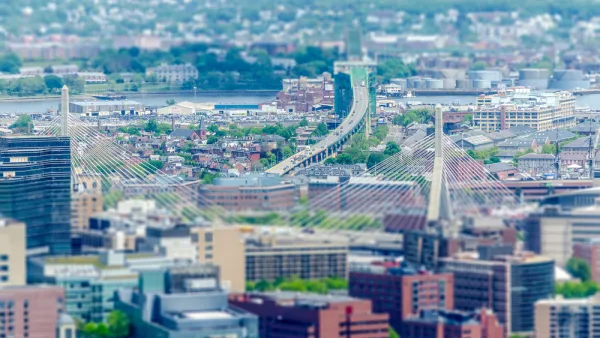
Legal Settlement a Major Win for High-Capacity Transportation in Massachusetts
A decision by the Massachusetts Department of Transportation to rescind a carpool lane has not resulted in a significant expansion of transit and carpool capacity on Interstate 93 north of Boston.
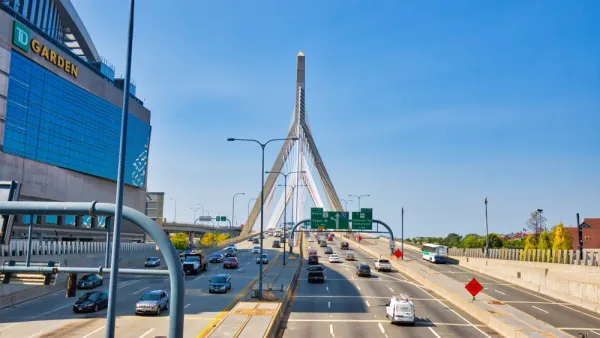
Massachusetts Converts HOV Lane to General Purpose Lane
Road planners looking to increase capacity without adding lanes are focusing on managing existing lanes more effectively. Massachusetts has gone the opposite direction. The Conservation Law Foundation plans to hold them accountable.

Planetizen Federal Action Tracker
A weekly monitor of how Trump’s orders and actions are impacting planners and planning in America.

The state-sanctioned urbicide of Austin
People don’t kill cities. Freeways do.

US to reduce Colorado River water deliveries to Mexico
A new Colorado Treaty amendment reduces Mexico’s Colorado River water allocation by 250,000 acre feet.

5 New England states march closer to 800 megawatt wind energy project
Securing federal approval for the project may be complicated under the Trump administration, which has historically been hostile towards domestic wind power.

Baltimore to break ground on $50 million Transit Priority Project
The project will bring faster bus trips, safer streets and better bike connections to Baltimore.

Airbnb launches $250 million 'last-dollar financing' housing accelerator, makes first investment in Austin
The company will put $6.4 million towards affordable housing development in Texas’ capital.

FREE Course: Walkable City 1: Why Walkability?
After describing his path towards focusing on walkability as the essence of good planning, Jeff Speck marches through his five principal reasons for making more walkable places.
Reinventing Malls: Planning Alchemy—Turning Gray Fields Into Gold
The course focuses on the opportunities and imperatives that shape reinvention of mall sites.

Eagle County Government
Harvard University Graduate School of Design
Nashville Planning Department
The Architects Foundation
University of Cincinnati Online
The Pocatello Development Authority
The Urban Renewal Agency of the City of Pocatello
Journal of the American Planning Association