Renderings of Dutch trains imagine a variety of seating styles for a variety of activities, including working, socializing, and relaxing.


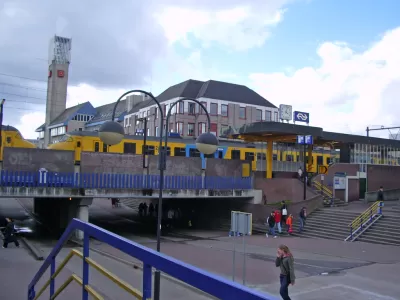
The Dutch National Railway wanted to imagine a train that could better handle the needs of future riders. That means a car that not only carries passengers from one place to another but also helps them work or socialize.
"The result is a stunning new train interior for intercity trains that connect the Netherlands’ major cities that allows passengers to make the most out of their time on board," Aridan Mecava writes for Pop-Up City. The designers wanted to create a car that would be homey, accommodating to work, and attractive. "Instead of long rows of double seats facing the same way with a single aisle in between, the train interior features different areas with distinct functionalities that suit different needs, like working on a laptop, reading, socializing, or relaxing," Mecava explains.
Read the full story: Dutch Trains Of The Future Fuse Work, Home, And Transit

BART Gets 10 New Rail Cars
Fewer seats and more room for standing commuters are among the updates to the rail cars coming to BART.
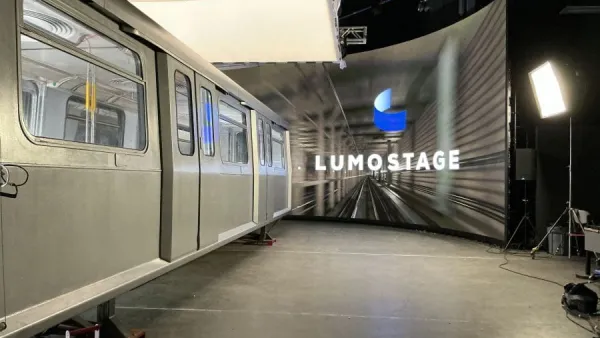
Retired Vancouver SkyTrain Car Hits Hollywood
As SkyTrain retires its first fleet of cars, the agency is seeking innovative ways to repurpose the roughly 130 first-generation cars.
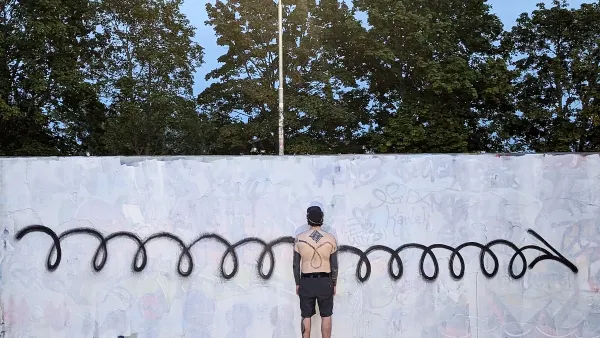
“Skin, Like a City, Will Tell You if You’ve Ignored its History”
Once an urban planner, Sean Colgrave traded in infrastructure for ink when he became a tattoo artist. Now he says: one profession has a lot to learn from the other.

Planetizen Federal Action Tracker
A weekly monitor of how Trump’s orders and actions are impacting planners and planning in America.

California plans to bury El Niño’s downpour
If the state plays its cards right, it may be able to store a billion acre-feet of El Niño’s water in aquifers.

Desperate measures: Advocates weigh draining Lake Powell to fill Colorado River
Draining the reservoir could reduce evaporation losses by a couple hundred thousand acre-feet.

Chicago voters approve permanent festival grounds, penalty for vacant property owners
Currently, major summer and fall festivals take over public parks for weeks at a time, drawing criticism from nearby residents

NYC votes to cut outdoor dining red tape, speed up permitting
New York City also voted to allow the Department of Transportation to begin work on urgent projects before notifying elected officials.

California appears to reject Prop. 45
The proposition would have expanded the projects that qualify for a streamlined environmental review, effectively paring down the California Environmental Quality Act.

FREE Course: Walkable City 1: Why Walkability?
After describing his path towards focusing on walkability as the essence of good planning, Jeff Speck marches through his five principal reasons for making more walkable places.
Reinventing Malls: Planning Alchemy—Turning Gray Fields Into Gold
The course focuses on the opportunities and imperatives that shape reinvention of mall sites.


City of Rosemead
Rutgers University, Edward J. Bloustein School of Planning and Public Policy
One Hundred Miles
Hunter College, City University of New York (CUNY)
The Architects Foundation
University of Cincinnati Online
City of Cambridge
Montrose County
The Pocatello Development Authority