Even with a year-long halt on new projects, the city is grappling with plans for industrial land use.


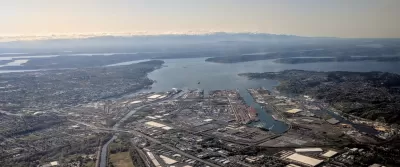
Eric de Place and Aven Frey report on developments in the industrial port area of Tacoma, Washington, called the Tideflats. Last year, the city council passed a moratorium on new fossil-fuel projects to give the city some time to develop a plan for the area. “It was also an unequivocal statement that Tacoma is moving in a new direction: toward cleaner and less divisive development,” say de Place and Frey.
The city council is considering renewing the moratorium, which will expire next month. But other controversial projects are still on the horizon, including a liquefied natural gas plant and expansion of operations at an oil refinery
In addition, a petroleum facility is seeking permits to bring in natural gasoline, a fracking byproduct. “Natural gasoline, sometimes used as a transportation fuel, would be delivered to the site by trains with as many as 107 tank cars, passing near residential areas, important water bodies, and the Puyallup Tribe’s reservation along the way,” according to de Place and Frey.
The projects are potential safety and environmental threats to Tacoma but also to the region and the Salish Sea, as these fossil-fuel products are transported. “There’s every reason to believe that dirty energy projects will continue to target the City of Destiny. Yet leaders can choose to expand their protections to preclude growth at existing facilities too,” say de Place and Frey.
Read the full story: TACOMA CITY COUNCIL FACING CRITICAL CROSSROADS FOR TIDEFLATS LAND-USE

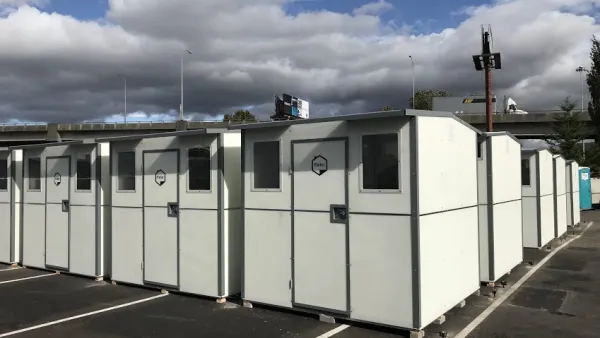
Disaster Shelters Housing the Homeless in Washington
Structures initially intended to temporarily house disaster victims are serving a new purpose in Tacoma, Washington—sheltering homeless people and getting them on the path to more permanent housing.
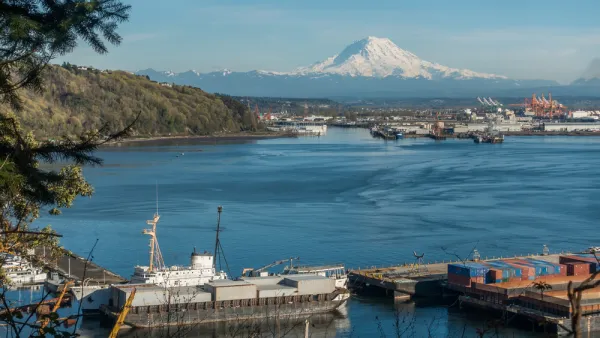
Plans for World's Largest Methanol Plant Die in Tacoma
The massive and controversial Tideflats methanol plant proposal will no longer trouble environmentalists in the Pacific Northwest.
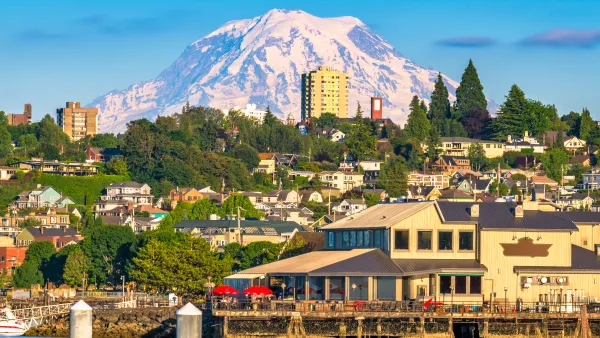
Tacoma sees 62% spike in units permitted after drastic 'Home in Tacoma' rezone
The new zoning allows for backyard buildings, courtyard housing, multiplexes, "houseplexes" and rowhouses, with a minimum of four units allowed on any lot.

Planetizen Federal Action Tracker
A weekly monitor of how Trump’s orders and actions are impacting planners and planning in America.

The state-sanctioned urbicide of Austin
People don’t kill cities. Freeways do.

Colorado’s Largest Data Center Could Rise Next to Homes — Without a Public Hearing
The proposed campus would consume 11 times the power of Denver International Airport; as it has across the country, opposition mounts.

Judges permit Denver to divert 77,000 acre feet from the Colorado River for reservoir expansion
Overuse and climate change have caused the Colorado River’s water levels to plummet.

Amtrak, CN end decades-long dispute with eight-year agreement
The new operating agreement establishes an updated framework for the companies to work together, including processes to resolve disputes.

Raised interest rates may kill financially vulnerable construction projects
The chief economist at ConstructConnect warns that if construction project owners are negatively impacted by the raised rates, it could result in delayed payments to contractors.

FREE Course: Walkable City 1: Why Walkability?
After describing his path towards focusing on walkability as the essence of good planning, Jeff Speck marches through his five principal reasons for making more walkable places.
Reinventing Malls: Planning Alchemy—Turning Gray Fields Into Gold
The course focuses on the opportunities and imperatives that shape reinvention of mall sites.


KFH Group Inc.
Greater Baltimore Committee
Eagle County Government
The Architects Foundation
University of Cincinnati Online
The Pocatello Development Authority
The Urban Renewal Agency of the City of Pocatello