A plan to remove four dams on the Klamath River took a crucial step forward at the end of June. Planners hope the dam removals will improve water quality, revive fisheries, create local jobs, and boost tourism and recreation.


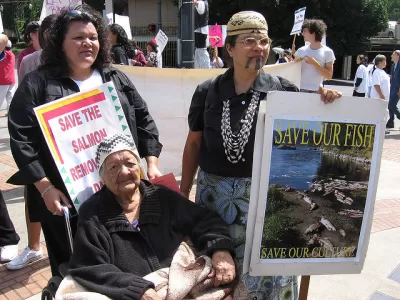
"The corporation created to remove four Klamath River dams that block fish passage and impair river quality has filed its 'Definite Plan for the Lower Klamath Project' with the Federal Regulatory Energy Commission (FERC)," reports the Del Norte Triplicate.
"The 2,300-page document provides analysis and detail on project design, deconstruction, reservoir restoration and other post-deconstruction activities related to the proposed removal of the J.C. Boyle, Copco No. 1, Copco No. 2 and the Iron Gate dams," adds the article.
"The Definite Plan addresses KRRC’s plans to manage construction impacts, impacts to groundwater wells, perform flood-proofing, improve roads and bridges, replace a water line in Yreka, protect aquatic resources and provide for ongoing fish hatchery operations, according to the press release. The plan also provides updated information on project costs and risk management."
Additional coverage is available from Holly Dillemuth at the Herald and News, George Plaven at the Capital Press, and Amy Souers Kober at American Rivers.
FULL STORY: Dam removal plan out for public review

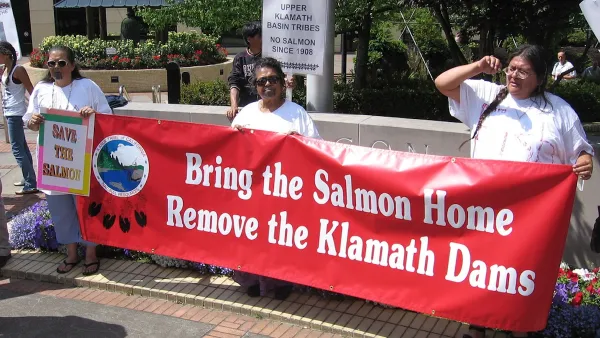
Last Dam in Klamath River Removal Project Comes Down
Salmon can now move freely along the river and its tributaries for the first time in over a century.
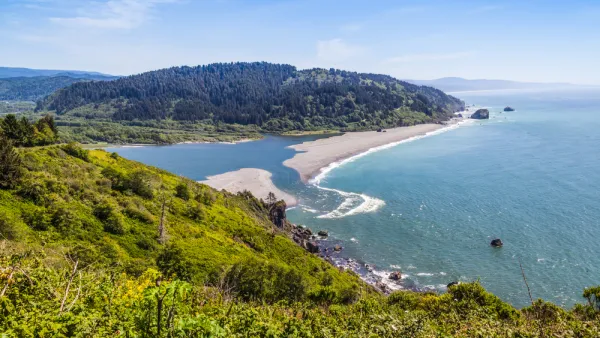
Major Dam Removal Proposals Move Forward in California and Oregon
The movement to restore the Klamath River by removing four dams has achieved a major milestone in recent weeks.
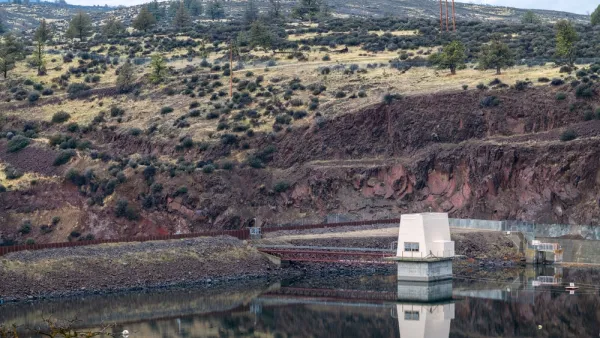
Largest Dam Removal in U.S. History Clears Final Regulatory Hurdle
Four dams are coming down along the Klamath River. The final decision to remove the dams is a milestone political and legal victory for indigenous tribes living in Southern Oregon and Northern California.

The state-sanctioned urbicide of Austin
People don’t kill cities. Freeways do.

US to reduce Colorado River water deliveries to Mexico
A new Colorado Treaty amendment reduces Mexico’s Colorado River water allocation by 250,000 acre feet.

New Jersey’s second-largest city bans standalone data centers
Jersey City will continue to allow co-location facilities, such as those meant for research institutions that store their own data.

Amtrak not solely to blame for New Jersey commuter rail's unreliability, report finds
A new study from the Garden State Initiative found that NJ Transit’s budget grew 20% across a 4 year period, but reliability declined significantly over the same period.

EPA erases limits on planet-warming pollution from power plants
Under Monday’s plan, power plants would still have some limits on how much mercury, arsenic and other contaminants they can emit.

Phoenix announces new on-demand transit service, more frequent RAPID buses
Both new services will launch in October, and are part of Phoenix's Project Effective Access Solutions for Easing Congestion.

FREE Course: Walkable City 1: Why Walkability?
After describing his path towards focusing on walkability as the essence of good planning, Jeff Speck marches through his five principal reasons for making more walkable places.
Reinventing Malls: Planning Alchemy—Turning Gray Fields Into Gold
The course focuses on the opportunities and imperatives that shape reinvention of mall sites.

Eagle County Government
Harvard University Graduate School of Design
Nashville Planning Department
The Architects Foundation
University of Cincinnati Online
The Pocatello Development Authority
The Urban Renewal Agency of the City of Pocatello
Journal of the American Planning Association