Georgia politics haven't usually been friendly to renewable energy. But some unlikely alliances, and a healthy dose of economics, can go a long way.


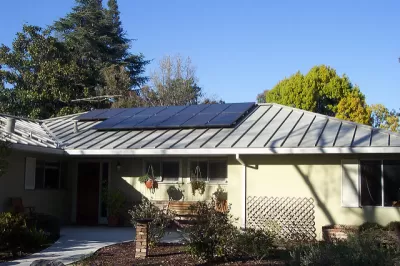
Only a few years ago, the state of Georgia "didn't have much solar power at all," James Bruggers writes. But last year, it ranked as one of the nation's top solar power states, producing enough energy to power 175,000 homes. Bruggers traces the history of that shift, and how it has bucked expectations for energy politics in a conservative state.
One of the leading figures is Lauren "Bubba" McDonald, Jr., chairman of Georgia's Public Service Commission. An "early Trump supporter," McDonald "has been pushing Georgia Power, the state's largest utility, to invest in clean energy by ensuring that solar is included in the utility's long-term power plans, updated every three years."
The PSC may shift further toward solar later this year, as "solar advocates expect a voter backlash this fall against the all-Republican, elected commission over a costly nuclear power plant expansion." That project, an expansion to the Vogtle nuclear plant, has been costing the typical Georgia Power customer an extra $100 a year since 2011, Bruggers writes.
As the costs of solar continue to fall in the sunny state, renewable energy has spurred unlikely alignments between groups like the Sierra Club and the Tea Party. "It's all about the message," said Debbie Dooley, a Tea Party activist who leads the so-called Green Tea Coalition. "Free market, competition, choice, expanding the energy portfolio and energy mix. I don't want excessive regulations."
Read the full story: How Georgia Became a Top 10 Solar State, With Lawmakers Barely Lifting a Finger

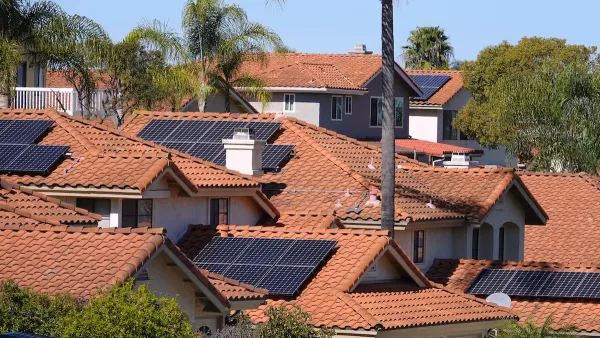
California Leads in Solar Rooftops
A combination of state and local incentives and building code mandates has helped California far outpace other states in residential rooftop solar permits.
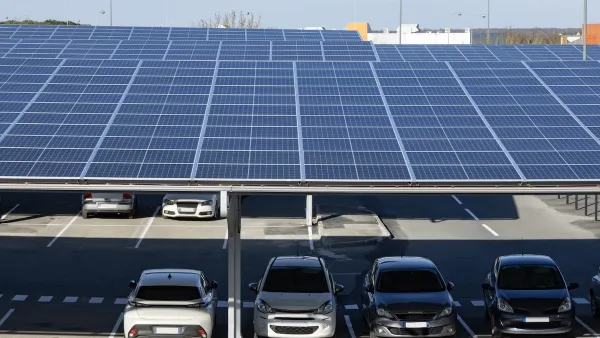
Commercial Buildings, Parking Lots Offer Significant Potential for Solar Energy
Massive swaths of flat rooftops, garages, and surface parking lots go underutilized. They could be producing renewable energy.
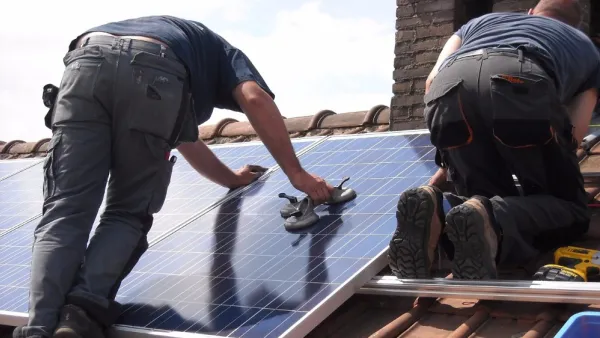
California Could Drastically Cut Solar Incentives
Rooftop solar customers in California could face higher costs and reduced incentives if a proposed overhaul of the state's solar program is approved by the Public Utilities Commission.

Planetizen Federal Action Tracker
A weekly monitor of how Trump’s orders and actions are impacting planners and planning in America.

The state-sanctioned urbicide of Austin
People don’t kill cities. Freeways do.

US to reduce Colorado River water deliveries to Mexico
A new Colorado Treaty amendment reduces Mexico’s Colorado River water allocation by 250,000 acre feet.

Nation's most wind-powered state turns to coal as data centers increase energy demand
For the first time in decades, Iowa has increased its generation of coal power.

NYC cools commuters with city's first rain garden above a bus stop
New York City officials say the plants in the rain garden can absorb 16 gallons of rainwater during heavy storms.

Brightline West’s future may rely on $6 billion federal loan
The company has until Nov. 2 to make a $400 million equity investment into its proposed high-speed rail line.

FREE Course: Walkable City 1: Why Walkability?
After describing his path towards focusing on walkability as the essence of good planning, Jeff Speck marches through his five principal reasons for making more walkable places.
Reinventing Malls: Planning Alchemy—Turning Gray Fields Into Gold
The course focuses on the opportunities and imperatives that shape reinvention of mall sites.

Greater Baltimore Committee
Eagle County Government
Harvard University Graduate School of Design
The Architects Foundation
University of Cincinnati Online
The Pocatello Development Authority
The Urban Renewal Agency of the City of Pocatello
Journal of the American Planning Association