The city of Cincinnati is scrambling to cover the difference on a shortfall of funding from a voluntary tax incentive contribution agreement (VTICA) system set up to support the Cincinnati Bell Connector.



Chris Wetterich reports on funding questions for the Cincinnati Bell Connector streetcar, as one funding source in particular lags behind projections. The voluntary tax incentive contribution agreement (VTICA) asks "developers to donate to the streetcar’s operations some of the savings they would receive from property tax abatements for constructing new buildings and renovating old ones," according to Wetterich.
"But VTICA has lagged and council is now left to figure out how to avoid spending down a surplus in the streetcar operations fund over the next two years while VTICA theoretically catches up," reports Wetterich. The city will receive $130,000 from VTICA in 2019, after projecting it would receive $524,000. A surplus generated by an infusion of parking revenue in 2015 will soon be exhausted. If the VTICA doesn't pick up soon, the streetcar will be about $428,000 in the red by 2020.
The article includes more detail on how the city overestimated VTICA revenue projections, and what it will possibly do as a result of the budgetary shortfall—options range from budget cuts to free rides.
Read the full story: City Council struggles with streetcar budget as revenue source lags

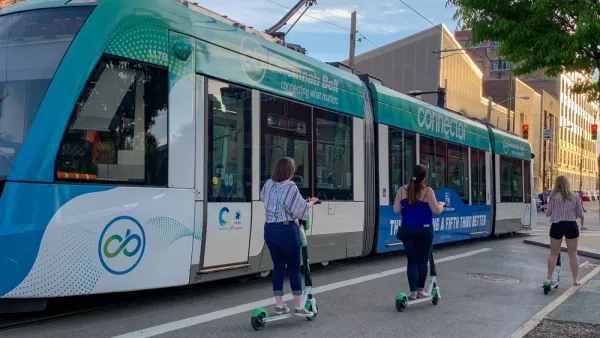
Cincinnati Streetcar Sets Monthly Ridership Record
The Cincinnati Streetcar, now known as the Cincinnati Connector, has come so far.
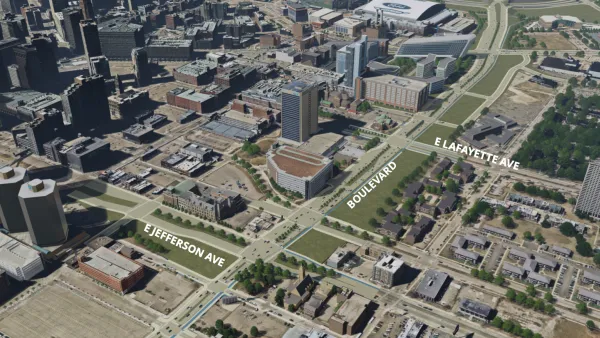
$1.5 Billion Awarded for Transportation Projects, Including $100 Million to Remove a Detroit Freeway
The latest round of federal infrastructure funding includes the largest contribution to emerge, so far, from the 2021 infrastructure bill for the removal of an urban freeway.
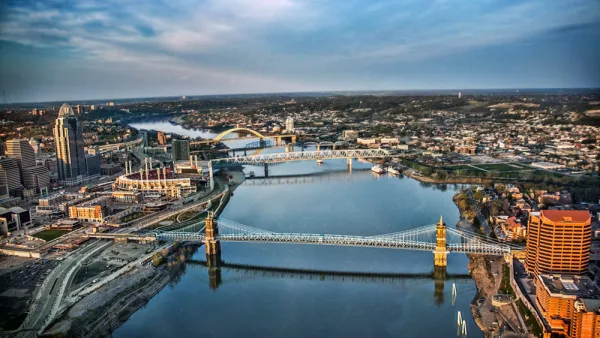
Two Bridges Across the Ohio River in Cincinnati Closed on the Same Day
Two of the transportation connections between Ohio and Kentucky in the Cincinnati metropolitan area were closed on the same day, leaving one side of the Ohio River cut off from the other.

Planetizen Federal Action Tracker
A weekly monitor of how Trump’s orders and actions are impacting planners and planning in America.

California plans to bury El Niño’s downpour
If the state plays its cards right, it may be able to store a billion acre-feet of El Niño’s water in aquifers.

Chicago breaks ground on $3 billion megadevelopment
The new neighborhood, titled Foundry Park, will one day host 3,700 residences.

Satanic Place Names
From streams and lakes to valleys and canyons, I mapped more than 1,000 places named after the Devil.

California High-Speed Rail Authority CEO resigns after $600,000 scandal
Under Ian Choudri, the authority used taxpayer dollars to fund first class flights and trips to nightclubs.

Want to study the Missouri River? Soon, you may need unanimous approval from 10 states
Legislation would require 10 governors’ permission to study or build projects moving water outside the basin.

FREE Course: Walkable City 1: Why Walkability?
After describing his path towards focusing on walkability as the essence of good planning, Jeff Speck marches through his five principal reasons for making more walkable places.
Reinventing Malls: Planning Alchemy—Turning Gray Fields Into Gold
The course focuses on the opportunities and imperatives that shape reinvention of mall sites.

City of Rosemead
Rutgers University, Edward J. Bloustein School of Planning and Public Policy
One Hundred Miles
Hunter College, City University of New York (CUNY)
The Architects Foundation
University of Cincinnati Online
City of Cambridge
Montrose County
The Pocatello Development Authority