Melissa Wandall has been fighting for safer conditions for Florida streets since the death of her husband Mark Wandall in 2003. Earlier this month, the Supreme Court of Florida upheld a traffic safety law passed in his name.



In 2010 after years of campaigning for safer streets Melissa, Wandall saw Florida's legislature pass the Mark Wandall Traffic Safety Act. In the most dangerous state in the nation for pedestrians, this law allows Florida cities to put in place red light cameras to catch and ticket cars running red lights
Since the act was passed, it's faced opposition every year, despite proof that it curbs fatal crashes. "An Insurance Institute for Highway Safety study of 117 cities, a number of them in Florida, found that those with camera programs have 21 percent fewer fatal red-light-running crashes," Angie Schmitt reports for Streetsblog USA. Now, with this decision in place, the act is more secure.
Wandall became an activist in 2003 after her husband was killed crossing the street. She did not have a background in organizing or lobbying. "With her baby daughter, Madisyn Grace (now 14) in tow, she started a one-woman lobbying campaign, often driving five hours to Tallahassee to press state lawmakers for action on red-light running," Schmitt reports.
FULL STORY: One Woman’s Decade-Long Struggle for Safer Intersections in Florida

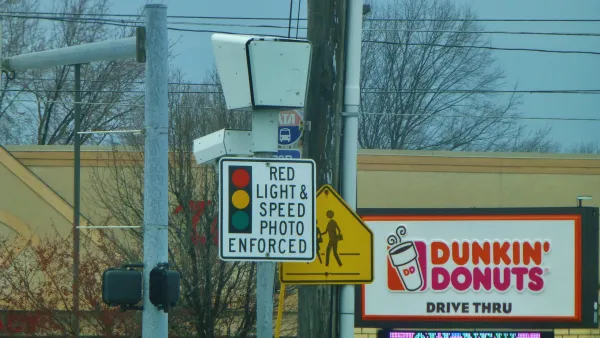
To Protect Pedestrians, Keep the Cameras
Active Transportation Alliance, a Chicago pedestrian advocacy group, urges Mayor Rahm Emanuel to improve red light cameras rather than remove them. Despite complaints from drivers, well-advertised cameras can reduce pedestrian fatalities.
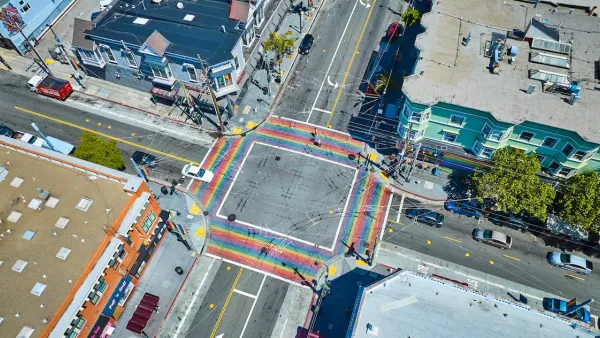
Sean Duffy Targets Rainbow Crosswalks in Road Safety Efforts
Despite evidence that colorful crosswalks actually improve intersection safety — and the lack of almost any crosswalks at all on the nation’s most dangerous arterial roads — U.S. Transportation Secretary Duffy is calling on states to remove them.

How Well Will San Francisco’s Daylighting Program Work?
Unlike other efforts to prevent cars from parking near intersections to improve visibility and road safety, San Francisco has no plans to install physical infrastructure to keep vehicles out of danger zones.

The state-sanctioned urbicide of Austin
People don’t kill cities. Freeways do.

US to reduce Colorado River water deliveries to Mexico
A new Colorado Treaty amendment reduces Mexico’s Colorado River water allocation by 250,000 acre feet.

New Jersey’s second-largest city bans standalone data centers
Jersey City will continue to allow co-location facilities, such as those meant for research institutions that store their own data.

Amtrak not solely to blame for New Jersey commuter rail's unreliability, report finds
A new study from the Garden State Initiative found that NJ Transit’s budget grew 20% across a 4 year period, but reliability declined significantly over the same period.

EPA erases limits on planet-warming pollution from power plants
Under Monday’s plan, power plants would still have some limits on how much mercury, arsenic and other contaminants they can emit.

Phoenix announces new on-demand transit service, more frequent RAPID buses
Both new services will launch in October, and are part of Phoenix's Project Effective Access Solutions for Easing Congestion.

FREE Course: Walkable City 1: Why Walkability?
After describing his path towards focusing on walkability as the essence of good planning, Jeff Speck marches through his five principal reasons for making more walkable places.
Reinventing Malls: Planning Alchemy—Turning Gray Fields Into Gold
The course focuses on the opportunities and imperatives that shape reinvention of mall sites.

Eagle County Government
Harvard University Graduate School of Design
Nashville Planning Department
The Architects Foundation
University of Cincinnati Online
The Pocatello Development Authority
The Urban Renewal Agency of the City of Pocatello
Journal of the American Planning Association