A report from a coalition of nonprofits recommends, among other restrictions, allowing outdoor watering only twice per week.



Less than three years after the end of a drought that devastated much of Texas, and just months after Hurricane Harvey delivered one of the wettest months in over a century, more than half the state has slipped back into abnormally dry conditions.
To reflect on what has and hasn’t changed, Paul Cobler of the Texas Tribune traveled to Wichita Falls, a small city in North Texas that was particularly affected by drought between 2010 and 2015, adopting serious regulations around outdoor water use and even launching one of the largest direct potable reuse (less delicately called toilet-to-tap) programs in the country.
This all coincides, Cobler writes, with the release of a report from the Texas Living Waters Project that recommends permanent restrictions on outdoor water use. Like most towns in Texas, Wichita Falls loosened restrictions on water use when the rain returned, but as Cobler’s article points out, conservation play a huge role in how the state plans to meet future water demand as its population soars and drought inevitably returns.
FULL STORY: As drought returns, experts say Texas cities aren't conserving enough water


Virginia Data Centers Draining State’s Water Supply
Being the world’s largest data center hub is having a severe impact on local water resources.

California Agency Awards $38 Million for Turf Replacement
The grant funds grass replacement rebates for commercial and residential properties and water-saving devices for fire stations.
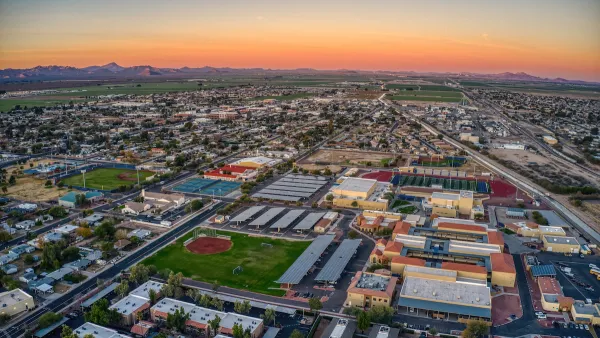
Arizona Town Looks for New Water Sources, Insists Development ‘Full Steam Ahead’
While many Southwest cities are looking for ways to conserve water and limit growth as water supplies become strained, one town is pressing ahead with rapid development.

The state-sanctioned urbicide of Austin
People don’t kill cities. Freeways do.

US to reduce Colorado River water deliveries to Mexico
A new Colorado Treaty amendment reduces Mexico’s Colorado River water allocation by 250,000 acre feet.

New Jersey’s second-largest city bans standalone data centers
Jersey City will continue to allow co-location facilities, such as those meant for research institutions that store their own data.

Amtrak not solely to blame for New Jersey commuter rail's unreliability, report finds
A new study from the Garden State Initiative found that NJ Transit’s budget grew 20% across a 4 year period, but reliability declined significantly over the same period.

EPA erases limits on planet-warming pollution from power plants
Under Monday’s plan, power plants would still have some limits on how much mercury, arsenic and other contaminants they can emit.

Phoenix announces new on-demand transit service, more frequent RAPID buses
Both new services will launch in October, and are part of Phoenix's Project Effective Access Solutions for Easing Congestion.

FREE Course: Walkable City 1: Why Walkability?
After describing his path towards focusing on walkability as the essence of good planning, Jeff Speck marches through his five principal reasons for making more walkable places.
Reinventing Malls: Planning Alchemy—Turning Gray Fields Into Gold
The course focuses on the opportunities and imperatives that shape reinvention of mall sites.

Eagle County Government
Harvard University Graduate School of Design
Nashville Planning Department
The Architects Foundation
University of Cincinnati Online
The Pocatello Development Authority
The Urban Renewal Agency of the City of Pocatello
Journal of the American Planning Association