The proposal promises a one-hour commute between Vancouver and Seattle.


High-speed rail from Vancouver to Portland is one step closer to reality.
The province of British Columbia and the states of Washington and Oregon have agreed to support a $1.2 million feasibility study on the Cascadia Rail project, which would connect Vancouver to Seattle before splitting into branches to Portland and Spokane.
At the annual Pacific Coast Collaborative conference, Washington Governor Inslee and BC Premier Horgan touted the economic opportunities promised by the "ultra-high-speed corridor," which they said could offer a one-hour trip between Vancouver and Seattle.
Moreover, Vancouver officials unveiled a $7 billion CAD plan to complete Phase Two of a 10-year vision for regional transportation, which includes expansion of SkyTrain, a new light rail line, and other major projects, and could break ground in 2019. The vision includes extending the SkyTrain Millennium Line underground following the route of the Route 99 B along Broadway, which The Urbanist reports is the busiest bus line in North America.
The ambitious plan represents "an amazing turn of events given the failure of the 2015 Transit Referendum that lost in a landslide amidst disagreement among many in the regional Mayors’ Council about priorities," according to The Urbanist's Stephen Fesler.
FULL STORY: British Columbia Goes All In on Rapid Transit, Funds High-Speed Rail Study

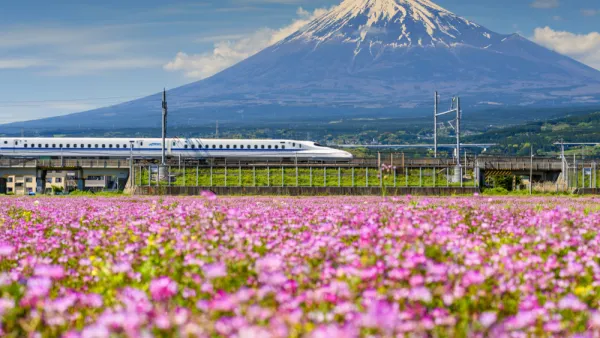
An Interstate High-Speed Rail Authority on the Legislative Agenda in Washington
A big idea is gaining momentum.
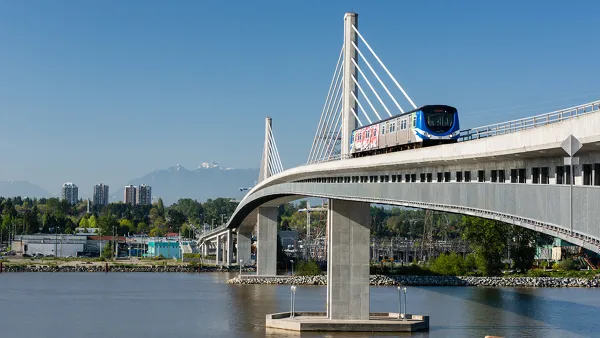
Cross-Border High-Speed Rail Studied for the Pacific Northwest
The state of Washington has taken a first, serious look at a high-speed rail project linking Vancouver in British Columbia to Seattle and Portland.
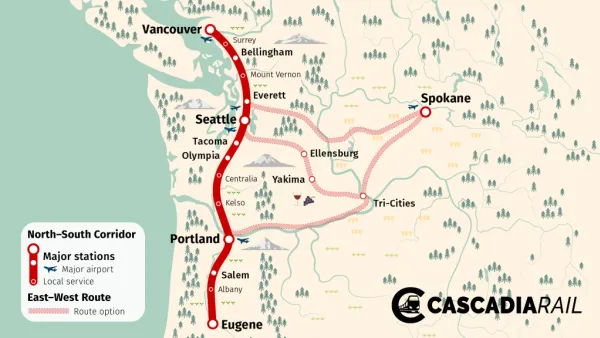
Cascadia High-Speed Rail Corridor Seeking Federal Funding
The state of Washington is hoping federal infrastructure funding can pay for $198 million of the $348 million necessary to plan the Cascadia High-Speed Rail project.

The state-sanctioned urbicide of Austin
People don’t kill cities. Freeways do.

US to reduce Colorado River water deliveries to Mexico
A new Colorado Treaty amendment reduces Mexico’s Colorado River water allocation by 250,000 acre feet.

New Jersey’s second-largest city bans standalone data centers
Jersey City will continue to allow co-location facilities, such as those meant for research institutions that store their own data.

Amtrak not solely to blame for New Jersey commuter rail's unreliability, report finds
A new study from the Garden State Initiative found that NJ Transit’s budget grew 20% across a 4 year period, but reliability declined significantly over the same period.

EPA erases limits on planet-warming pollution from power plants
Under Monday’s plan, power plants would still have some limits on how much mercury, arsenic and other contaminants they can emit.

Phoenix announces new on-demand transit service, more frequent RAPID buses
Both new services will launch in October, and are part of Phoenix's Project Effective Access Solutions for Easing Congestion.

FREE Course: Walkable City 1: Why Walkability?
After describing his path towards focusing on walkability as the essence of good planning, Jeff Speck marches through his five principal reasons for making more walkable places.
Reinventing Malls: Planning Alchemy—Turning Gray Fields Into Gold
The course focuses on the opportunities and imperatives that shape reinvention of mall sites.

Eagle County Government
Harvard University Graduate School of Design
Nashville Planning Department
The Architects Foundation
University of Cincinnati Online
The Pocatello Development Authority
The Urban Renewal Agency of the City of Pocatello
Journal of the American Planning Association