A local nonprofit created a real estate development wing to stem the tide of displacement in San Francisco.


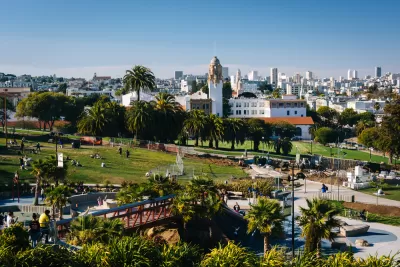
In an effort to reduce the impacts of gentrification, a local nonprofit in San Francisco's Mission District has begun to purchase properties with the goal of providing affordable housing to existing residents of the neighborhood reports Oscar Perry Abello.
The Mission Economic Development Agency was created in the 1970s, but only in recent years has it begun to purchase, preserve, and develop properties with the intention of preventing displacement of people and businesses. It uses a range of funding sources and strategies to pursue its goals.
The agency has already achieved its 2020 goal of developing 1,000 affordable housing units and 100,000 square feet of commercial space, and is doubling its goals as a result, according to Abello.
Read the full story: How the Mission District Took Equitable Development Into Its Own Hands

A Case for Universal Rental Assistance
A pair of researchers argues that expanding rental assistance programs for low-income households is the most effective way to alleviate the housing crisis.
Trump Administration Could Effectively End Housing Voucher Program
Federal officials are eyeing major cuts to the Section 8 program that helps millions of low-income households pay rent.

Affordable Housing: A Primer
A guide to affordable housing definitions and federal housing assistance programs.

Planetizen Federal Action Tracker
A weekly monitor of how Trump’s orders and actions are impacting planners and planning in America.

Amtrak, CN end decades-long dispute with eight-year agreement
The new operating agreement establishes an updated framework for the companies to work together, including processes to resolve disputes.

Judges permit Denver to divert 77,000 acre feet from the Colorado River for reservoir expansion
Overuse and climate change have caused the Colorado River’s water levels to plummet.

NYC DOT wants faster, more permanent street upgrades
The city is examining ways to build more concrete infrastructure without getting entangled in 'decades-long' projects.

'Something we’ve never seen before:' rising utility rates could strain city finances nationwide
Data centers, climate change and other factors have caused utility rates in the United States to increase by 38% since 2020.

Trump to overrule local leaders, lease millions of acres of America’s Pacific Island territories’ seafloors to mining companies
International law says that the Indigenous people of America’s territories have a right to prior and informed consent regarding projects that impact their countries.

FREE Course: Walkable City 1: Why Walkability?
After describing his path towards focusing on walkability as the essence of good planning, Jeff Speck marches through his five principal reasons for making more walkable places.
Reinventing Malls: Planning Alchemy—Turning Gray Fields Into Gold
The course focuses on the opportunities and imperatives that shape reinvention of mall sites.

Harvard University Graduate School of Design
KFH Group Inc.
Greater Baltimore Committee
The Architects Foundation
University of Cincinnati Online
The Pocatello Development Authority
The Urban Renewal Agency of the City of Pocatello