Scandals and growing competition have contributed to the declining value of the transportation network company.



"Numerous outlets had reported in the fall that the company’s valuation would take a hit, after a year that began with a boycott and continued with a gauntlet of scandals that culminated in the replacement of founder and CEO Travis Kalanick with Dara Khosrowshahi," Heny Grabar writes for Slate. Some analysts speculate the loss of valuation stems from a changing competitive and regulatory landscape rather than the company's scandals but, whatever the cause, a change of 30% is a big one.
Grabar writes, "A $48 billion company is nothing to sneeze at, of course. But the prospect of one company at the helm of a profitable, global transportation empire just isn’t looking as likely now as it did at the end of 2015."
Read the full story: Uber Valuation Down Sharply Since 2015

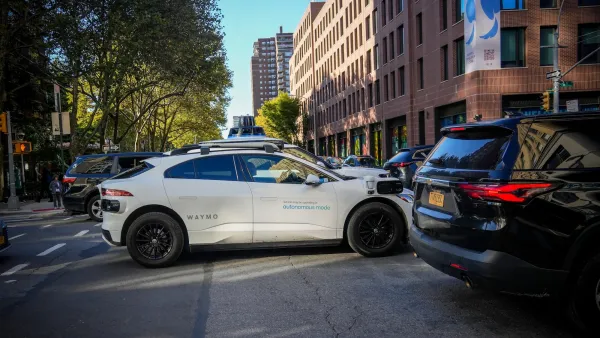
Uber says more Waymos are good for Uber too
The company believes robotaxis are spurring growth in the ride-hailing sector as a whole.

New Uber Feature Lets Riders Request Women Drivers — and Vice Versa
The feature debuted in Saudi Arabia in 2019 and is now available in 41 countries where Uber operates.
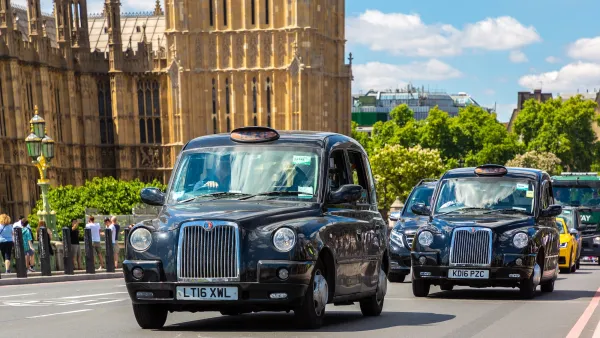
Can Robotaxis Handle London's Famously Tangled Streets?
Black Cab drivers say autonomous cars won’t be able to handle London’s unique conditions.

Planetizen Federal Action Tracker
A weekly monitor of how Trump’s orders and actions are impacting planners and planning in America.

Amtrak, CN end decades-long dispute with eight-year agreement
The new operating agreement establishes an updated framework for the companies to work together, including processes to resolve disputes.

Northwest rail fans eager for Sept. 30 debut of Amtrak’s Airo fleet
Get ready for that new train smell and more seats. But they won’t go faster or run more frequently on the Cascades route in Washington and Oregon.

St. Louis Metro to test if single-car trains can reduce operating costs, maintain rider satisfaction
The pilot program will run from October to spring 2027, and begin with one single-car train operating on Metrolink’s Red and Blue lines.

Pennsylvania is building data centers in abandoned mines
Housing data centers in mines provides an alternative to destroying local forests and may spare residents from data centers’ noise and air pollution.

If Corpus Christi can’t revive desalination plant project, it may owe Texas $235 million
Earlier this month, city officials declined to pursue developing the plant for the second time in a year.

FREE Course: Walkable City 1: Why Walkability?
After describing his path towards focusing on walkability as the essence of good planning, Jeff Speck marches through his five principal reasons for making more walkable places.
Reinventing Malls: Planning Alchemy—Turning Gray Fields Into Gold
The course focuses on the opportunities and imperatives that shape reinvention of mall sites.

City of Thousand Oaks
City of Wisconsin Rapids
Harvard University Graduate School of Design
The Architects Foundation
University of Cincinnati Online
The Pocatello Development Authority
The Urban Renewal Agency of the City of Pocatello