The city about to set a new standard for battery-powered electric bus transit was a small collection of fishing villages just 40 years ago.


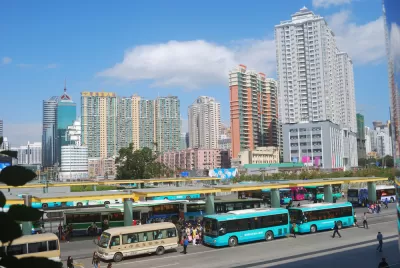
Shenzen is set to reach a major milestone in mass transit technology by the end of the year.
Sebastian Castellanos, Schuyler Null, and Xiangyi Li report that the city will "electrify 100 percent of its public transit bus fleet by the end of 2017." And, "[i]f successful, it will become the first in the world to do so." Shenzen already has 14,500 battery-powered electric buses in its fleet.
The article includes details about how Shenzen overcame some of the obstacles holding back other cities from wide-spread adoption of new battery technology for buses. The articles also discusses the benefits, in terms of air pollution and carbon emissions, of the city's new bus fleet.
Read the full story: In a Global First, Shenzhen Steers Toward 100% Electric Bus Fleet

The 'Quiet Revolution' of Zero Emission Transit Buses
More and more U.S. transit agencies are rolling out electric buses, and the recently approved federal infrastructure bill could make it easier than ever to buy zero emission electric buses.

Range Anxiety: Electric Buses Still Aren't Ready to Scale
Money intended for electric buses in Indianapolis will instead be spent on diesel buses.
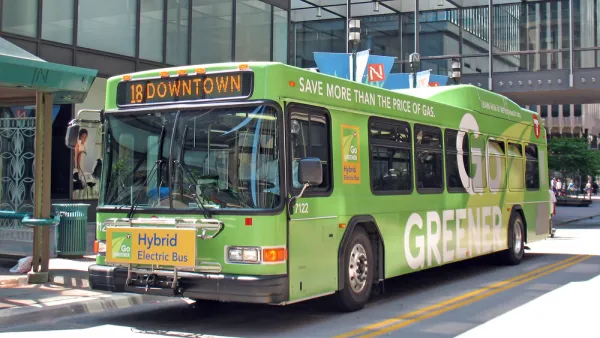
Twin Cities Set Ambitious Target for Electric Buses
The planned opening of a new bus rapid transit line is the impetus for a larger-scale shift to electric buses by Metro Transit.

Planetizen Federal Action Tracker
A weekly monitor of how Trump’s orders and actions are impacting planners and planning in America.

California plans to bury El Niño’s downpour
If the state plays its cards right, it may be able to store a billion acre-feet of El Niño’s water in aquifers.

Desperate measures: Advocates weigh draining Lake Powell to fill Colorado River
Draining the reservoir could reduce evaporation losses by a couple hundred thousand acre-feet.

Los Angeles just elected an urban planner as its mayor
Transportation analysts are optimistic that Raman will be more aggressive in addressing transit issues than Bass.

Mamdani’s pied-à-terre tax survives legal challenge
A panel of judges found that the plaintiffs failed to demonstrate injury as a result of New York City's implementation of the tax.

Eastern Nebraska is running out of electricity
Data centers and electrification are straining eastern Nebraska’s grid, throttling economic development.

FREE Course: Walkable City 1: Why Walkability?
After describing his path towards focusing on walkability as the essence of good planning, Jeff Speck marches through his five principal reasons for making more walkable places.
Reinventing Malls: Planning Alchemy—Turning Gray Fields Into Gold
The course focuses on the opportunities and imperatives that shape reinvention of mall sites.

City of Rosemead
Rutgers University, Edward J. Bloustein School of Planning and Public Policy
One Hundred Miles
University of Michigan School for Environment and Sustainability (SEAS)
Hunter College, City University of New York (CUNY)
The Architects Foundation
City of Cambridge
Montrose County
The Pocatello Development Authority