Labor leaders argue that curbing real estate speculation is Vancouver's best chance at lowering housing costs.


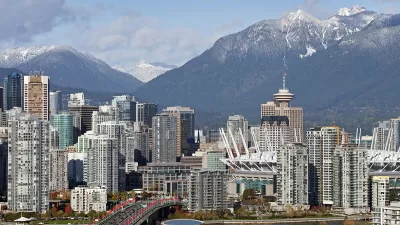
In the Vancouver Sun, three union leaders locate the root of the regional housing affordability crisis in real estate speculation and rising land values, which recent research suggests does drive rising housing costs.
"While foreign investment acts as a catalyst by setting a high bar for real estate sales, it is financial institutions that drive up prices by approving larger mortgages than they would otherwise allow," they write, equating the added costs for renters to a tax. "Speculators profit from ever-increasing real estate values, while the actual productive value of land — the rent it produces — is harvested by the lenders."
To mitigate the effects of this process on renters, the writers suggest that provinces tax land value in order to both curb speculation and raise their own funds for affordable housing. The argument echoes a recent reflection on Vancouver housing policy by University of British Columbia professor Patrick Condon.
Read the full story: Opinion: Tax land value, close loopholes to solve affordability crisis


Vancouver Home Sales Nosedive After Foreign Buyer Restrictions Take Effect
A new tax on foreign buyers and a threatened tax on vacant homes have contributed to a significant drop in home sales in October.

Fast-Rising Rents: Cause or Effect of Institutional Real Estate Investors?
More media attention for the growing influence of large, institutional investors on the housing market.

Vancouver Might Allow Non-Profit Housing to Skip Rezoning Application
Vancouver is considering eliminating a rezoning application, which could save non-profit developers up to two years in the city's approvals process.

Planetizen Federal Action Tracker
A weekly monitor of how Trump’s orders and actions are impacting planners and planning in America.

California plans to bury El Niño’s downpour
If the state plays its cards right, it may be able to store a billion acre-feet of El Niño’s water in aquifers.

Desperate measures: Advocates weigh draining Lake Powell to fill Colorado River
Draining the reservoir could reduce evaporation losses by a couple hundred thousand acre-feet.

California city breaks ground on transit connector
The project includes three mobility hubs and a pedestrian bridge.

After public outcry, Massachusetts city releases housing development tracker
Cambridge’s tracker currently shows 250 housing projects in various stages of development.

40 years after approval, Chicago breaks ground on new park
The park honors Jean Baptiste Point du Sable, the city’s first permanent non-native settler.

FREE Course: Walkable City 1: Why Walkability?
After describing his path towards focusing on walkability as the essence of good planning, Jeff Speck marches through his five principal reasons for making more walkable places.
Reinventing Malls: Planning Alchemy—Turning Gray Fields Into Gold
The course focuses on the opportunities and imperatives that shape reinvention of mall sites.

City of Rosemead
Rutgers University, Edward J. Bloustein School of Planning and Public Policy
One Hundred Miles
Hunter College, City University of New York (CUNY)
The Architects Foundation
University of Cincinnati Online
City of Cambridge
Montrose County
The Pocatello Development Authority