Home builders fear bans on connections of homes to water systems, issued from the state and cities, will increase next month when Gov. Jerry Brown's new water mandates take effect June 1.


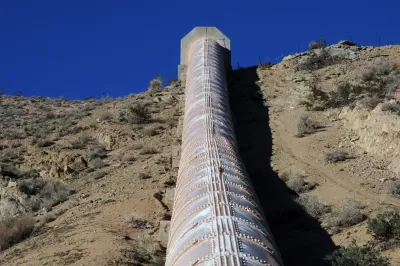
"In October, the state’s water board barred 22 mostly rural districts serving 5,063 water-rights holders from granting additional water taps until they find alternative, supplemental water sources," writes Kris Hudson, real estate reporter for The Wall Street Journal. He adds that some municipalities with their own water sources, such as Montecito Water District near Santa Barbara, banned new water taps, the term for the connection between water and homes, until new sources of water are found.
Builders point to the fact that not only are new homes far more water-efficient inside homes, using only about half as water as three bedroom homes built in 1975 according to the bar graph, but the water conservation on landscaping far surpasses older homes.
The greater strides that builders can make now are in new homes’ yards. Gov. Brown’s order seeks for new lawns to use underground irrigation systems....
Some builders, such as KB Home, are installing minimal, if any, turf in front of their newly built homes, instead opting for rock, mulch and drought-tolerant vegetation.
Home building in California, second only to Texas, "increased 17 percent in 2014, with 69,000 units added, compared with 59,000 in 2013," writes Melody Gutierrez for the San Francisco Chronicle. Insufficient home construction, particularly in coastal areas, is blamed for the state's high housing costs, as a state Legislative Analyst's report recently concluded.
"We really need to look at older homes and the agriculture industry if you want to…have a bigger impact on water conservation,” said Lawrence Webb, chairman and CEO of The New Home Co.
On the national level, home builders may appear less concerned with adapting to new environmental conditions regarding water judging from their opposition to "the Environmental Protection Agency and U.S. Army Corps of Engineers implementing a proposed rule that could result in millions of acres of private property to be regulated as wetlands under the Clean Water Act," according to the National Association of Home Builders' May 1 press release.
"A [2013] federal study shows that America's wetlands are disappearing faster than efforts can restore and recreate them, with serious consequences for endangered species and our quality of life," wrote former Planetizen editor, Jonathan Nettler, now directing the Urban Land Institute's Los Angeles Office.
FULL STORY: As California Drought Drags On, Home Builders Vie for a Voice

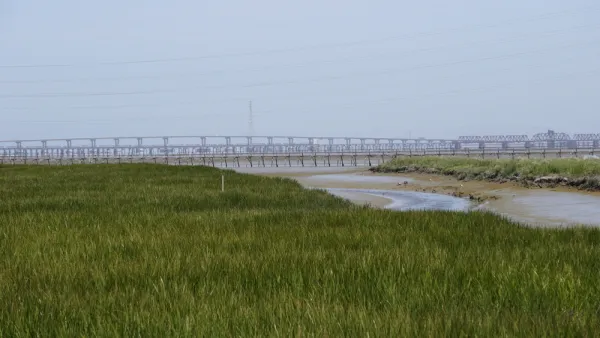
EPA and Army Corps of Engineers Propose Revision of Wetlands Definition
Fulfilling a promise he made as a candidate, the Trump administration proposed a redefinition of what is classified as a wetland, with the result being the loss of federal protection of millions of acres of waterways and wetlands.
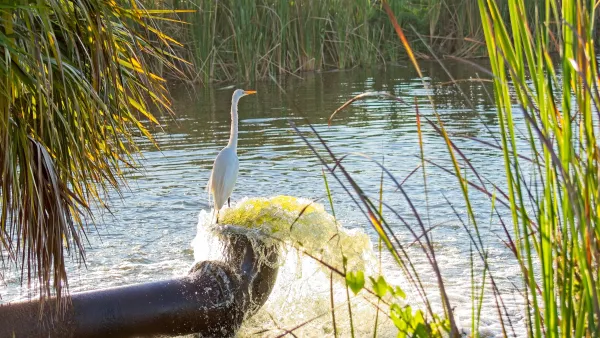
94% of wetlands could lose federal protections under proposed EPA rule
The ruling would only allot federal protections to waterways that flow nearly everyday, which few wetlands do.
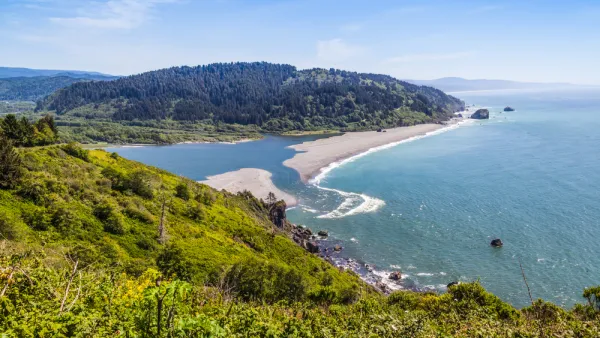
Biden Administration Seeks More Protection for Wetlands
In a reversal from Trump-era policy, the Biden administration wants to reinstate protections that prevent the contamination of streams and waterways.

The state-sanctioned urbicide of Austin
People don’t kill cities. Freeways do.

US to reduce Colorado River water deliveries to Mexico
A new Colorado Treaty amendment reduces Mexico’s Colorado River water allocation by 250,000 acre feet.

New Jersey’s second-largest city bans standalone data centers
Jersey City will continue to allow co-location facilities, such as those meant for research institutions that store their own data.

Amtrak not solely to blame for New Jersey commuter rail's unreliability, report finds
A new study from the Garden State Initiative found that NJ Transit’s budget grew 20% across a 4 year period, but reliability declined significantly over the same period.

EPA erases limits on planet-warming pollution from power plants
Under Monday’s plan, power plants would still have some limits on how much mercury, arsenic and other contaminants they can emit.

Phoenix announces new on-demand transit service, more frequent RAPID buses
Both new services will launch in October, and are part of Phoenix's Project Effective Access Solutions for Easing Congestion.

FREE Course: Walkable City 1: Why Walkability?
After describing his path towards focusing on walkability as the essence of good planning, Jeff Speck marches through his five principal reasons for making more walkable places.
Reinventing Malls: Planning Alchemy—Turning Gray Fields Into Gold
The course focuses on the opportunities and imperatives that shape reinvention of mall sites.

Eagle County Government
Harvard University Graduate School of Design
Nashville Planning Department
The Architects Foundation
University of Cincinnati Online
The Pocatello Development Authority
The Urban Renewal Agency of the City of Pocatello
Journal of the American Planning Association