For all the discussion about affordable housing at the APA National Conference in Seattle last week, clear solutions have yet to emerge. Polycentric regional planning is one long-term goal.


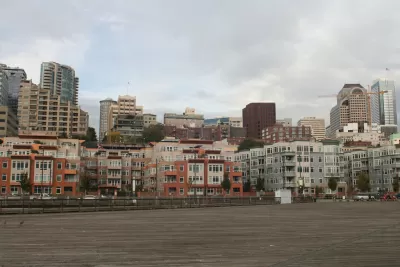
The majority of us agree: vibrant cities shouldn't be only for the rich. But today's real estate market urban centers that only decades ago were considered undesirable: "Intensifying this dynamic is a supply and demand problem, as two groups—highly educated millennials and retiring boomers—compete with working-class residents for the same types of housing: smaller and efficient, and above all close to transit, jobs, and urban amenities."
For some, the only solution is to build our way out. "The shortfall of affordable housing arguably would take 50 years to fill at the current rate of production in San Francisco [...] It might take 25 years in New York City. But betting it all on increasing supply is fraught, too." Besides, haven't we already discovered that adding lanes doesn't solve traffic?
Perhaps the most promising solution involves emancipating the urban promise from exclusive city centers. "In a broader view, a more regional approach, with polycentric, high-density centers supported by transit, has the advantage of breaking out of the borders of the super-hot markets."
FULL STORY: When It Comes to Housing Affordability, Are Cities Like Seattle Doomed?

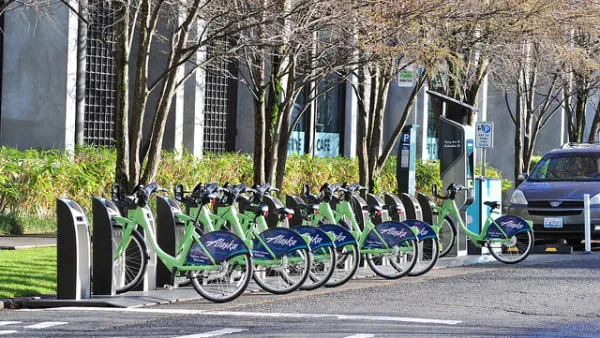
Seattle Sets Bikeshare Record with the APA in Town
Planners have gathered in Seattle to enjoy the city. The city's bikeshare system is also enjoying the planners.
7 Lessons in Park Planning from the APA National Conference
What’s new in environmental planning, the value of multi-functional urban parks, and the importance of providing open spaces for an aging population discussed at a recent conference stood out to planner Clement Lau.
Students a Bright Light for the Future of Planning at the APA National Conference
The American Planning Association has invited students to contribute blog posts on their reactions to the APA National Conference. Their thoughts so far have revealed holistic concerns and creative thinking—positive signs for the next generation.

Planetizen Federal Action Tracker
A weekly monitor of how Trump’s orders and actions are impacting planners and planning in America.

The state-sanctioned urbicide of Austin
People don’t kill cities. Freeways do.

US to reduce Colorado River water deliveries to Mexico
A new Colorado Treaty amendment reduces Mexico’s Colorado River water allocation by 250,000 acre feet.

5 New England states march closer to 800 megawatt wind energy project
Securing federal approval for the project may be complicated under the Trump administration, which has historically been hostile towards domestic wind power.

Baltimore to break ground on $50 million Transit Priority Project
The project will bring faster bus trips, safer streets and better bike connections to Baltimore.

Airbnb launches $250 million 'last-dollar financing' housing accelerator, makes first investment in Austin
The company will put $6.4 million towards affordable housing development in Texas’ capital.

FREE Course: Walkable City 1: Why Walkability?
After describing his path towards focusing on walkability as the essence of good planning, Jeff Speck marches through his five principal reasons for making more walkable places.
Reinventing Malls: Planning Alchemy—Turning Gray Fields Into Gold
The course focuses on the opportunities and imperatives that shape reinvention of mall sites.

Eagle County Government
Harvard University Graduate School of Design
Nashville Planning Department
The Architects Foundation
University of Cincinnati Online
The Pocatello Development Authority
The Urban Renewal Agency of the City of Pocatello
Journal of the American Planning Association