Land Use

CicLAvia Helping Restaurants Keep Outdoor Dining
CicLAvia is working with the city to make its "al fresco dining" program permanent.
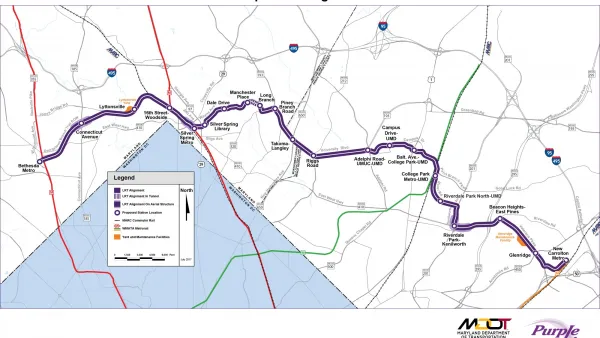
New Tool Demystifies Regulations Around Maryland's Purple Line
The tool aims to help stakeholders "cut through regulatory complexity" and ensure equitable access to the light rail line's economic benefits.

Proposed Bill Could Fund Redevelopment of Baltimore's 'Highway to Nowhere'
The Reconnecting Communities Act would provide funding for retrofitting highway infrastructure and reconnecting neighborhoods cut off by road projects.
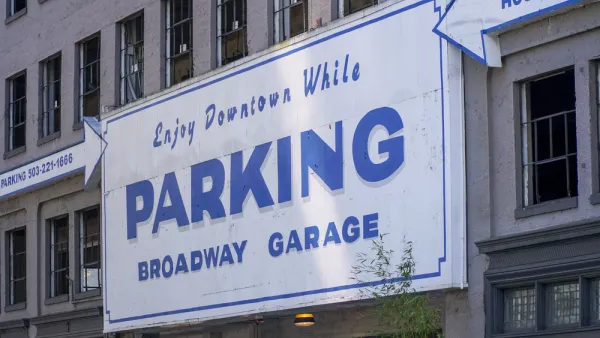
The Perils of Central Planning for Parking
Donald Shoup, the author of the seminal planning book "The High Cost of Free Parking," explains how parking requirements have poisoned cities and why poor planning is to blame.
Most Questions About the Long-Term Impact of the Pandemic Still Unanswered
Planetizen started gathering articles attempting to predict the post-pandemic future in March 2020. The work goes on, with many questions left still to be answered.
On the Essential Role of Land Use in the Fight Against Climate Change
The country cannot hope to achieve its goals for the reduction of greenhouse gas emissions without fundamentally rethinking its land use and development patterns, according to this article.
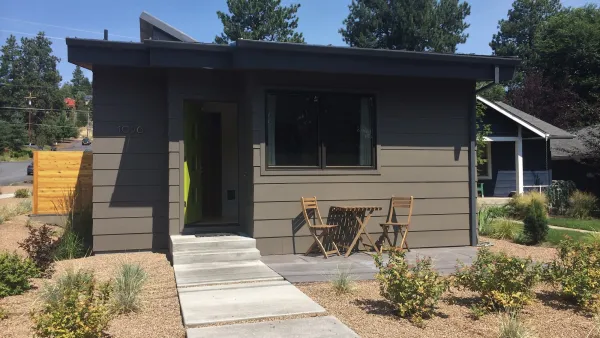
San Diego Residents Challenge the City's ADU Regulations
Residents in some of the city's single-family neighborhoods worry about the potential impacts of ADU construction on local character and parking.

A Daring 50-Year Vision for the San Francisco Bay Area
The SPUR Regional Strategy sets a new standard for planning advocacy, not only for the depth and breadth of its vision, but for its skill in execution.
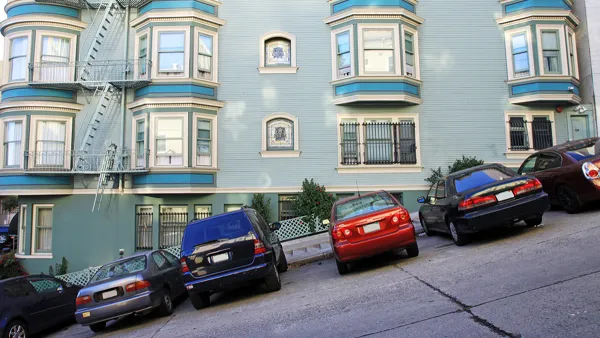
The Parking Disaster
Minimum parking requirements, argues Michael Manville, raise the cost of construction and eat up valuable urban real estate.
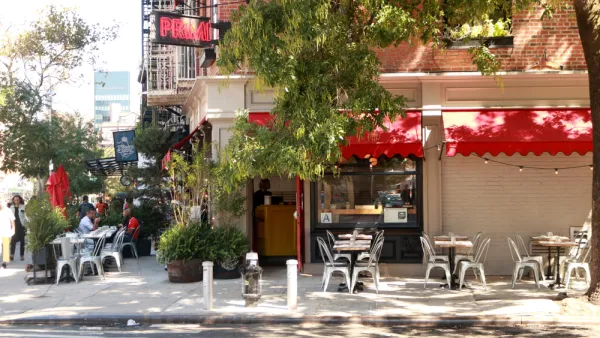
Car-Free Streets Benefit Restaurants, Yelp Survey Shows
Restaurants in areas designated as "slow streets" during the pandemic saw a boost in consumer interest.
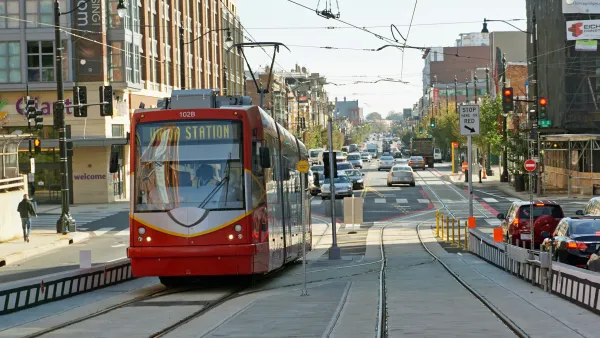
D.C. Comprehensive Plan Amendments Approved
New amendments to the D.C. Comprehensive Plan set goals for new housing development and fewer cars on the road.

A Microfarm Grows in an L.A. Front Yard
The founder of Asante Microfarm hopes his farm will serve as a model for bringing fresh produce to underserved communities.
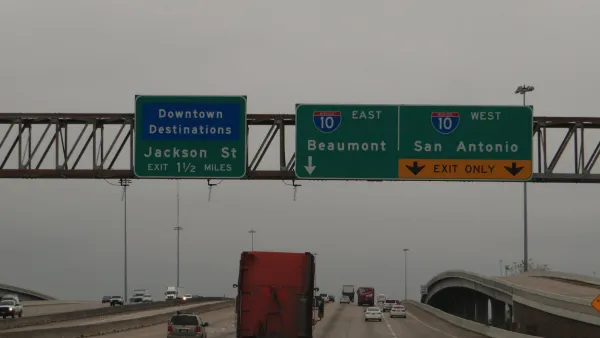
I-10 Widening Project Continues in Texas
The current work will expand the freeway to three lanes in each direction and shift a notorious bottleneck farther west.
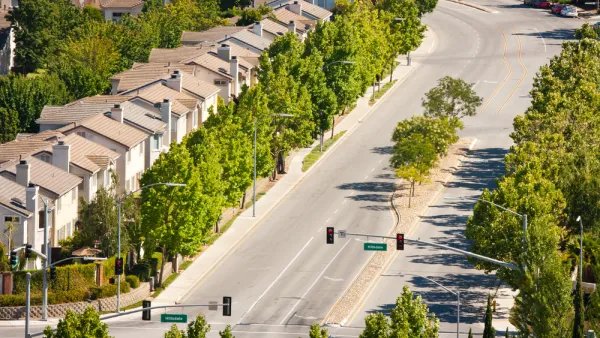
Approaching Land Use and Transportation as Interconnected Issues
One researcher argues that the division between transportation and land use policymaking at the federal level has harmed communities of color and encouraged unchecked sprawl.
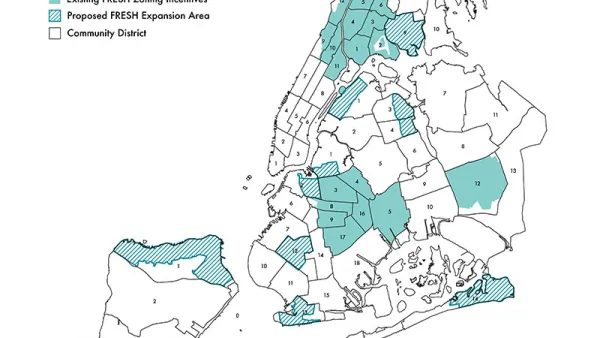
Zoning Incentives for Supermarkets: New York Expands its FRESH Program
The FRESH program, previously offering zoning incentives for grocery store development in 19 districts around New York City, will expand to 11 new locations.
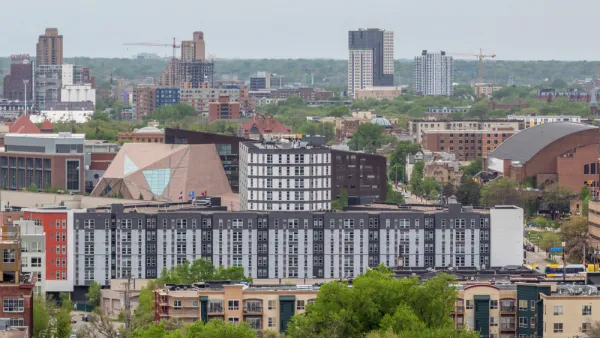
Minneapolis Eliminates Parking Requirements Citywide
Minneapolis joins the avant garde of cities implementing a dramatic overhaul of the parking requirement status quo that has been a primary determinant of the form and function of cities for nearly a century.

Chicago to Install More Protected Bike Lanes
Chicago's transportation commissioner says the city's transportation department is exploring options for keeping cars out of bike lanes, such as raised curbs.

Fourplexes on the Legislative Agenda in San Francisco
San Francisco, the poster child for runaway housing costs and displacement of existing residential populations, could be on the cusp of a change of plans.
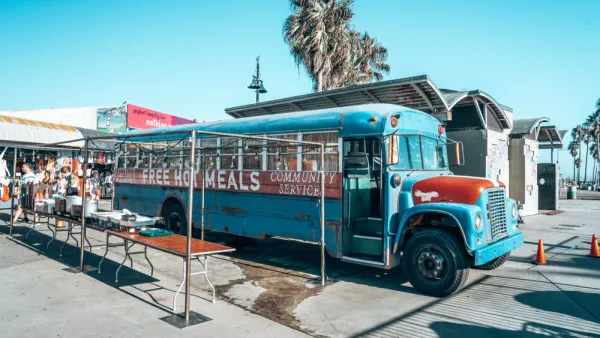
L.A. Could Consider Parks for Sanctioned Camping Locations for People Experiencing Homelessness
L.A. residents are demanding solutions for the city's growing number of people experiencing homelessness, but they don't tend to like those solutions when they include allowing people experiencing homelessness to stay in the neighborhood.
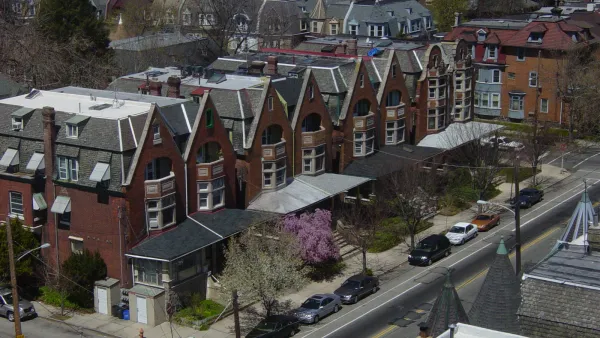
Philly City Council to Consider Bill Protecting Neighbors from Construction Damage
The proposal would hold builders accountable for damage incurred to adjacent homes as historic rowhouse properties see increased redevelopment.

FREE Course: Walkable City 1: Why Walkability?
After describing his path towards focusing on walkability as the essence of good planning, Jeff Speck marches through his five principal reasons for making more walkable places.
Reinventing Malls: Planning Alchemy—Turning Gray Fields Into Gold
The course focuses on the opportunities and imperatives that shape reinvention of mall sites.

One Hundred Miles
County of Mendocino
planning NEXT
The Architects Foundation
University of Cincinnati Online
Montrose County
Northern Illinois Transit Authority (NITA)
The Pocatello Development Authority









