Tracing the backstory of the last year of cuts to multimodal transportation reveals an alarming definition of road safety that only serves one mode.


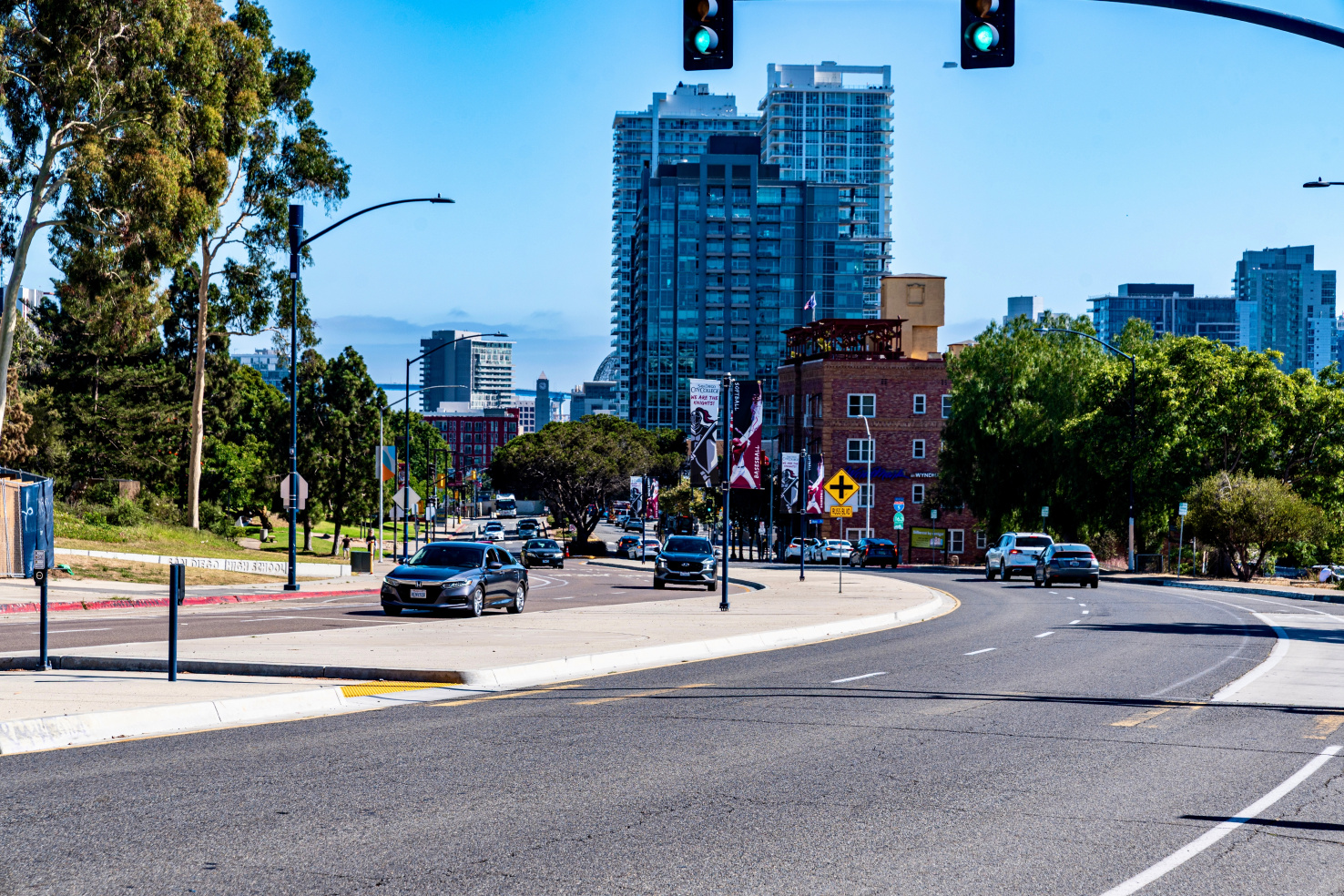
When I run around my neighborhood in San Diego, I pass space that sounds pleasant, on paper. I take shaded passages in between private lots and dirt trails winding through canyons. I’ll bounce by serviceable transit stops, and a fair amount of green space. But even so, I would have to be deluded to see any animosity toward cars in these built environments. Zoom out and all I see is dangerous sprawl.
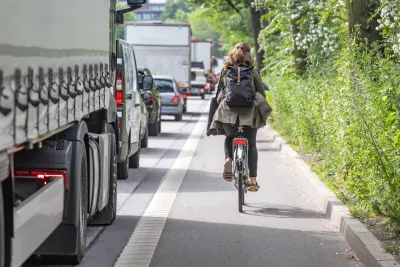
My area, called Mid-City, has three major interstates (I-8, I-805, and I-15) and another freeway (SR 94). Cars can go almost anywhere. What makes this possible, other than freeways, are non-freeway arterial roads — the multilane mini-highways covering communities that I’ve written about in the past. These are some of the most dangerous and unpleasant roads in my city, and probably yours too; 65% of bicyclist deaths occur along these roads even though they comprise just 10% of total roadways.
So, it should be welcome news that the Trump administration’s Department of Transportation, headed by Sean Duffy, pointed out arterial roads as a major priority for road safety. But even so, the administration is stubbornly focusing on cars as the only mode of movement: last year, Trump began to cut funding for numerous bike, pedestrian and traffic calming projects all over the nation. His administration introduced dramatic funding shortfalls for multimodal transportation infrastructure projects in Alabama, California, Connecticut, Florida, Illinois and New Mexico (which is the most deadly state for pedestrians). These cuts expanded Trump’s gutting of Biden’s centerpiece policies in the Inflation Reduction Act and Infrastructure Investment Jobs Act. Meanwhile, arterial roads remain deadly and other projects to enhance road safety are scrambling for cash. Why did this austerity happen, and how have counties and cities made up for lost federal cashflow?
'Woke' and 'hostile'
Part of the attack on non-car mobility stems from culture wars jostling against anything “woke,” DEI or climate related, which Duffy calls the “Green New Scam.” Another striking aspect that halted multimodal projects was posted in a memo Duffy wrote claiming such projects are “hostile to cars.” This approach is foolhardy — not only because our entire mode of mobility and transportation is already car-centered, but because in the absence of public/mass transit and active transportation like bike lanes, boosting car-only grayscaping and funding car-only infrastructure is itself hostile to cars.
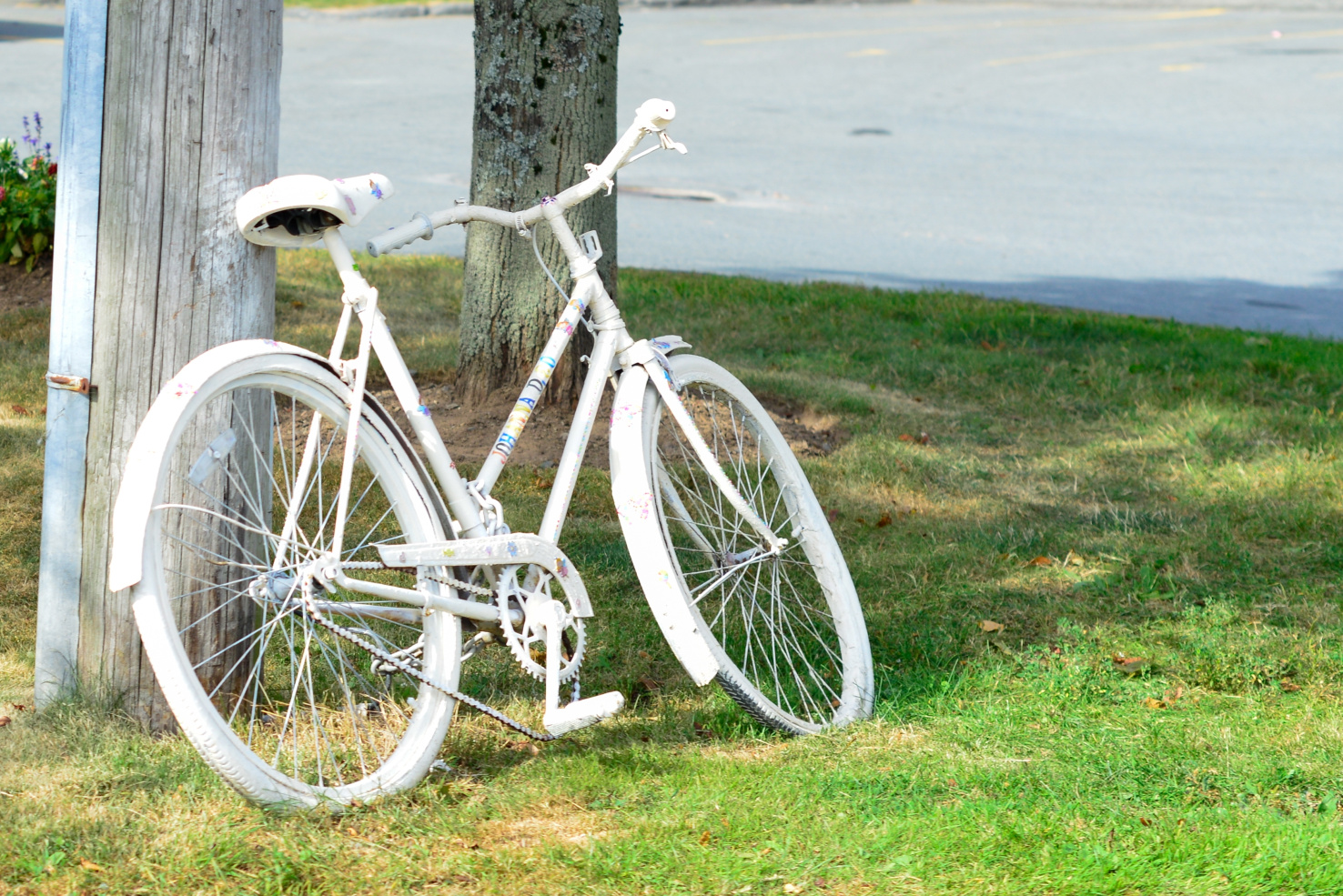
Data shows one in five deaths from traffic accidents happen to people who aren’t even in a car. And it’s getting worse. Anyone choosing to travel without the use of a car does so along unsafe roadways. If any transportation infrastructure is going to be safe for cars, it will have to address the dire conditions for people like me who walk, run, bike, or use wheelchairs or strollers.
The fight against federal cuts
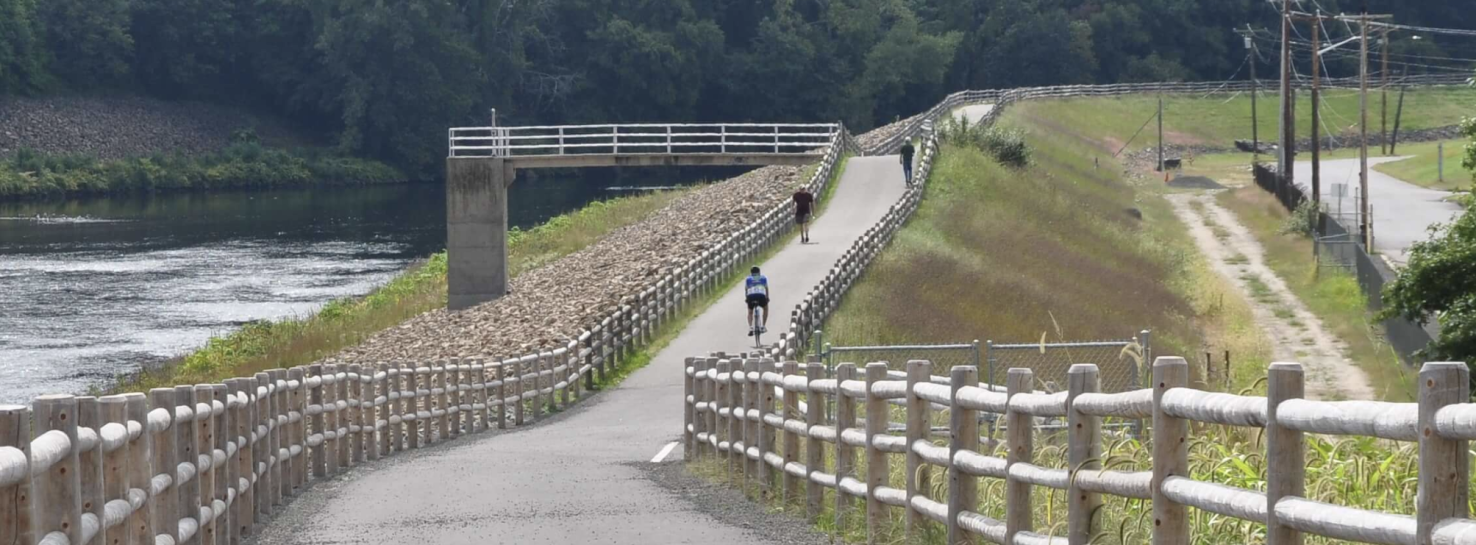
Fortunately, there has been a visible response to unsafe roads and federal funding cuts. Albuquerque sued to recover the $11.5 million in funding promised for its Rail Trail, and is still building its paths. Other multimodal projects that lost funding, like Connecticut’s Naugatuck Greenway, responded by allocating funds from other mechanisms. Some sought state grants, like they did in McClean County, Illinois to build their Route 66 bike trail. What these responses indicate is that mobility justice is achievable. People support the building of pleasant urban spaces where all modes of movement are welcome, even when funding is not going to come from federal sources.
In some supposedly left-leaning coastal communities, funding might not even come from the city: San Diego Mayor Todd Gloria proposed a 2027 budget that would’ve gutted the multimodal team and scrapped bike lanes. Vehement public opposition and the city council’s openness to the community’s needs for programs like Vision Zero resulted in him modifying the plan. This victory indicates that “road safety” for those in power is a fuzzy notion: un-measured, vague, technological, surveillance-based and behavior-focused, in lieu of sweeping redesigns of transportation infrastructure. A recent USDOT press-release points out their sensibility of road safety as utterly car-centered.
'Innovation'
Some officials have a brilliant awareness that elevating multimodal users’ presence in the roads boosts road safety, health and makes strides towards climate goals. They know that cutting transportation funds for everything but car infrastructure is folly. But this is essentially what happened in the Congressional House Committee for Transportation and Infrastructure that re-authorized Trump’s Build America playbook in May. The committee, and the administration, do not care about making movement safe for anyone or anything — except cars. Their plans in the re-authorization make no mention of Vision Zero, cut active transportation by $400 million in California, increased highway funds by $28 billion while cutting public transit by $43 billion (a 23% cut), and rail by an even worse 82%. Additionally, Trump has abandoned all mass transit projects for the last year.
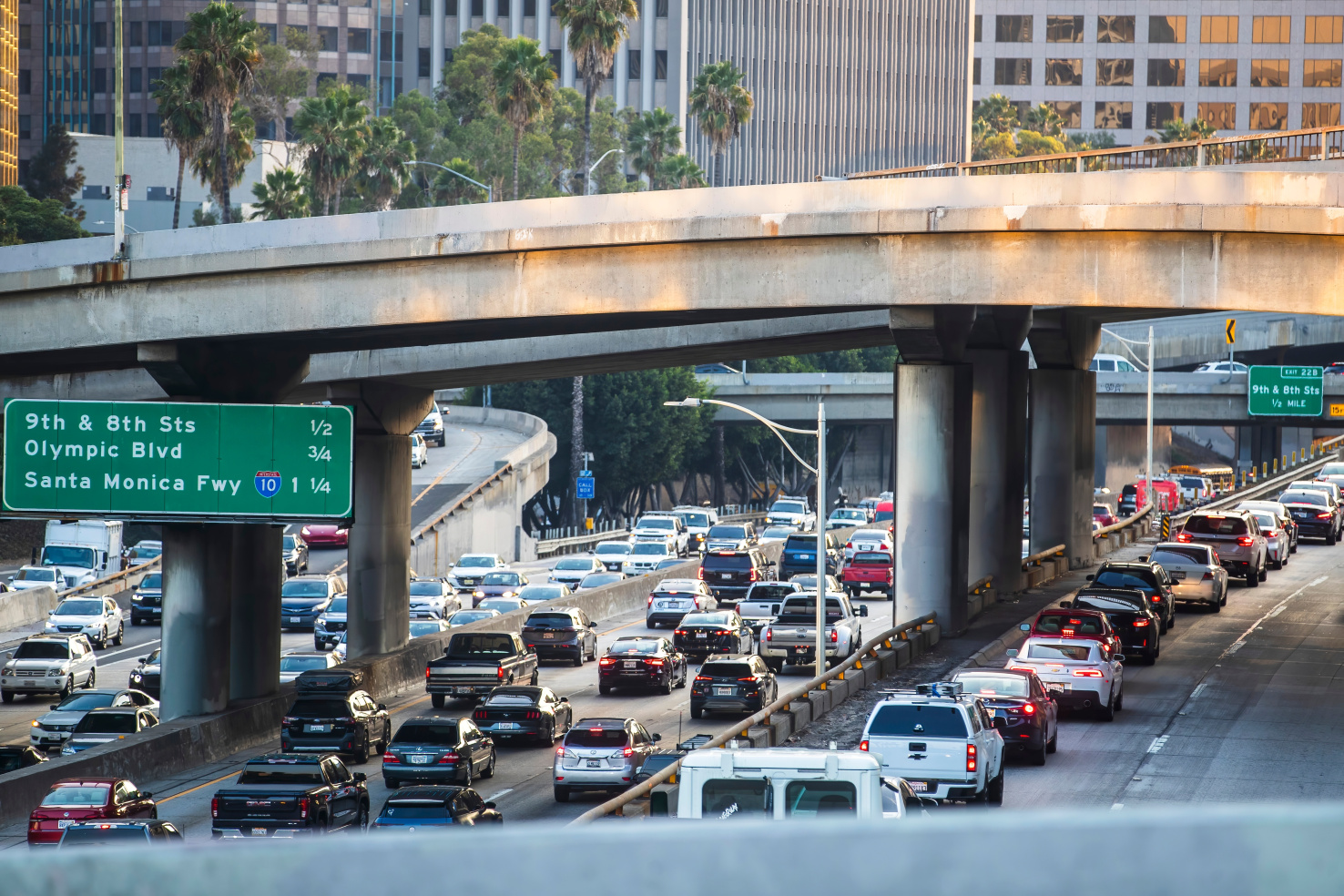
If you look at Duffy’s work, he’s not saying anything about bicycles or pedestrians — two terms he has never tweeted about since taking office [see search queries 1, 2]. Safe roads are ones with multiple ways of getting around. E-bikes, bicycles, walkers, strollers, wheelchairs, rollerstakes, skateboards, scooters and feet are all legitimate modes of transportation. Even people on unicycles ought to be able to safely go from point A to B. So why is the current administration and congress defunding virtually everything in the built environment except cars?
The Trump administration is focused on re-inventing the wheel and charging capitalism — striving for innovation where it is not necessarily needed while leaving basics to crumble. They look for a car-centered future to come, sidestepping historical awakening like the Biden administration’s Neighborhood Equity and Access Program, which sought to heal the harms caused by interstate construction through destroying predominantly neighborhoods of color.
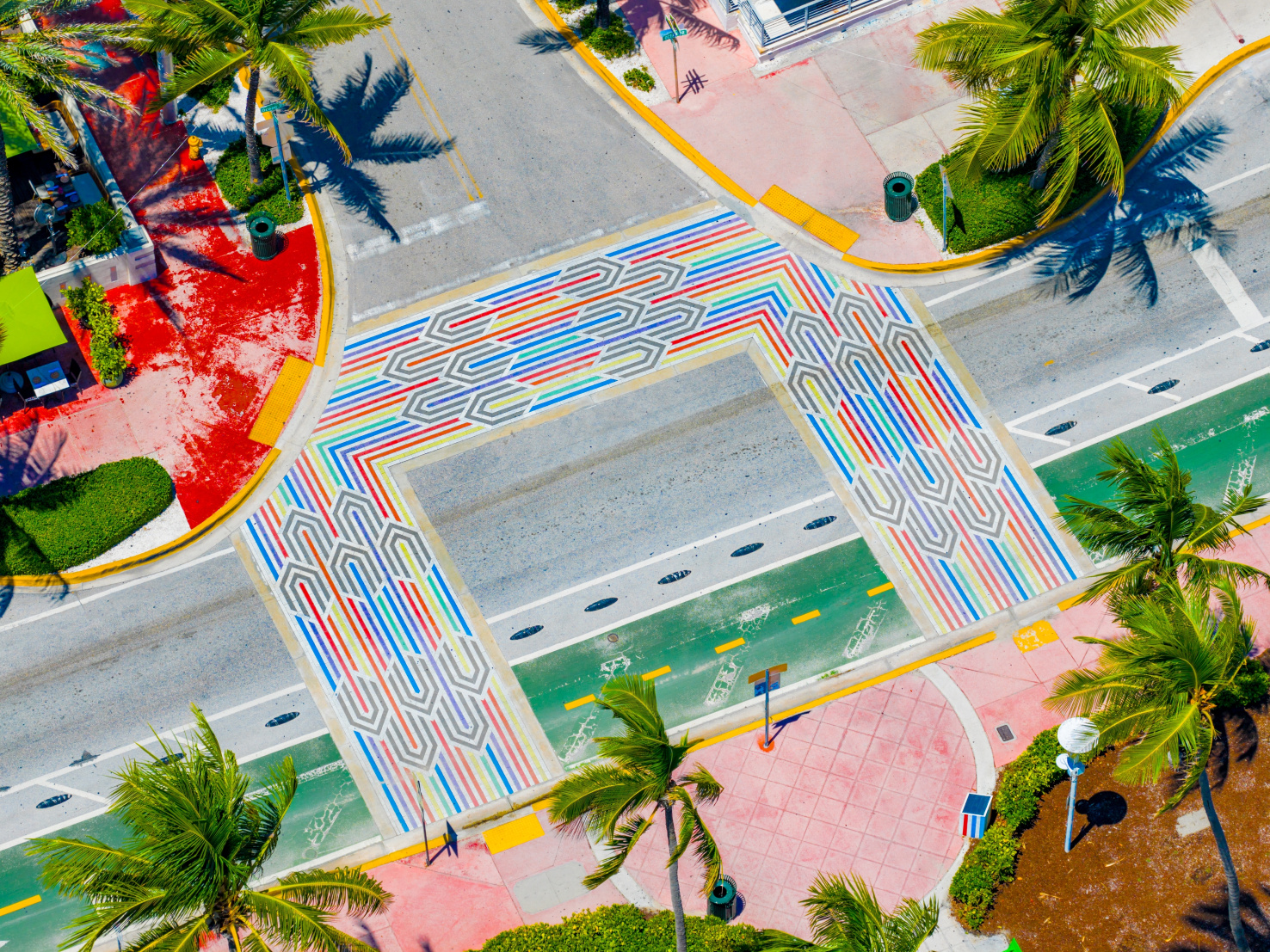
The former reality TV star Duffy has plenty to say about far-right framing issues like removing LGBTQ Pride rainbow-painted crosswalks and critiques ideas like the Green New Deal (a non-existent, proposed legislation). When it comes to substantive issues for mass transit, Secretary Duffy has been more muted. He repeats the negative framing of his own government’s infrastructure, depicting trains like the Chicago L as unsafe for riders based on a random act of violence.
In reality, cars are increasingly unsafe and riding a bicycle, even in a bike lane, is far more hazardous than it should be. Press releases coming from the department have begun looking like Fox News segments railing against wokeness (without defining what that even means in the context of transport), instead of the typical rote, policy wonk, background hum of bureaucracy rooted in evidence or equality. Duffy has raised eyebrows further by taking gifts from the companies he is meant to regulate, like Boeing, to star in another TV show sponsored by the industries he is meant to regulate.
Ready for a change
To be fair, the situation is not always clear cut. Communities are experiencing austerity unevenly and it’s hard to make an accurate statement of the whole picture. For example, the DOT is boosting funds for Native American Tribal road safety, with places like Wisconsin getting more funds. But the traditional American love of the automobile remains baked into rural and urban space. Anyone on foot is left out. After seeking to entrench car dependency, one thing that stands out despite austerity is public support for a different path.
—
Sam Orndorff is a teacher, writer, and Geography PhD from the Joint Doctoral Program of San Diego State University and University of California, Santa Barbara. He investigates Indigenous land rights, mobility, resource extraction, and environmental justice. His recently-completed dissertation worked with, and for, People of Red Mountain, who are a Paiute-Shoshone organization defending their sacred landscape Peehee Mu'huh (Thacker Pass, Nevada) and the McDermitt Caldera region from lithium mining for electric vehicle batteries. You can follow him on Bluesky.
Report: San Diego’s Lack of Progress on Vision Zero Mirrors Nationwide Trend
The city’s efforts to improve road safety have been outweighed by other factors such as larger vehicle sizes.
Opinion: To Meet Climate Goals, San Diego Must Improve Bike Infrastructure
The city wants to drastically reduce carbon emissions, but bike advocates argue it has not done enough to make biking and walking in the city safer and more convenient.
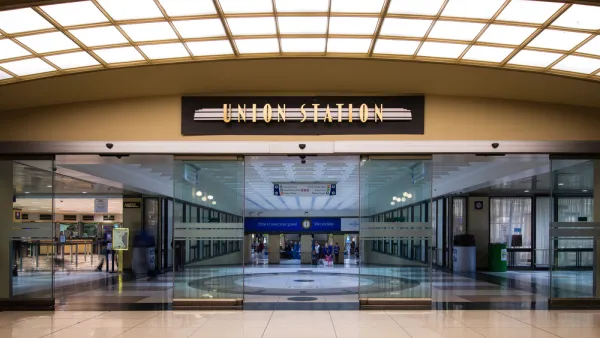
First on Chicago's Wish List from the Trump Administration: $1 Billion for Union Station
The Emanuel Administration has yet to secure needed funding for a big project to update Chicago's Union Station. Now it's up to the Trump Administration to supply a needed loan.

Planetizen Federal Action Tracker
A weekly monitor of how Trump’s orders and actions are impacting planners and planning in America.

California plans to bury El Niño’s downpour
If the state plays its cards right, it may be able to store a billion acre-feet of El Niño’s water in aquifers.

Desperate measures: Advocates weigh draining Lake Powell to fill Colorado River
Draining the reservoir could reduce evaporation losses by a couple hundred thousand acre-feet.

Bay area voters pass ‘crucial lifeline’ for transit
Proposition RTM, which will fund Bay Area transit, has approval from 61% of voters as of 9:45 p.m. on Nov. 3.

Voters across the country reject data centers
Dozens of communities voted on measures to restrict the buildout of data centers.

US buildings threatened, destroyed by fires set to triple by 2060
Researchers found a high fire risk for socioeconomically vulnerable neighborhoods in the American West.

FREE Course: Walkable City 1: Why Walkability?
After describing his path towards focusing on walkability as the essence of good planning, Jeff Speck marches through his five principal reasons for making more walkable places.
Reinventing Malls: Planning Alchemy—Turning Gray Fields Into Gold
The course focuses on the opportunities and imperatives that shape reinvention of mall sites.

City of Rosemead
Rutgers University, Edward J. Bloustein School of Planning and Public Policy
One Hundred Miles
Hunter College, City University of New York (CUNY)
The Architects Foundation
University of Cincinnati Online
City of Cambridge
Montrose County
The Pocatello Development Authority

