Data shows that cultural venues have long lacked proper classification — which is why so many fall through the cracks.


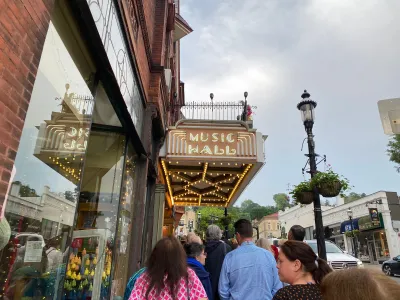
Quick exercise. Pull up your city's official list of cultural venues; the theaters, music halls, artist studios, and community stages that make your city feel like somewhere instead of just anywhere.
Take your time. I'll wait.
...
Still looking?
It wasn’t a trick question, and if you came up empty, you're in excellent company. When I set out to study how cities recognize their cultural infrastructure, I assumed this would be the easy part; a warm-up before the real research questions. Cities have inventories for street trees, storm drains, and fire hydrants. Surely they have one for the 400-seat black box theater that anchors the downtown arts district!
Most don’t. And once you start looking for why, you find something much more interesting than an oversight.
The assumption that doesn't hold up
If you're a planner, this may sound familiar. We classify almost everything because classification is how planning works. Land uses. Historic resources. Transportation assets. Parks. Utilities. Once something has a category, it can be mapped, measured, regulated, funded, and managed. So, I assumed cultural venues would have one too.
It’s reasonable that if a venue matters enough to fill Friday nights, house a beloved nonprofit, and show up in every "best of downtown" listicle, some department somewhere has formally classified it as cultural infrastructure. Parks get a parks department. Housing gets a housing plan. Culture, surely, gets something equivalent, right?
To test that assumption, I built two national datasets: the Municipal Cultural Venue Governance Dataset (MCVG) and the Municipal Cultural Infrastructure Recognition Dataset (MCIR). One tracked how nearly 9,500 municipal documents across 100 U.S. cities talked about culturally significant spaces. The other went venue by venue, coding recognition patterns for more than 2,500 individual cultural spaces in those same cities.
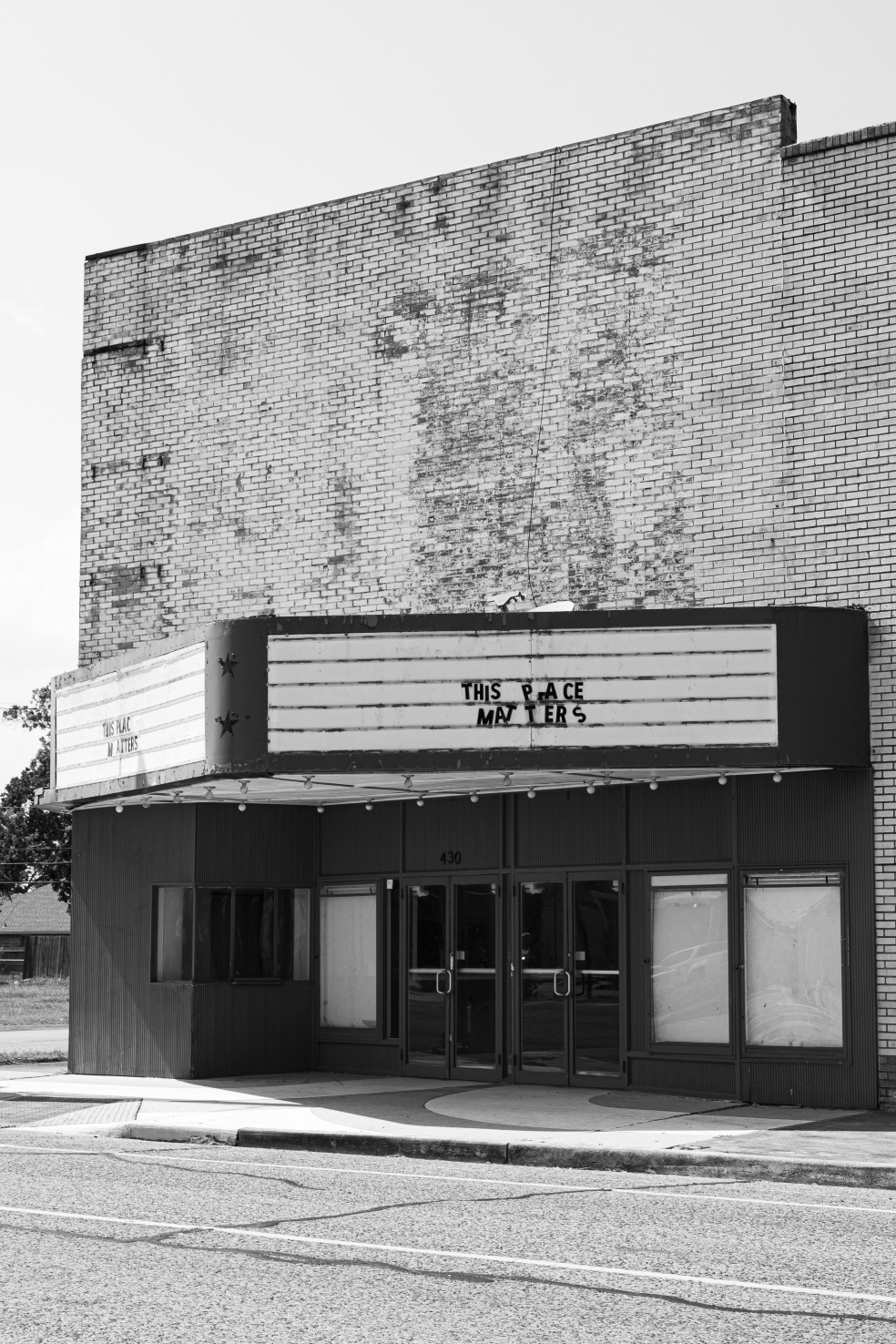
The headline result? Cities recognize cultural venues constantly, just almost never as cultural venues. Across the venue-level dataset, about 94% of spaces showed up in some form of municipal recognition. But only about 39% were recognized directly, as cultural sites in their own right. The rest were recognized sideways, and swept in under something else. At the document level, the pattern was even starker: roughly 72% of governance references treated cultural spaces as a side effect of some other policy category entirely.
Your city almost certainly knows your concert hall exists. It just may not know it as a cultural venue. It knows it as a downtown development parcel, a tourism draw, a historic structure, or a nonprofit tenant. Same building, four different bureaucratic disguises, none of them a "culturally significant space."
Hello, proxy governance
I started calling this pattern proxy governance: the practice of managing culturally significant spaces entirely through categories built for something else.
It shows up everywhere once you know to look for it. Zoning treats the jazz club as a commercial use, same as a nail salon. Tourism offices treat the historic theater as a visitor amenity, same as a scenic overlook. Historic preservation treats the old vaudeville house as an architectural artifact, just like a courthouse. Economic development treats the maker space as a small business, same as a hardware store. Arts programming treats the community stage as a grant recipient, same as the mural project. Every one of these lenses is legitimate. None of them was designed to answer the question "is this cultural infrastructure?" and so none of them do. It's a little like discovering your city has five different ways to acknowledge a speakeasy exists (liquor license, historic plaque, tourism brochure, tax parcel, noise complaint file) but no box anywhere that just says "speakeasy."
Proxy governance isn't neglect. Cities aren't ignoring culture. They're managing it competently through borrowed vocabulary, and the data suggests something structural is driving which venues get which proxy. Ownership type, more than city size or region, predicts whether a venue gets direct recognition at all. A city-owned civic auditorium and an independent nonprofit theater down the street can receive wildly different administrative treatment, not because one matters less, but because they entered the system through different doors.
Why the missing category actually matters
A skeptical planner might reasonably ask: so what? If the zoning code, the tourism office, and the preservation board are all quietly doing the work, does it matter that no one calls it "cultural governance"?
Truth is, it matters in exactly the moments planners care about most.
Emergency response: When disaster planning asks "what critical community facilities need priority attention," cultural venues often aren't on the list. Not because they don't matter, but because no administrative category flags them for inclusion. They fall through a gap nobody built on purpose.
Funding access: The dataset showed financial instruments (grants, loans, incentive programs) are heavily gated by nonprofit status, while regulatory tools like zoning and preservation overlays are largely ownership-neutral. Translation: a for-profit music venue can get zoned and permitted just fine, and then discover it's invisible to almost every funding mechanism built to help venues like it survive.
Preservation: Historic designation protects buildings, not the cultural use inside them. A structure can be perfectly preserved as architecture while the theater company that made it worth preserving quietly closes.
Investment decisions: You can't prioritize what you can't see. If cultural infrastructure isn't a category in your capital planning process, it isn't competing for capital. It's borrowing whatever leftover attention its proxy category has to spare.
Proxy governance works fine right up until you need to ask a cultural question. Then you discover the systems answering it were never designed to.
What Planners Can Actually Do About It
Here's the part I want to be very clear about: this is not a pitch for a new department, a new funding stream, or another line item competing for next year's budget. Cities have plenty of tools already. What's missing is simpler and cheaper: an administrative category that lets those tools talk to each other about the same set of buildings.
A few starting points that don't require reinventing anything:
Build the list: Not a grant program, a registry. A simple, cross-referenced inventory of culturally significant spaces that every department can point to, the same way you'd maintain a list of designated historic properties or floodplain parcels.
Tag, don't reorganize: Add a "cultural infrastructure" flag to your existing zoning, permitting, and capital planning data. You're not creating new systems; you're giving your current systems a shared vocabulary.
Ask the resilience question on purpose: When you update your hazard mitigation or emergency operations plan, explicitly ask whether cultural venues are included rather than assuming they're covered because they're "commercial buildings" or "historic sites."
Notice the ownership gap: If your funding tools quietly favor nonprofits, decide whether that's intentional. Independent and for-profit venues are just as often the community anchors. They're just less likely to be legible to City Hall.
Say the word "cultural" out loud in the paperwork: It sounds almost too simple, but the data suggests the biggest gap isn't political will or funding. It's classification. Venues that get called cultural, in an actual administrative document, get treated differently than venues that merely function as cultural spaces while being labeled something else.
None of this requires new money. It requires cities to notice that they've been governing an entire category of civic infrastructure through borrowed clothes, and to give it (finally) an outfit of its own.
The Final Note
Somewhere between the zoning map, the tourism brochure, and the historic registry, an entire category of civic life has been hiding in plain sight; recognized everywhere, named nowhere.
The fix isn't another program. It's a simple label. Sometimes the most radical planning tool available is simply calling something what it is.
--
Chewi Lockhart, CVP, is Assistant Director of Operations at Appalachian State University and a graduate researcher studying municipal governance and cultural infrastructure. He is the creator of the Municipal Cultural Venue Governance Dataset (MCVG) and the Municipal Cultural Infrastructure Recognition Dataset (MCIR).

How Chicago Got its Cultural Center
The history of the Chicago Cultural Center, "the nation's first and most comprehensive free municipal cultural venue," offers insight into the shifting relationships between culture, politics, and money in the third-largest city in the United States.
Cincinnati welcomes artists leaving the coasts
For the founders of young art center Wave Pool, Cincinnati offers opportunities unmatched by the coastal cultural meccas.
Shot by Shot, Brooklyn Histories Revealed
To build ties to its neighbors, a young arts organization embarked on a sprawling multimedia project exploring the past and present of Williamsburg's Latino community.

Planetizen Federal Action Tracker
A weekly monitor of how Trump’s orders and actions are impacting planners and planning in America.

Chicago breaks ground on $3 billion megadevelopment
The new neighborhood, titled Foundry Park, will one day host 3,700 residences.

This MA town is drowning in its own sewage — and residents like it that way
Susan Murcott, a waste water expert, said if Carlisle didn't address their leaking sewage, the problem could turn “deadly.”

Home batteries are ushering in an energy revolution
Batteries capable of storing solar energy can stabilize the grid during peaks and keep homes running on cloudy days.

A sneak peek at NYC’s Midtown Bus Terminal rebuild
The city will turn a deck used for storage during the construction process into a park once construction is complete.

Air taxis to connect Texas airports to business hubs
Archer Aviation says its taxis will turn 90 minute drives into 20 minute flights.

FREE Course: Walkable City 1: Why Walkability?
After describing his path towards focusing on walkability as the essence of good planning, Jeff Speck marches through his five principal reasons for making more walkable places.
Reinventing Malls: Planning Alchemy—Turning Gray Fields Into Gold
The course focuses on the opportunities and imperatives that shape reinvention of mall sites.

City of Rosemead
Rutgers University, Edward J. Bloustein School of Planning and Public Policy
One Hundred Miles
The Architects Foundation
University of Cincinnati Online
Montrose County
The Pocatello Development Authority
The Urban Renewal Agency of the City of Pocatello

