As New York prepares to add 200,000 affordable housing units, Tianli Cheng says that dismantling access barriers is as important as creating new supply. He has a laundry list of great starting points.



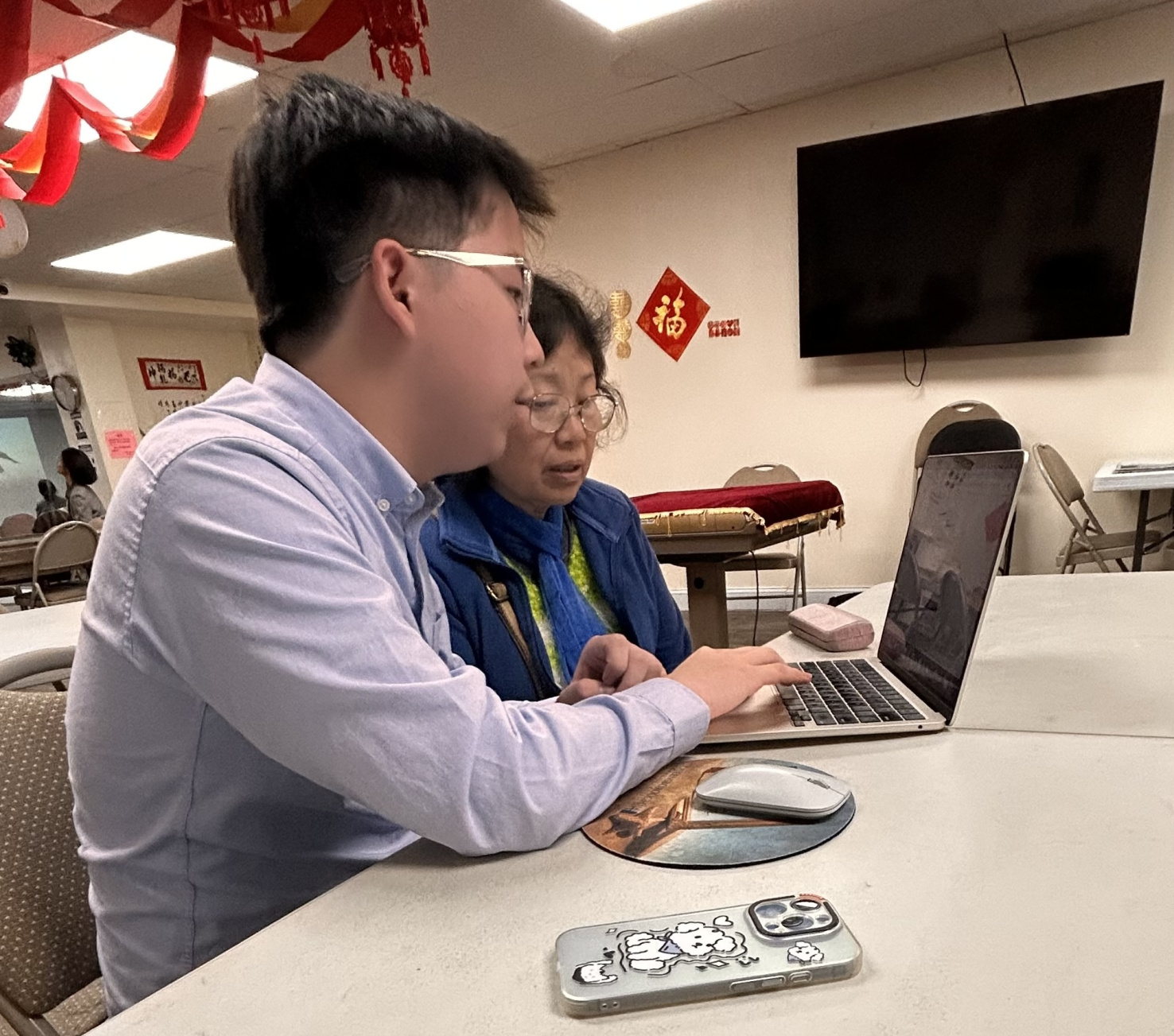
I began volunteering with Chinese seniors on housing applications when I was fourteen. Over the past several years, I have helped people navigate Housing Connect, New York City Housing Authority accounts, and application systems that remain difficult even for fluent English speakers to manage, a role written about in this very publication. What I have learned is that the most challenging part of housing assistance often occurs long before eligibility is ever reviewed.
Recently, when I tried to help an older adult set up a NYCHA account, I realized that he already had one. His application had entered the system a year before I was born and was eventually closed without ever leading to housing. That record stayed with me long after I read it. It reflected what I often see in my volunteer work. Many older adults already have housing accounts, but their applications expire after missing renewal deadlines. For many older adults, housing exists on paper. The more challenging part is staying connected to the system long enough for it to actually work.
This gap between housing on paper and housing in practice matters as the city prepares to expand supply at an unprecedented scale. New York City’s new mayor has made expanding the affordable housing supply a central part of his agenda. The administration is preparing for what could become one of the largest affordable housing expansions in the city’s recent history, including a plan to build 200,000 new affordable units over the next decade, as reported by NY1. Addressing supply is essential in a city facing sustained housing pressure and rising rents.
Access-driven displacement
Building more units can ease pressure across the city. But it does little for seniors who fall out of the system long before a unit becomes available. Many seniors never reach the starting line. Most of the older adults I assist have no idea what NYCHA or Housing Connect is. They simply know that they need housing. Yet the application system assumes they understand the process. Somehow, they are expected to figure out which system to use on their own.
Even with volunteer help, access is often unreliable. Sometimes, an account that cannot be processed at the time becomes accessible days or weeks later without any changes being made. These issues often show up in small moments, but they add up. Error messages appear without explanation, and there is rarely a clear way to speak with a real person. One of the most common messages reads, “We could not find contact based on the information provided.” As a result, volunteers often end up asking seniors to try another day, and access becomes a question of timing instead of eligibility.

Verification codes sent to phones sometimes fail to arrive, and when that happens, the same number cannot be used again. Email links required to continue an application may appear hours later, forcing volunteers to stop and wait for another attempt. Although many seniors select Chinese as their preferred language, system messages are often sent only in English. All of these small breakdowns in the system create serious interruptions in the application process.
Renewal requirements create another silent filter. NYCHA typically requires applicants to renew the application every two years. In practice, waiting for housing often takes far longer than two years. This means older adults must renew the form again and again over many years. However, older adults often face memory challenges, health issues, or limited access to ongoing assistance. This policy poses a significant challenge. Missed renewal deadlines are a common reason applicants lose their place on the waiting list. These are rare cases of active withdrawal.
To improve their chances, many seniors apply far beyond the neighborhoods they know. I often encourage this myself when helping with applications, because applying citywide can feel like the only way to stay competitive. On paper, it helps. In real life, it comes at a cost.
Through my coursework, I began to recognize this as access-driven displacement: people moving not because they want to, but because the way access works leaves them few other options. Applying this way can pull seniors away from familiar language environments, health providers, and the support systems they rely on in daily life.
Long before a unit is available, the rules of access are already shaping where seniors feel they have to apply and where they can realistically live.
If New York wants its new housing goals to succeed, it must broaden its definition of progress. Success cannot be measured only by how many units are built, but also by who is able to remain in the system long enough to benefit. For older adults, the barrier is not willingness or eligibility. It is whether the city’s housing systems are designed in a way that allows them to stay inside at all.
Where to start
Communication is one of the most immediate places to begin. Aligning notices with applicants’ language preferences would make a meaningful difference. Notifications could be sent in the selected language through both email and paper mail or include a translated summary alongside the original message.
Renewal and review processes also deserve reconsideration. When an application is flagged for potential denial, a human review step could be built in, and paired with additional outreach such as mail or phone confirmation in the applicant’s preferred language, to help prevent unnecessary removals from the waiting list. For older applicants in particular, failure to complete a digital step on time does not necessarily signal withdrawal. Silence often reflects barriers rather than intent.


When I help seniors with housing applications, confirming their current address is a routine step. Over time, this has revealed a clear pattern. Many applicants are concentrated in a small number of immigrant neighborhoods. This reality points to a different approach to access. The city could offer place-based, in-person support in the languages seniors actually use, located in communities where need is already concentrated. These settings make it more likely that seniors can complete housing applications on their own, with consistent local support, instead of relying on one-time help from volunteers or family members.
Housing applications often overlap with other public benefits such as SNAP and Medicaid. These programs typically require the same documents and rely on similar digital systems.
For many older adults, repeated exposure to these systems does not lead to greater comfort over time. Without ongoing, in-person assistance, access erodes instead of improving. Designing for place-based, bundled services does not create a system for one group alone. My work focuses on the Chinese community, but the barriers I see are not unique to it. Older adults in many immigrant and low-income communities struggle with the same access problems.
Long enough to reach home
As New York moves forward with plans to build 200,000 new affordable housing units, these investments present an opportunity not only to expand supply, but also to reduce access-driven displacement. When applicants are pushed to apply far beyond their communities in order to compete, new housing should be planned to ease that pressure.
One critical step is to prioritize new affordable housing in neighborhoods where older residents are already concentrated. Application data makes these patterns clear. Locating new units closer to existing communities allows seniors to apply locally without treating distance as a requirement for success.
New York’s new housing agenda focuses on building more units. But success cannot be measured by numbers alone. It depends on whether seniors can remain connected to the process long enough to reach those homes.
As the city enters this new chapter in housing policy, it has an opportunity to broaden its definition of progress. Building homes is essential, but it is not enough. The real test of progress is whether the system allows older adults to remain connected long enough to reach those homes.
—
Tianli Cheng is an honors student at Ranney School in New Jersey. He has spent the past three years volunteering with older adults on housing and public benefits applications through the Asian Community Care Organization (ACCO) in New York City. In Fall 2025, he launched the Senior Housing & Language Support Initiative through his school’s Key Club to expand this support with student volunteers. He has also studied urban research methods, housing justice, and displacement.

NYC expands housing vouchers by $175M in new budget
Mayor Mamdani agreed to drop an Adams-era lawsuit that attempted to block the expansion of the voucher program.
NYC mayor announces plan to repair, restore and build new public housing
Roughly 300,000 New Yorkers live in the city's public housing system.
Federal cuts to voucher program put 9,000 New Yorkers at risk of homelessness
The Emergency Housing Voucher program is ending years ahead of schedule, forcing housing agencies to find new ways to support roughly 70,000 households nationwide.

Planetizen Federal Action Tracker
A weekly monitor of how Trump’s orders and actions are impacting planners and planning in America.

The state-sanctioned urbicide of Austin
People don’t kill cities. Freeways do.

US to reduce Colorado River water deliveries to Mexico
A new Colorado Treaty amendment reduces Mexico’s Colorado River water allocation by 250,000 acre feet.

5 New England states march closer to 800 megawatt wind energy project
Securing federal approval for the project may be complicated under the Trump administration, which has historically been hostile towards domestic wind power.

Baltimore to break ground on $50 million Transit Priority Project
The project will bring faster bus trips, safer streets and better bike connections to Baltimore.

Airbnb launches $250 million 'last-dollar financing' housing accelerator, makes first investment in Austin
The company will put $6.4 million towards affordable housing development in Texas’ capital.

FREE Course: Walkable City 1: Why Walkability?
After describing his path towards focusing on walkability as the essence of good planning, Jeff Speck marches through his five principal reasons for making more walkable places.
Reinventing Malls: Planning Alchemy—Turning Gray Fields Into Gold
The course focuses on the opportunities and imperatives that shape reinvention of mall sites.

Eagle County Government
Harvard University Graduate School of Design
Nashville Planning Department
The Architects Foundation
University of Cincinnati Online
The Pocatello Development Authority
The Urban Renewal Agency of the City of Pocatello
Journal of the American Planning Association

