Community / Economic Development
Ambitious Plan Seeks to Guide D.C.'s Metro Into a New Era
A draft long-range Strategic Plan for Washington D.C.'s Metro aims to adapt one of the nation's busiest transit systems to the needs of a growing region, at a cost of $26 billion.
India Comes to Grips With the Challenges of Urbanization
In the first entry in an eight-part series, Aparna Piramal Raje explores the challenges facing an urbanizing India that lacks sufficient planning to ease the country's transition from a nation of villages.
Data Shows Inclusionary Housing Is...Inclusionary!
Advocates of inclusionary zoning have something to smile about. A new report from the Rand Corporation confirms that the housing produced by these zoning policies does in fact create or preserve affordable housing in areas of low poverty.
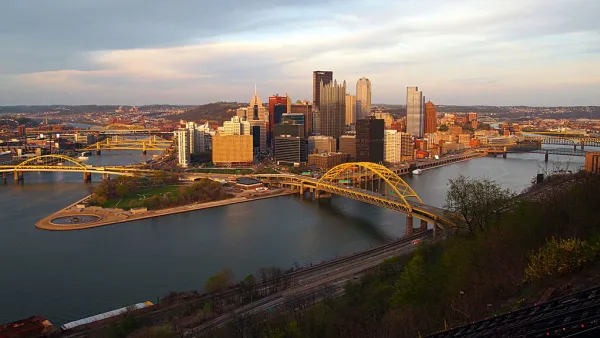
Once Dumping Grounds, Pittsburgh's Rivers Now Eyed by Residents and Developers Alike
Once controlled by "industrial behemoths", Christine H. O'Toole examines the role that Pittsburgh's three rivers - its genius loci - have played in spurring the redevelopment of the city's downtown.
Gentrification Pushes Artists out of LA's Arts District
The arts district in downtown Los Angeles is transforming its industrial buildings into trendy boutiques, restaurants and hotels. The concern is that gentrification will drive out low-paid artists who can no longer afford to live there.
Can One Man Transform a Struggling Chicago Neighborhood?
From education to housing to health, Chicago's Gary Comer, billionaire founder of Lands' End, invested millions into the struggling South Side neighborhood of Pocket Town in a mission to transform it into a beacon of hope for the community.
Dare to Live Outdoors
The old cool: Sealing yourself inside suburban air conditioning. The new cool? According to Howard Blackson, it's the joy to be found outside, connecting with one another and the world we share.
Who Should Pay for Parks?
Philadelphia spends $64 on parks and recreation facilities per resident, one of the lowest totals in the nation. Ryan Briggs uses the city as a lens to examine the growing impact of budget cuts to park systems on their surrounding communities.
San Francisco Debates Tearing Down More Freeways
One of the cities that's led the growing trend in urban freeway removal is considering another tear down, report Phillip Matier and Andrew Ross.
Did Obama Inaugurate D.C.'s 'Heightened Hipness'?
Rachel L. Swarns traces D.C.'s transformation into a younger and livelier city to when a former senator from Illinois moved into a stately mansion on Pennsylvania Avenue, and brought with him urbane tastes and an iPod filled with Nicki Minaj.
10 Innovations Driving America's Cities and States Forward
"America is renewing itself from the bottom up." That is the premise underlying the second annual “Innovations to Watch” list just released by The Brookings Metropolitan Policy Program and The Rockefeller Foundation.
The Tokyo Model: From Post-War Slum to Superpower
In this compelling essay, authors Matias Echanove and Rahul Srivastava take a look at Tokyo's post-war development and explore how lessons learned from its unplanned growth may be useful for other rapidly urbanizing Asian cities today.
The Rise of the Trophy Rental
Renting out luxury homes has become an attractive choice in today's housing market. High-end renters get many of the benefits of owning a home, with greater built-in flexibility, and without the financial risk.
A Model for How to Transform a Cherished Sports Landmark
The decade-long transformation of Toronto's historic Maple Leaf Gardens into a new centerpiece for its neighborhood may serve as a model for one of the trickiest types of adaptive reuse, reports Mark Byrnes.
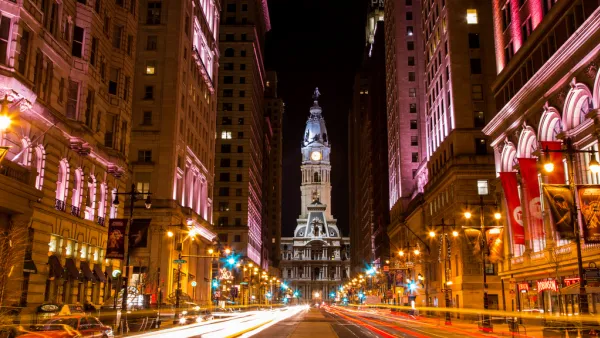
How Light Helped Remake Downtown Philadelphia
Neal Peirce looks at how Philadelphia has used light to help transform the image, and fortunes, of Center City.
Has Europe Reached Its Car Peak?
Declining populations and economic malaise in many European countries are just some of the forces contributing to what most agree seems like a lasting decline in the continent's demand for automobiles.
Social Connections and Resilience
Are we growing more connected, yet further and further apart? And how does this bode for the resilience of the communities we share? Scott Doyon finds promise as of yet unfulfilled.
Imminent Doom as Grand Strategy
What do three-pack-a-day smoking habits, triple-decker cheese burgers and sprawl have in common? They all offer immediate gratification and deferred consequences. But now the bill's coming due. Ben Brown lays out some ways to face the music.
Lessons Learned: Five Principles of People and Place
Employing material gathered for his forthcoming book, Chuck Wolfe argues for layered, historical illustrations of how people relate to built and sociocultural communities around them, and offers 5 principles and companion lessons for placemaking.
Rich Seedlings for the Urban Revolution
Over the next few decades, half of global economic growth is predicted to come from the slums of developing world cities. Gaia Vince believes the key to the coming urban revolution is how these shantytowns evolve.

FREE Course: Walkable City 1: Why Walkability?
After describing his path towards focusing on walkability as the essence of good planning, Jeff Speck marches through his five principal reasons for making more walkable places.
Reinventing Malls: Planning Alchemy—Turning Gray Fields Into Gold
The course focuses on the opportunities and imperatives that shape reinvention of mall sites.

City of Rosemead
Rutgers University, Edward J. Bloustein School of Planning and Public Policy
One Hundred Miles
University of Michigan School for Environment and Sustainability (SEAS)
Hunter College, City University of New York (CUNY)
The Architects Foundation
City of Cambridge
Montrose County
The Pocatello Development Authority









