Community / Economic Development
For Cities, Industrial Land Matters
When the "highest and best use" of city land...isn't.
Black Residents Displaced in Pittsburgh
Rents are on the rise in Pittsburgh, prompting some longtime residents to relocate farther away. Race, as well as class, figures heavily in this narrative.
The Changing Nature of Retail: The Impact of Online Shopping on Cities
As consumers increasingly buy online, technology is changing the shape of our cities, reducing demand for retail space, increasing freight congestion, and leaving parking lots empty.
Tech Sector Makes Inroads in Portland
Low prices and a less frenetic working environment are drawing tech employees to Portland, Oregon. Gentrification may loom, but along with it may come expanded economic opportunities for the city and state.
Op-Ed: Affordability Crisis Dwarfs Affordability Policies
Although the political optics are hard to see, Daniel Hertz argues that policies like inclusionary zoning need to be strengthened by orders of magnitude to have more than a token impact on housing affordability.
A Map of the Most Economically Distressed Communities in the United States
The economic recovery of recent years has not reached all corners of the country—it hasn’t even reached all corners of many cities. A new report plots a new map of the nation's distressed communities.
Op-Ed: San Diego's Draft Downtown Mobility Plan Suffering From Suburban Myopia
San Diego's Draft Downtown Mobility Plan is laudable but consists of basic generalities and vanilla concepts, ignoring how an urban environment functions, writes Jimmy Parker, former president of the city's most urban business district.
Friday Eye Candy: Dallas, Transformed Into Poetry
Dallas is a subject in a visual experiment titled "A City is a Poem."
Detroit's Business Community Ties Its Fate to Detroit's Neighborhoods
The Detroit Regional Chamber made an explicit show of solidarity with the concerns of neighborhood revitalization in the many neighborhoods of the city.
The United States of Startup Accelerators
The Brookings Institution mapped the proliferation of startup accelerators—an increasingly popular tool for economic growth.
Smart Design = Smart Policy? Not So Fast
After a few decades watching—and sometimes helping—great ideas die of overexposure to reality, I'm convinced it's not enough to just listen to folks you're hoping to help. You have to make something happen. A well-conceived charrette helps.
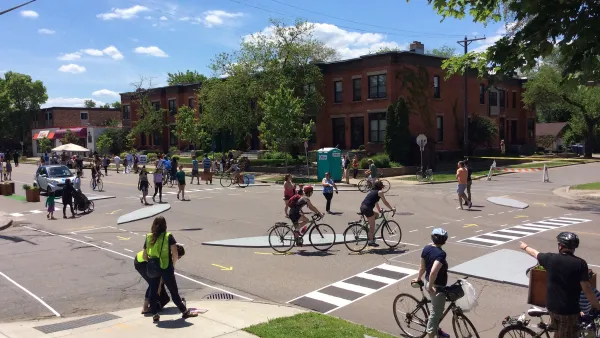
DIY Urbanism and Top-Down Planning
Though projects tend to be hyper-local and temporary, Do It Yourself, Tactical, or Guerrilla Urbanism is an endorsement of the top-down planning model, rather than a repudiation.
A Failing Anchor Sinks All Mall Businesses
The big anchor businesses of malls are bleeding business and closing stores, dragging the rest of the mall business down with them.
Loan Program Provides Gentrification Defense Near Chicago's 606 Bike Trail
That beautiful new bike lane, known as the 606, in Chicago has brought along with it local concerns about gentrification. The city and a local non-profit have teamed up to create a loan program to help current residents stay ahead of the curve.
'Rust Belt Riders' Grow New Composting Service in Cleveland
Waste management and composting take an entrepreneurial twist through Cleveland millennials' burgeoning home-grown business.
9 Ways to Ruin a Community Meeting
An article in CityLab says organizers and facilitators should avoid a few simple mistakes to help improve community meetings.
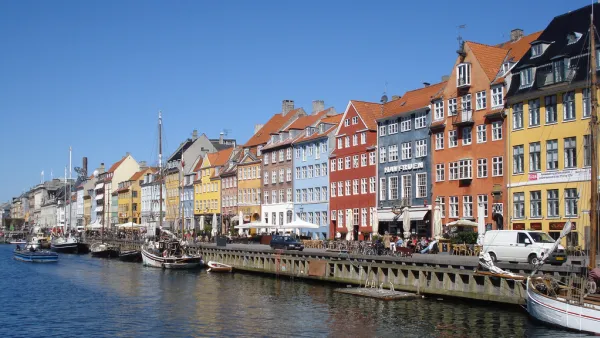
Compromise and an Engaged Public: Lessons From Copenhagen
Copenhagen is often cited as the world’s most livable city—a city characterized by bicycles and shared open spaces. But the road to get there has required compromise among politicians and an active and engaged community.
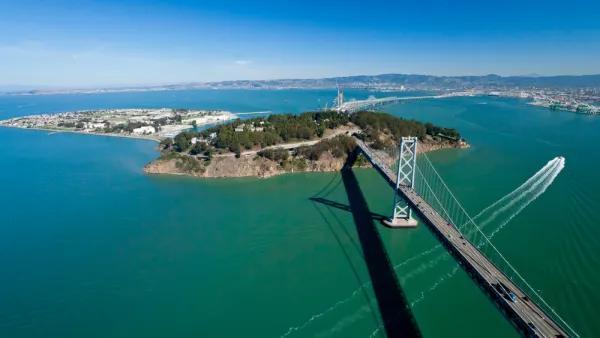
The Lost Art of Great Infrastructure in America
Writing in the New York Times, Allison Arieff asks what happened to the great works of public infrastructure from years past that stand as today's monuments to America’s achievements.
Lots of Positive Signs for Pittsburgh in 2016
Good news for Pittsburgh, which is now officially reversing decades of Rust Belt trends.
Program Protects School Diversity in Gentrifying Neighborhoods
The benefits of diverse classroom settings are well established. How then to protect diversity in schools when the surrounding neighborhood is quickly becoming homogenous?

FREE Course: Walkable City 1: Why Walkability?
After describing his path towards focusing on walkability as the essence of good planning, Jeff Speck marches through his five principal reasons for making more walkable places.
Reinventing Malls: Planning Alchemy—Turning Gray Fields Into Gold
The course focuses on the opportunities and imperatives that shape reinvention of mall sites.

KFH Group Inc.
Greater Baltimore Committee
Eagle County Government
The Architects Foundation
University of Cincinnati Online
The Pocatello Development Authority
The Urban Renewal Agency of the City of Pocatello