When the "highest and best use" of city land...isn't.


In a recent blog post, Tarry Hum, a professor of urban studies at Queens College, profiled the failure of the De Blasio Administration to preserve prime industrial spaces in the outer boroughs of New York City. In particular, she noted the failure of the city's industrial zoning regulations to limit industrial conversion to non-industrial uses. While we often assume the combination of mass deindustrialization and high land costs preclude industrial employment, many major cities and metro areas remain centers of industrial production. Further, as Dr. Hum points out in her blog post, manufacturing remains one of the key pathways for poorer immigrant communities to claim a spot in many urban economies.
But until recently the question of industrial land provision and preservation has been largely ignored by economic development researchers and professionals. Generally, both land-use and economic development planners have generally treated industrial land as drags on a city's tax rolls and near obsolete given an assumption of total domestic de-industrialization. But more critical economic development planners have started to question these assumptions.
Read the full story: For Cities, Industrial Land Matters

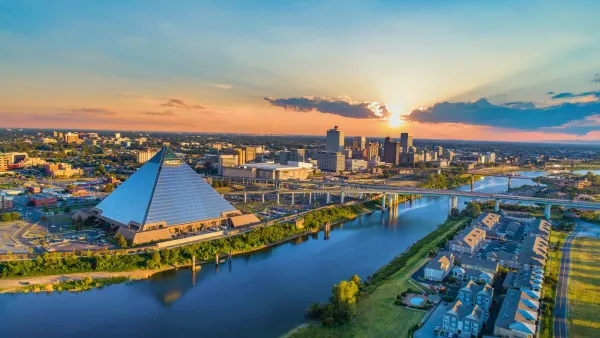
15 US cities and their global namesakes
Hundreds of cities around the United States are named after other places. We tour a few of them.
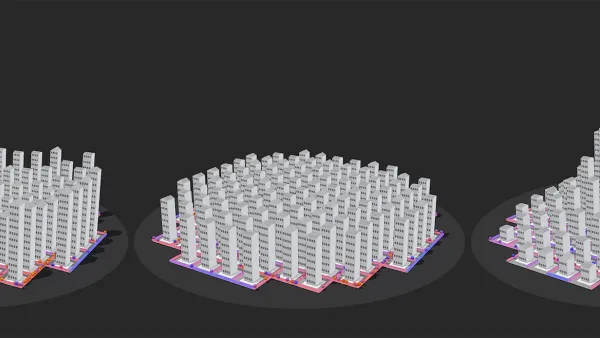
New study visualizes how city shapes impact mobility
Whether circular or linear, the shape and layout of cities affects how their residents get around.

Cincinnati upzoning plan paves way for revitalized waterfront district
The city hopes to kickstart new development on five vacant lots in the riverfront entertainment district.

Planetizen Federal Action Tracker
A weekly monitor of how Trump’s orders and actions are impacting planners and planning in America.

Amtrak, CN end decades-long dispute with eight-year agreement
The new operating agreement establishes an updated framework for the companies to work together, including processes to resolve disputes.

Northwest rail fans eager for Sept. 30 debut of Amtrak’s Airo fleet
Get ready for that new train smell and more seats. But they won’t go faster or run more frequently on the Cascades route in Washington and Oregon.

LAX SkyLink opening delayed again, contractor won’t commit to new deadline
The project was supposed to open its doors to the public in 2023.

Caltrain may slash over one-third of its stations
If Bay Area voters reject two transit tax measures, Caltrain, BART and AC Transit will see steep service cuts.

A 'dangerous' precedent: North Carolina successfully pressures communities into voting for toll roads
Two mayors resigned from the Charlotte Regional Transportation Planning Organization after it voted in favor of the toll roads.

FREE Course: Walkable City 1: Why Walkability?
After describing his path towards focusing on walkability as the essence of good planning, Jeff Speck marches through his five principal reasons for making more walkable places.
Reinventing Malls: Planning Alchemy—Turning Gray Fields Into Gold
The course focuses on the opportunities and imperatives that shape reinvention of mall sites.

City of Thousand Oaks
City of Wisconsin Rapids
Harvard University Graduate School of Design
The Architects Foundation
University of Cincinnati Online
The Pocatello Development Authority
The Urban Renewal Agency of the City of Pocatello