United States
Social Mobility in America: Reality or Dream?
Richard Reeves explains the factors that limit or assist social mobility for people born into the lowest economic quintile in American society.
Why the Federal Government Should Require Minimum Service Standards for Rail
According to Yonah Freemark, there's folly in the way the federal government has been funding rail transit projects but failing to set standards for minimum service—a key indicator of transit ridership success.
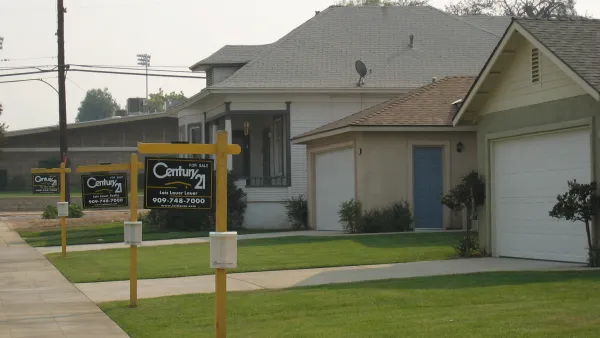
White Flight Patterns Continue Within the Suburbs
According to a recent study, white flight proliferates even in the suburbs, as suburbs attract large numbers of middle-class minority residents and white residents flee so-called 'ethnoburbs'.
Bloomberg Offers $1 Million Annually for 'Innovation Delivery Teams'
Former New York City Mayor Michael Bloomberg began a new program via Bloomberg Philanthropies to invest $45 million for shaking up city halls.
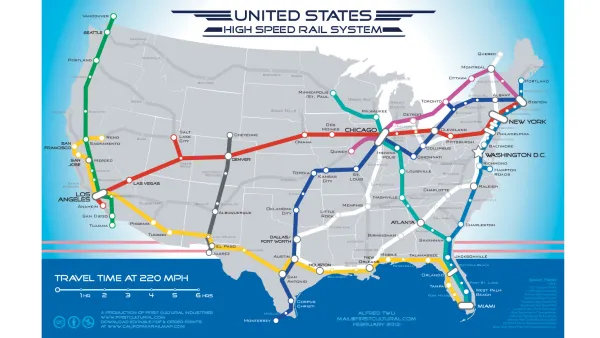
How Can Rail Complete its Comeback in the United States?
Deepa Sanyal writes the second installment of a series devoted to the idea of "Rail Redux"—this time examining the question of what components are necessary to drive a "true rail resurgence."
Arriving in Texas: the Shinkansen Bullet Train
The Houston to Dallas high speed rail train will be built with the cooperation of Japan's Central Railway, a longtime successful and profitable operator of Shinkansen bullet train lines. Securing the private financing is key to the project.
Breaking Down the Demographics of Bicycle Commuters
A new report from the League of American Bicyclists discussed equity in bicycle commuting and infrastructure, causing a flurry of discussion throughout the Internet.
USDOT Announces Proposed Rulemaking for Vehicle-to-Vehicle Communications
USDOT's National Highway Traffic Safety Administration (NHTSA) yesterday publicized an advance notice of proposed rulemaking (ANPRM) and a supporting comprehensive research report on cutting edge V2V communications technology.

Kotkin on Cities: What the Hipsters Want is Not What the People Want
Joel Kotkin checks in with a dissenting take on the politics and demographics behind the urban revival.
The Starchitect Debate Continues: Locatecture, Public Art, and Branding
James S. Russell, architecture and design critic, pitches his two cents into the starchitect debate, arguing for locatecture and sensitivity to place.
Responding to Distorted Criticisms of the President's High Speed Rail Program
High-speed rail is not an $11-billion failure, as a recent New York Times article asserts, writes Time's Michael Grunwald. A more appropriate name would be "higher speed" rail as outside of the California project, all are upgrades of Amtrak lines.
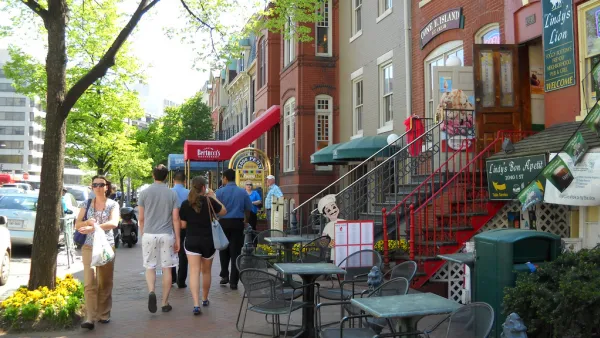
A Collection of Benefits for 'Walkable, Compact, Diverse' Neighborhoods
A meta-analysis published in Housing Policy Debate finds that extensive studies in recent years support positive claims about walkable neighborhoods.
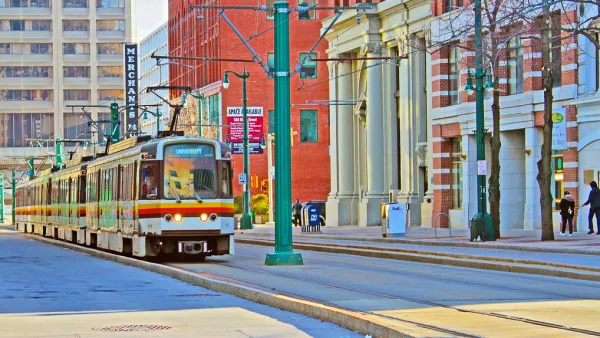
Editorial: Streetcar Funding Better Spent Elsewhere
The Economist introduces the concept of the streetcar in America—its history and its recent revival—before laying the arguments in support of, and against, the role of streetcars in urban revival.
Domestic Migration, Visualized
The New York Times recently visualized domestic migration and population makeup for each state in the United States from 1900 until today using Census data.
U.S. Bike Share: 23 Million Rides; Zero Fatalities
Despite all the dire—sometimes hysterical—warnings about the safety risks of bike share, the country's bike share systems boast a flawless fatality record. Compare that record with, for instance, driving or riding non-bike-share bikes.
Design By the Blind, for the Blind
Lamar Anderson tells the story of architect Chris Downey, who lost his eyesight six years ago but has persevered in his career first as a consultant and then as the lead architect for the new Independent Living Resource Center of San Francisco.
Activists Advocate for Community Land Trusts
“We were drawn to CLTs not just as a technical model, but because they provide the opportunity for residents—including renters—to actually have control over their homes and communities,” says Tony Romano, the Right to the City's organizing director.
America's Energy Bust
Unlike Texas and N.D, Alaska's oil production peaked in 1988 and continues to decline. An upcoming referendum on oil taxes threatens to reduce energy investment. The North Slope pipeline is carrying such low oil volumes to endanger its safety.
Good Design Sparks Rural Community Development
Now more than ever, creative professionals are turning their attention to community development. While this trend toward good design is exciting, it’s harder to find in rural areas. Here are a few ideas from the forefront of rural design.
7 Essential Books on the Local Food Movement
Marianne Peters lists seven "classic, must-read" books about the evolving role of locally grown and sold food in the American economy.

FREE Course: Walkable City 1: Why Walkability?
After describing his path towards focusing on walkability as the essence of good planning, Jeff Speck marches through his five principal reasons for making more walkable places.
Reinventing Malls: Planning Alchemy—Turning Gray Fields Into Gold
The course focuses on the opportunities and imperatives that shape reinvention of mall sites.

One Hundred Miles
County of Mendocino
planning NEXT
The Architects Foundation
University of Cincinnati Online
Montrose County
Northern Illinois Transit Authority (NITA)
The Pocatello Development Authority









