Deepa Sanyal writes the second installment of a series devoted to the idea of "Rail Redux"—this time examining the question of what components are necessary to drive a "true rail resurgence."


Deepa Sanyal poses the question: "What factors will drive a true rail resurgence?" before listing four critical initiatives to achieve that goal. The list includes recommendations to build a robust train network (describing the state of Amtrak as "skeletal at best"), improving air-rail connectivity, and building public and private high speed rail. Sanyal also includes more detail on each of those points.
The first installment of the series examined the value of rail stations to communities.
Read the full story: What Factors Will Drive a True Rail Resurgence?
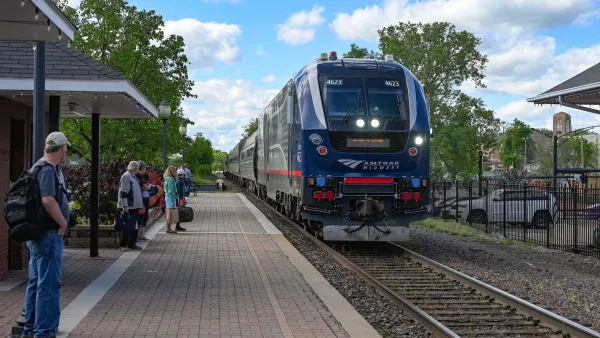
FRA Wants to Split Amtrak in 3, Sparking Privatization Fears
A proposal to restructure the rail agency could streamline accountability — or add more bureaucracy.
What the US Intercity Rail System Could Look Like
An FRA study shows how new Amtrak lines could connect tens of millions more Americans to rail travel.

Gateway Tunnel Project Ready to Move Forward
The project is primarily funded through federal agencies and will improve a key link between New Jersey and New York City.

Planetizen Federal Action Tracker
A weekly monitor of how Trump’s orders and actions are impacting planners and planning in America.

Eastern Nebraska is running out of electricity
Data centers and electrification are straining eastern Nebraska’s grid, throttling economic development.
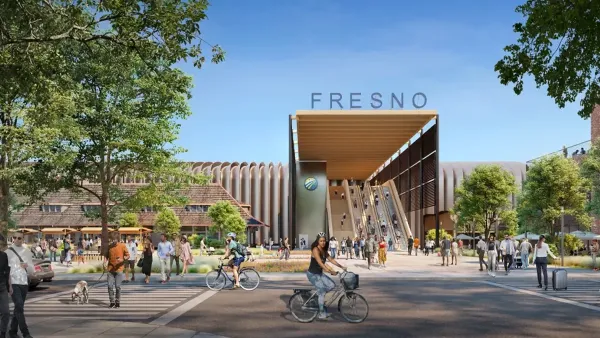
California High-Speed Rail Authority picks trainset manufacturer
The California High-Speed Rail Authority aims to start servicing passengers by 2033.

States are counting on battery farms. Some towns don’t want them.
While fire safety has improved, some communities are still wary.

Dallas releases zoning code overhaul to officials
The drafted overhaul is over 400 pages long.

NYC renovations for dangerous, ‘mercilessly crammed’ street delayed until 2027
Construction was supposed to begin this fall.

FREE Course: Walkable City 1: Why Walkability?
After describing his path towards focusing on walkability as the essence of good planning, Jeff Speck marches through his five principal reasons for making more walkable places.
Reinventing Malls: Planning Alchemy—Turning Gray Fields Into Gold
The course focuses on the opportunities and imperatives that shape reinvention of mall sites.

City of Rosemead
Rutgers University, Edward J. Bloustein School of Planning and Public Policy
One Hundred Miles
University of Michigan School for Environment and Sustainability (SEAS)
Hunter College, City University of New York (CUNY)
The Architects Foundation
City of Cambridge
The Pocatello Development Authority
The Urban Renewal Agency of the City of Pocatello