United States
'4Liters Challenge' Addresses Water Poverty and Conservation
As opposed to the wasteful "Ice Bucket Challenge," 4Liters challenges individuals to experience water poverty by limiting themselves to four liters of water for 24 hours, about 1 percent of the amount an average American uses.
Survey Illuminates American Mayors' Priorities
A new study conducted by former Boston Mayor Tom Menino and the Initiative on Cities at Boston University surveyed 70 mayors on their challenges, policy agendas, and relationships.
Like the Old Days: Average Fuel Economy Declines in the United States
A recent study at the University of Michigan Transportation Research Institute showed that September saw the largest decline in average fuel economy, from 25.8 mpg to 25.3 mpg, since December 2011.
Study Compares Job Access by Transit in 46 U.S. Metropolitan Areas
The Center for Transportation Studies at the University of Minnesota has released the Access Across America: Transit 2014 report.
A New Buzzword for Changing Cities: 'Trust'
Christopher Swope writes of the emergence of the word "trust" in the buzzy lexicon of urbanism.
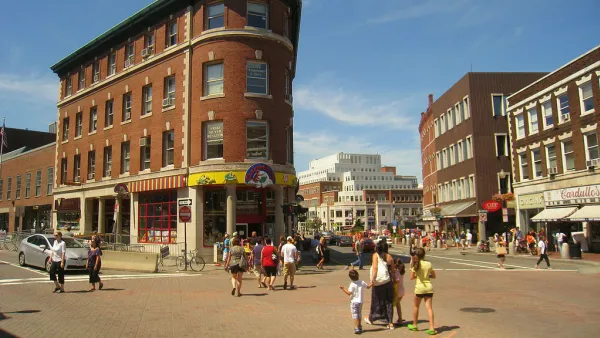
On the Importance of the Human Scale in Walkable Cities
Instead of density for density's sake (or for smart growth's sake), F. Kaid Benfield argues that the human scale is the key to walkable smart growth.
Millennials and Gen Xers Commuting Less by Car
Following up on earlier reports about the latest commuting data from the U.S. Census 2013 American Community Survey, Joseph Kane and Adie Tomer find different trends in commute choice between age groups.
The Best Country in the World to Grow Old
The country most friendly to electric vehicles is also the country most supportive of senior citizens, not that there's a relationship. After Norway, Sweden is the best place to grow old, according to the just released Global AgeWatch Index.
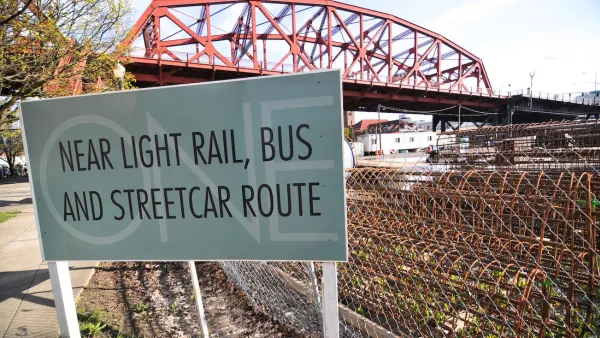
Report: Transit Oriented Development Leads the Market in Major Metros
A report released last week by Cushman & Wakefield has won a lot of attention from media outlets covering large-scale development market trends. Among the report's findings: growing cities need to better support transit-oriented development.
More Evidence for the 'New Donut' Model of Metropolitan Areas
Spatial analysis of income and education over time in U.S cities provides further evidence for the “New Donut” theory of the city. Wealthier and more educated residents are more likely to move to the urban core or exurbs than to inner-ring suburbs.
Ranking the Best and Worst Cities to Live and Work with Special Needs
WalletHub recently released the "2014 Best & Worst Cities for People with Disabilities" to highlight the economic power of providing employment opportunities and livable communities for people with special needs.
National Institute for Transportation and Communities Releases Complete Streets Design Guide
Principal investigator Marc Schlossberg and co-investigator John Rowell, of the University of Oregon, have complete a guide to help communities of all varieties realize the benefits of complete streets.
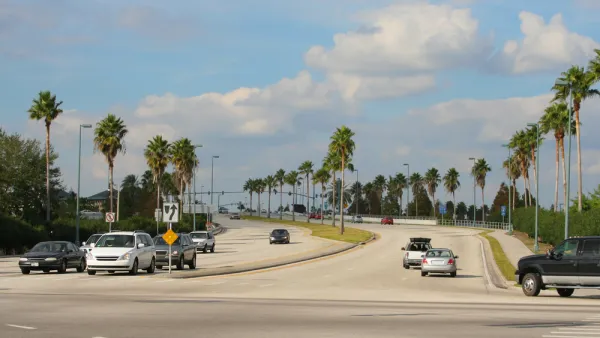
Traffic Safety Silver Bullet: Prohibit the 12-Foot Traffic Lane
Jeff Speck, author of Walkable City, argues that reducing the width of traffic lanes would be a panacea for the disastrous public health outcomes of traffic safety.
Political Winds Could End 'Black=Urban'
Pete Saunders examines the urban base of African-American politics since the Civil Rights and how recent trends in urbanization will require a restructuring of political agendas in cities all over the country.
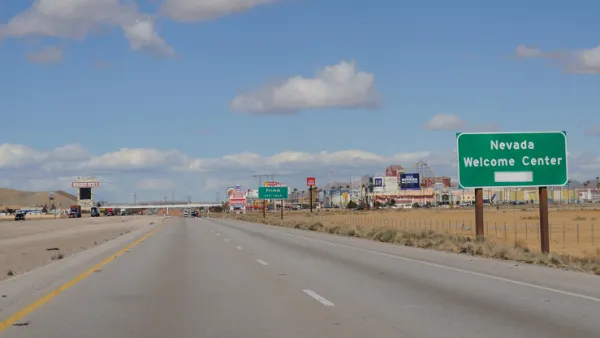
Migration Trends Don't Support the 'Golden Age' of Cities Narrative
"Who's Moving to the Cities, Who Isn't" suggest that the number of Americans selling the "Golden Age" cities narrative is greater than the number of Americans buying into it.
Study: Domestic Responsibilities Contributing to Biking's Gender Gap
Answering the question of why more women in the United States don't bike, researchers find that infrastructure and design only explains some of the gender gap. Another obstacle for women: a higher share of chores and child-supporting car trips.
A Call for Cities to Help Veterans through Homelessness and PTSD
As noted by the Department of Veteran Affairs, even one veteran without safe and stable housing is too many. Ron Littlefield calls for cities to move beyond studies and seek ways to aid returned veterans.
Wyoming Reports Road Improvements From 10-Cent Gas Tax Increase
Wyoming legislators passed its gas tax hike in Feb. 2013, an incredible 71 percent increase when the state then had the second to lowest tax. AASHTO reports that the WYDOT has already completed 12 projects with the additional revenue.
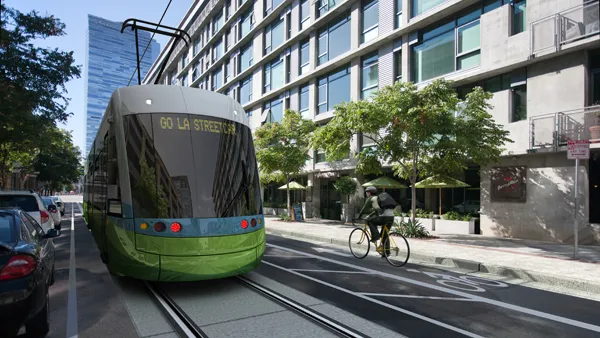
The Great Streetcar Debate
David Alpert and Jarrett Walker go head to head debating the merit of streetcar systems in many United States cities and suburbs and their efficiency at creating urban, walkable communities.
It's Official: No More 'Paper or Plastic' in California
If you forget to bring a bag, pay a dime for either a paper or reusable plastic bag. Single-use plastic bags will disappear from grocery stores and pharmacies on July 1, convenience and liquor stores a year later. A composting bill was also signed.

FREE Course: Walkable City 1: Why Walkability?
After describing his path towards focusing on walkability as the essence of good planning, Jeff Speck marches through his five principal reasons for making more walkable places.
Reinventing Malls: Planning Alchemy—Turning Gray Fields Into Gold
The course focuses on the opportunities and imperatives that shape reinvention of mall sites.

One Hundred Miles
County of Mendocino
planning NEXT
The Architects Foundation
University of Cincinnati Online
Montrose County
Northern Illinois Transit Authority (NITA)
The Pocatello Development Authority









