Urban Development

Mobile Home Residents Face Rising Displacement Threat
As investors continue to eye mobile home parks as a profitable opportunity, current residents, many elderly and low-income, face steep rent hikes and possible eviction.
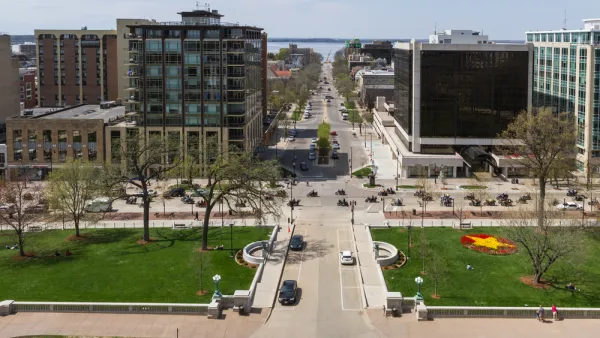
Wisconsin Coalition Releases Housing Affordability Toolkit
The guide outlines zoning reforms that can encourage affordable housing construction and increase density and walkability.
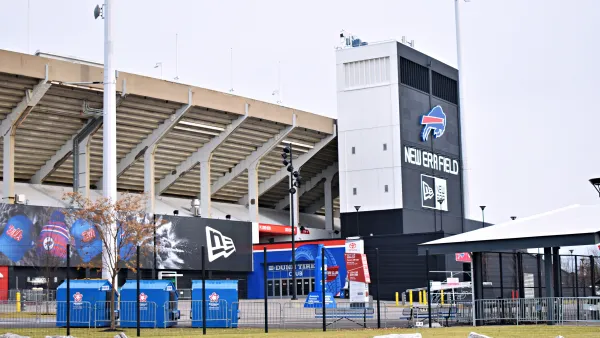
Buffalo's New NFL Stadium Paid for by $850 Million in Public Funding
The total estimated cost of the NFL stadium planned for the Buffalo Bills in Orchard Park, south of Buffalo, New York, comes to $1.4 billion—including $850 million in public funding.

Orlando Rail Driving Transit-Oriented Development
Central Florida's SunRail commuter train is spurring dozens of transit-oriented housing projects near its stations.
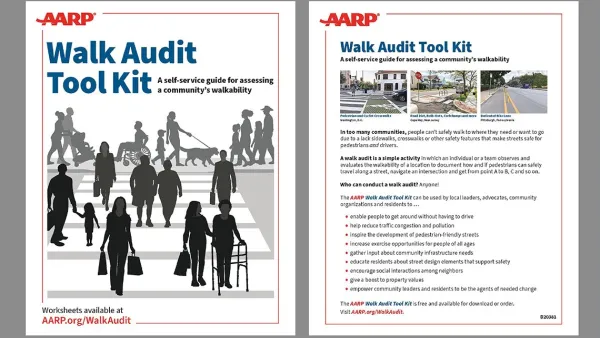
Free From AARP: Walk Audit Tool Kit and Worksheets
AARP recently published an all new, 28-page, image-filled guide—and 11 downloadable worksheets—for how to assess and report on the safety and walkability of a street, intersection, or neighborhood.

Smarter Planning for Rural Communities
Many rural communities face growing demographic and economic challenges. Smart planning can help anticipate and respond to these problems, allowing communities to take control of their destinies.

The Political Compass of Housing and Urbanism
The "political compass" idea can easily be applied to explain differing philosophies about urban development.

How a Feminist Perspective Can Make Cities Better for Everyone
An argument for embedding a feminist analysis into planning practice.

What Is a Density Bonus?
A density bonus offers development permissions beyond what's allowed by a zoning code as an incentive for developers to contribute to desired policy goals. Density bonus programs can offer numerous forms of incentives, and can be used as an incentive to address a variety of policy goals.

Another Silicon Valley Town Tries To Sidestep State Density Law
Palo Alto could designate more than one hundred properties as historic in an attempt to prevent lot splitting permitted under a new state law designed to lightly increase residential density.

The Rise of the Megaregion
A new book outlines the benefits of public investment at the regional scale.
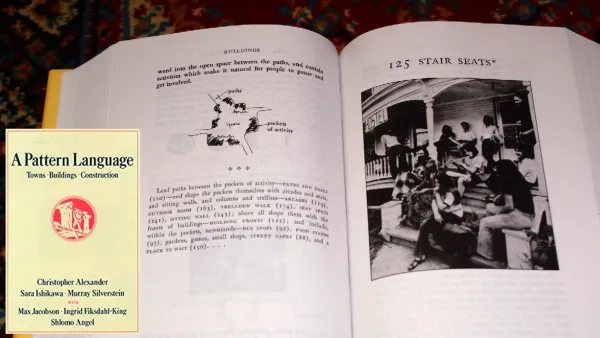
Why Christopher Alexander Still Matters
The author of "A Pattern Language" and "Notes on the Synthesis of Form" had an outsize influence far beyond architecture and urbanism—and still does.

Booming Arizona Must Confront its Water Problem
Even as more people and companies flock to the state for its climate and economic opportunities, Arizona's water supplies are facing historic shortages.

Easing the Burden of High Gas and Housing Costs for Low-Income Households
Low-income families suffer most from dramatic spikes in housing and transportation costs, but governments can soften the impact through a series of actions.

Proposed 'Fair Share' Would Assess and Allocate Affordable Housing in Connecticut
The state of Connecticut is looking to take a more aggressive role in allocating affordable housing development requirements around the state.

'Proptech' Companies Target Single-Family Rental Market
Startups aimed at streamlining the house-flipping process are seeking out rental property owners as the popularity of single-family rentals continues to grow.

Urban Highway Removal: 4 Considerations for Reknitting a City’s Fabric
Making the right decisions to create a positive urban legacy.

'Micro-Apartments' Break Ground in East Austin
Averaging less than 400 square feet per unit, the Sixth and Chicon development is a new take on urban density.
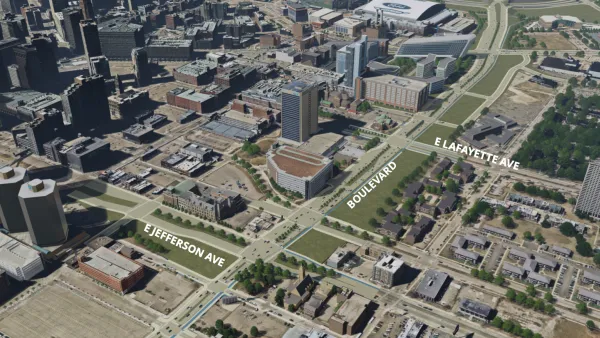
Detroit Plans Freeway Removal To Spur Economic Development
City and state officials hope the proposal to turn part of I-375 into a walkable boulevard will help bring back businesses and economic vitality to the area.

Christopher Alexander, Influential Author of "A Pattern Language," Passes Away at 85
Christopher Alexander died on March 17, leaving behind a towering legacy of influence on the fields of architecture, planning, and urban design.

FREE Course: Walkable City 1: Why Walkability?
After describing his path towards focusing on walkability as the essence of good planning, Jeff Speck marches through his five principal reasons for making more walkable places.
Reinventing Malls: Planning Alchemy—Turning Gray Fields Into Gold
The course focuses on the opportunities and imperatives that shape reinvention of mall sites.

City of Rosemead
Rutgers University, Edward J. Bloustein School of Planning and Public Policy
One Hundred Miles
University of Michigan School for Environment and Sustainability (SEAS)
Hunter College, City University of New York (CUNY)
The Architects Foundation
City of Cambridge
Montrose County
The Pocatello Development Authority









