Technology
The New Era of 'Cities 3.0': Just Add Infrastructure
Any vision for a "City 3.0"—or an untethered, technology-enabled city—is dependent on next generation infrastructure for Internet, energy, water, and more.

How Self-Driving Cars Can (and Should) Improve Transit
Comments on the proceedings of the Automated Vehicles Symposium (San Francisco, July 14-18, 2014), where participants addressed the many transportation and land use implications of an automated future.
Out of the Frying Pan and into the Fire: Summer Temperatures in 2100
A new interactive map titled "1,001 Blistering Future Summers" displays predicted daytime summer heat temperatures for 1,001 cities in the United States for the year 2100.
Mapping Drone No-Fly Zones
While the FAA sorts out regulations for commercial drone flights in the United States, cities, states, and other groups have already restricted the flight of drones. Mapbox is working to compile a comprehensive map of prohibited air space.
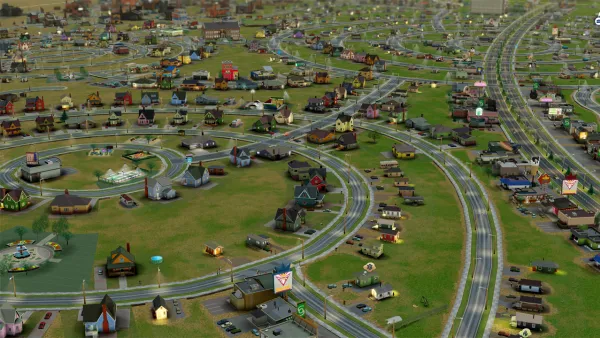
Gaming for Planners—More than SimCity
At the Serious Gaming workshop held in South Africa, game-maker Tygron showcased their game "The Climategame" and examined game play for lessons in how planners might improve their professional practice.
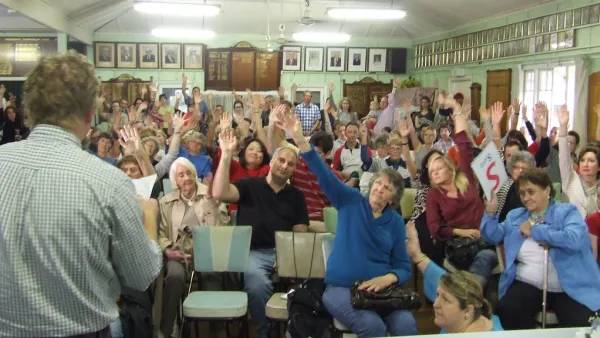
How Civic Engagement Platforms Can Bring Back the Expertise of Urban Planners
The increasing use of online civic engagement platforms offers a chance for planners to improve the planning process—that is, if they take full advantage of the opportunities presented by the new technology to showcase their expertise.
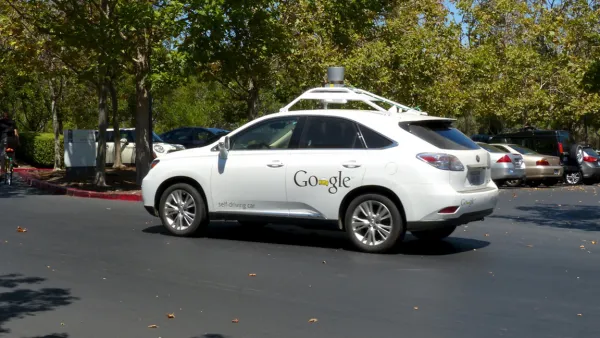
Concerns Raised about Sprawl, Public Safety Implications of Autonomous Vehicles
A pair of articles sounds separate warnings about what a future of autonomous vehicles will mean for law enforcement and fuel consumption. The warnings are far from the utopian ideal that many desire for the technology.
Speed Cameras: Working in Chicago; Needed in Philadelphia
In Chicago, speed cameras are proving effective at reducing speeds; in Philadelphia, a police commissioner is lobbying the state to allow the implementation of the cameras.
What's Missed When Taking the Scenic Route?
An app that plots the most beautiful route across cities made news earlier this month, but one commenter worries about how taking the more scenic route could make it harder to improve quality of life in the "less-than-scenic" sections of cities.
World's Largest Carbon Capture and Storage Project Breaks Ground in Texas
Construction began July 16 on the Petra Nova project, 27 miles from Houston. President Obama and many climate experts are banking on CCS to mitigate carbon emissions from the world's largest source of carbon emissions: coal burning power plants.
Time to Find a Better Word than 'Sharing' for the New Economy
Abigail Zenner writes of the need to find new nomenclature, instead of "sharing," for transportation network companies like Uber, or sharing economy darlings like Airbnb.
New Zoning Query App Answers the Question: 'Where Can I Open My Business?'
A new app called ZoningCheck provides users a responsive query function. In addition to the obvious layer of bureaucratic interface saved by the process, the app also makes a compelling case for the benefits of open municipal codes.
How Apps Can Help Track How Angelenos Move
In a review of the iPhone app Human, Los Angeles County planner Clement Lau examines how the daily movement of residents can be measured.
Post-Car? Helsinki's Plans for a Tech-Enabled Mobility Network
Helsinki, capital of Finland's, is working to create a "mobility on demand" system that integrates shared and public transit in a single payment network. The idea is that with such a system in place, residents would no longer need cars.
An App that Calculates the Most Beautiful Route
New in flaneur-enabling technology: a team of intrepid aesthetes in Barcelona is working on a new app that would advance GPS mapping tools by providing the most beautiful route to a destination, rather than the shortest or least congested route.
Op-Ed: Comprehensive Plan Needed to Replace Dallas' Aging Traffic Lights
An editorial calls for a comprehensive plan to address Dallas' growing need to overhaul its streetlights—80 percent of which are now older than their recommended 25-year life span.
Holy Autonomous Bicycles Batman!
Recent reports reveal that a Chinese Internet search company known as Baidu is developing a bicycle that will ride itself. The technology could be game changer in Asia—China, for instance, has 551 million bike riders.
Benefits of Uber in Philadelphia: Reduced Drunk Driving
While much of the concern of how to regulate transportation network companies like Uber, Lyft, and Sidecar comes down to questions about safety and access, recent findings show that the apps have reduced DUI arrests in the City of Brotherly Love.
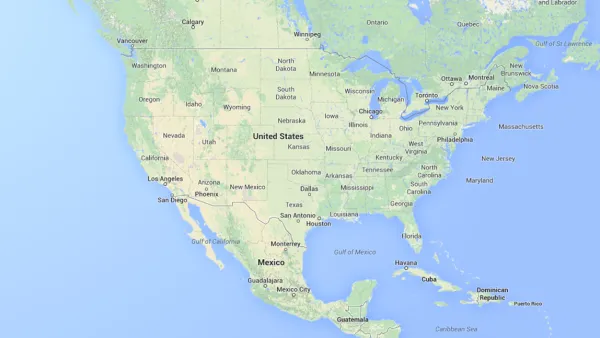
Friday Funday: New Google Maps Game Tests Your Geography Knowledge
If you're obsessed with trivia and maps, prepare to lose some hours.
Transportation Network Companies Struggling with ADA Compliance
Ted Trautman provides a thorough investigation of the actions (or lack thereof) of transportation network companies to provide access for customers with special needs.

FREE Course: Walkable City 1: Why Walkability?
After describing his path towards focusing on walkability as the essence of good planning, Jeff Speck marches through his five principal reasons for making more walkable places.
Reinventing Malls: Planning Alchemy—Turning Gray Fields Into Gold
The course focuses on the opportunities and imperatives that shape reinvention of mall sites.

City of Rosemead
Rutgers University, Edward J. Bloustein School of Planning and Public Policy
One Hundred Miles
University of Michigan School for Environment and Sustainability (SEAS)
Hunter College, City University of New York (CUNY)
The Architects Foundation
City of Cambridge
Montrose County
The Pocatello Development Authority









