Mode Share
Downtown Seattle's Workforce Abandoning Solo Car Commutes
Downtown Seattle is doing something right to get drivers out of cars: a recent survey reveals that fewer and fewer commuters are driving alone, and the fastest growing modes for commuters are of the non-motorized variety.
Website Opens Bay Area Transportation Data to the Masses
The Metropolitan Transportation Commission—the Bay Area's regional transportation planning agency—recently did fans of data and mapping a huge favor and launched a website called Vital Signs.
Ten Provocative Ideas for Bicycling Architecture
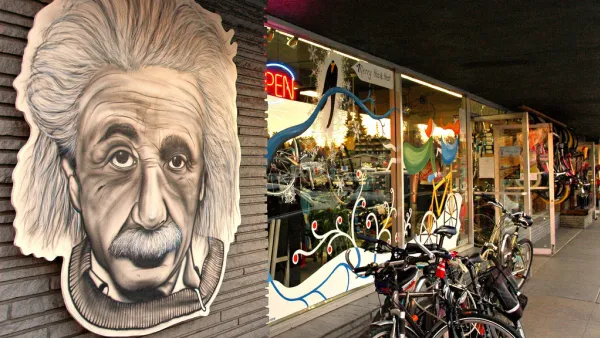
Arch Daily presents the ten major ideas to emerge from a "design provocation" for big ideas to push trip share of bike in New York City closer to, and even beyond, the levels of Copenhagen.
Top Ten Car-Independent Neighborhoods
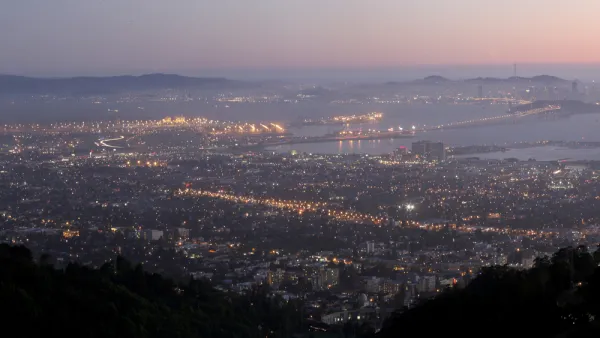
City Clock prepared two lists of neighborhoods with the most commute trips made without cars (for every city BUT New York City). One list ranks university neighborhoods, and the other non-university neighborhoods.
Investment in Infrastructure Leads to Jump in S.F. Cyclists
The San Francisco Municipal Transportation Agency's annual bike count reveals that cycling has increased 14 percent in the city since 2011 and 96 percent since 2006.
Bad Habits Are Hard to Break for US Metro Commuters
Despite significant investment in transit infrastructure, and renewed interest in downtowns and walkable neighborhoods, new data shows that gains in transit commute mode share have been hard to come by in America’s largest cities, says Kaid Benfield.
People Report Walking or Riding Transit More Than They Actually Do
Alan Pisarski says despite reports of growth in walking, biking, carpooling and transit, very little has changed in the U.S., and people will always over-report their good intentions.
Philadelphia Leads the Largest Cities in America for Bicycle Mode Share
A new report from The Bicycle Coalition of Greater Philadelphia shows that Philadelphia's bicycle mode share is more than double that of Chicago's (the big city with the second-greatest share).

FREE Course: Walkable City 1: Why Walkability?
After describing his path towards focusing on walkability as the essence of good planning, Jeff Speck marches through his five principal reasons for making more walkable places.
Reinventing Malls: Planning Alchemy—Turning Gray Fields Into Gold
The course focuses on the opportunities and imperatives that shape reinvention of mall sites.

City of Wisconsin Rapids
Harvard University Graduate School of Design
KFH Group Inc.
The Architects Foundation
University of Cincinnati Online
The Pocatello Development Authority
The Urban Renewal Agency of the City of Pocatello