Federal Railroad Administration
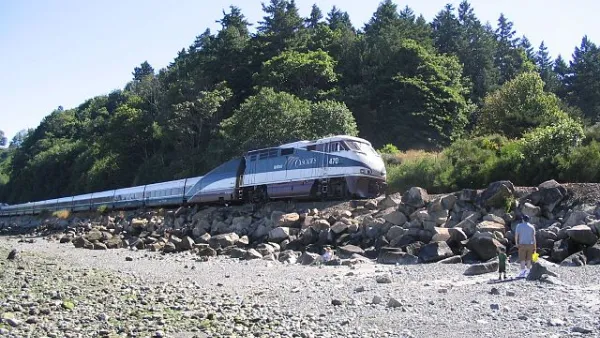
Focus on Positive Train Control after Amtrak Train 501 Derails in Washington
Excessive speed is thought to be the cause of the deadly derailment on Dec. 18. Positive train control, which likely would have slowed down the train, was installed on the tracks and locomotive but was not yet operational.
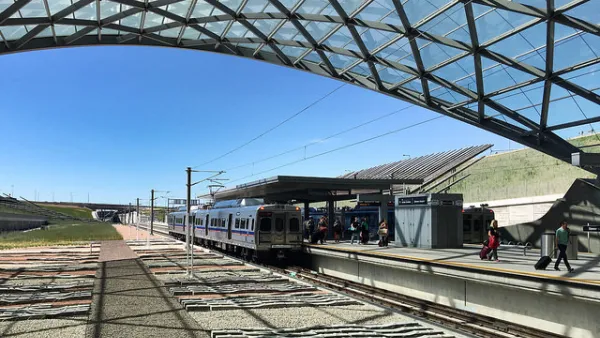
Problems on Denver's New Commuter Rail Lines Threaten Shutdown by Federal Regulators
The problems caused by crossing gates for the new A and B Lines are so serious that the Federal Railroad Administration had threatened to close both lines on Nov. 5. They granted the Regional Transit District a 90-day waiver.
Amtrak Receives $2.45 Billion Federally Secured Loan for New Acela Trains
Amtrak will replace, rather than overhaul, aging Acela trains with new, 186-mph trains from French manufacturer, Alstom, though they won't exceed 160 mph. The agreement was announced Friday by VP Joe Biden at Biden Station, Wilmington, Del.
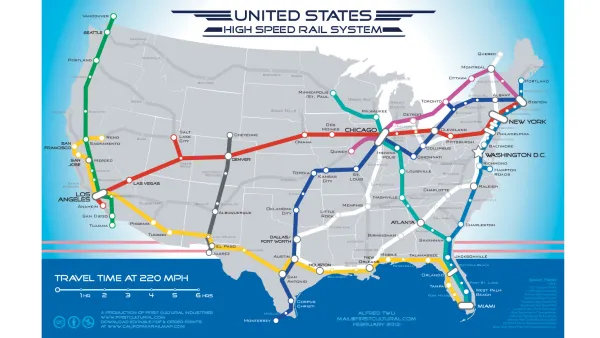
Three Reasons Why High-Speed Rail Has Not Caught On in U.S.
If you guessed cheap gas, love of automobiles, or preference for air travel, you are correct, but those fall under one reason, "lack of demand." Two additional reasons are offered in this article for the construction industry.
Train Connection from Boston to Montreal Leaves the Station
An early approval from the Federal Railroad Administration has set the Northern New England Intercity Rail Initiative in motion.
NTSB Makes Urgent Recommendations to Address Crude-by-Rail Explosions
The National Transportation Safety Board called on federal regulators on Jan. 23 to approve several measures in light of a rash of oil train derailments and crude oil explosions as did their Canadian counterparts, the Transportation Safety Board.
Why are Crude Oil Trains Exploding Across North America?
Crude oil may be flammable, but until recently was not thought to be explosive. However, three recent oil train explosions all involving crude oil from the Bakken formation have prodded investigators to determine why Bakken crude is more explosive.
Would Advanced Technology Have Prevented the Metro-North Derailment?
As federal investigators focus on the likelihood of human error being the cause of the Dec. 1 derailment that killed four passengers, attention has been placed on the federal requirement for all railroads to install positive train control systems.
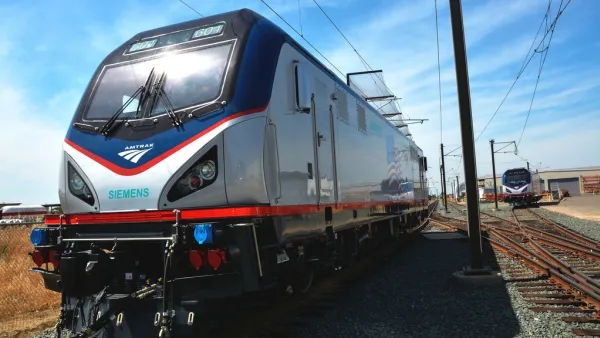
Amtrak's New Outdated Trains
Why is Amtrak spending $500 million on new locomotives for the Northeast Corridor that are "fat, expensive and slow"? Americans have the the Federal Railroad Administration's "globally-unique crash safety standards" to thank.
A SMART, Quiet Train in Store for S.F.'s North Bay
The planned Sonoma-Marin Area Rail Transit (SMART) District trains will not only be quiet (though diesel-powered), but so will the crossings if cities and counties cooperate.
Amtrak Reauthorization & Safety Bill Signed
Two weeks after Congress passed HR 2095, Bush signed this bill to double Amtrak funding and mandate safety technology to prevent Metrolink-like crashes. It may be a precursor to greatly expanded transit spending in the next administration.

FREE Course: Walkable City 1: Why Walkability?
After describing his path towards focusing on walkability as the essence of good planning, Jeff Speck marches through his five principal reasons for making more walkable places.
Reinventing Malls: Planning Alchemy—Turning Gray Fields Into Gold
The course focuses on the opportunities and imperatives that shape reinvention of mall sites.

City of Thousand Oaks
City of Wisconsin Rapids
Harvard University Graduate School of Design
The Architects Foundation
University of Cincinnati Online
The Pocatello Development Authority
The Urban Renewal Agency of the City of Pocatello