Qualifying developments are eligible for a ten-year tax abatement in Philadelphia. These op-ed authors say the abatement doesn't work as anything other than a government payout.


Ira Goldstein, president of Policy Solutions, and Emily Dowdall, chief of development and policy implementation at the Reinvestment Fund, write a guest opinion piece for the Philadelphia Inquirer:
Philadelphia’s 10-year tax abatement is fundamentally a tax expenditure: not the benign concept of “money we never had” but more like writing a check from the city to the developers or buyers of new or substantially rehabilitated properties. Extreme cases such as abating $2 million townhouses prompt us to ask: Is this a wise expenditure for the city or school district?
The opinion piece was prompted by news of a luxury townhome development, each of the ten units expected to sell for $2 million, that would receive the tax abatement. "Assume an average price for these townhouses of $2 million per unit and that 20 percent of the $2 million is the value of the land for which tax will be owed; $1.6 million per unit will be exempt from the Philadelphia real-estate tax," explain Goldstein and Dowdall. "The city’s annual tax expenditure per unit will be $23,315 per unit (with the proposed 2019 tax rate of 1.4572)."
The writers present their argument against the abatements by refuting a series of arguments in favor of the abatements—i.e., the market requires stimulation, the abatement lowers the cost of construction, and it's an investment that eventually yields more revenue.
Read the full story: Let's cap Philly's 10-year tax abatement to be fair to all


How Effective are Philadelphia’s Keystone Opportunity Zones?
The impacts of a tax break designed to create jobs, stimulate development, and reduce blight are proving hard to track.
Philadelphia on Track to Build Record Number of Apartments in 2022
A researcher from the Lindy Institute for Urban Innovation at Drexel University tells a tale of two housing markets—rental and for-sale—in the City of Brotherly Love.
Affordable Housing Bonus Program Expanded in Philadelphia
The city of Philadelphia launched a height and density bonus in 2018 to create incentives for the development of affordable housing, but so far the results have proven underwhelming.

Planetizen Federal Action Tracker
A weekly monitor of how Trump’s orders and actions are impacting planners and planning in America.

Amtrak, CN end decades-long dispute with eight-year agreement
The new operating agreement establishes an updated framework for the companies to work together, including processes to resolve disputes.
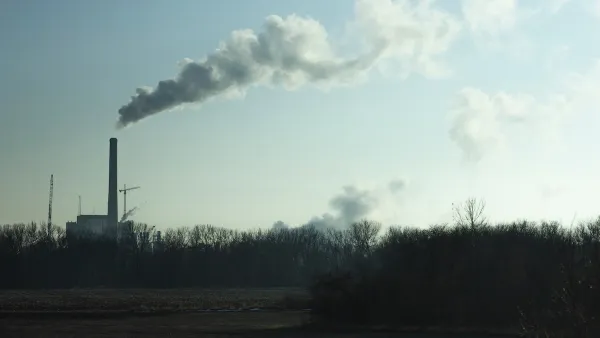
Nation's most wind-powered state turns to coal as data centers increase energy demand
For the first time in decades, Iowa has increased its generation of coal power.

Alabama scores up to $2.5 billion federal loan for largest infrastructure project in state’s history
The Mobile River Bridge and Bayway Project aims to ease congestion at Alabama’s worst bottleneck.

Trump is considering data centers on 6 states' public land — some state officials say they had no idea
If the administration approves the proposed projects, data center and data center-related developments will cover 17,600 acres of public land.

Despite court ruling, Trump is keeping nearly all wind projects in the US on hold
At least 110 wind energy projects have not heard from the government since a federal judge ruled that the Trump administration's freeze on wind turbine clearances was likely illegal.

FREE Course: Walkable City 1: Why Walkability?
After describing his path towards focusing on walkability as the essence of good planning, Jeff Speck marches through his five principal reasons for making more walkable places.
Reinventing Malls: Planning Alchemy—Turning Gray Fields Into Gold
The course focuses on the opportunities and imperatives that shape reinvention of mall sites.

KFH Group Inc.
Greater Baltimore Committee
Eagle County Government
The Architects Foundation
University of Cincinnati Online
The Pocatello Development Authority
The Urban Renewal Agency of the City of Pocatello