In addition to laying out the incredible expense of bringing the public housing of New York City into good repair, the Citizens Budget Commission also included recommendations for how to cover those costs.


"The Citizens Budget Commission released recommendations Tuesday suggesting how the New York Housing Authority could meet its $32 billion capital needs," reports Gabriella Iannetta.
According to Ianetta, the CBC, "recommends the agency be fully integrated into the city’s affordable housing strategy, transitioning NYCHA from a landlord to an affordable housing steward that manages fewer buildings by accelerating public-private partnerships, utilizing air rights and infill development to fund repairs and renovations, and improving operations and construction management."
The financing recommendations follow a report detailing the $31.8 billion over the next five years in capital investment needs. The number increases to $45.2 billion when extended 20 years. "[N]owhere near that amount of cash is expected to be allocated in federal, state or city budgets," adds Iannetta. Joe Anuta writes an earlier article devoted to the findings of the Monday report, following the scoop on the report by Sally Goldenberg.
FULL STORY: CBC calls for 'dramatic changes' to address NYCHA's $32B capital need

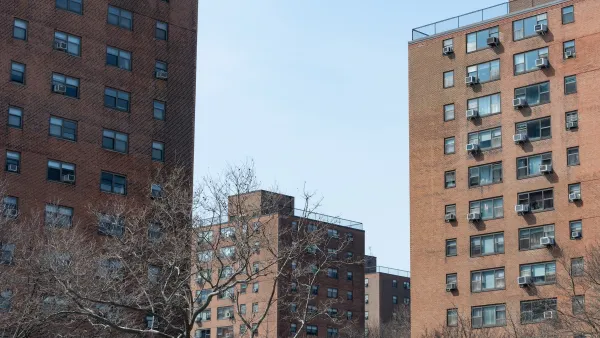
NYC mayor announces plan to repair, restore and build new public housing
Roughly 300,000 New Yorkers live in the city's public housing system.
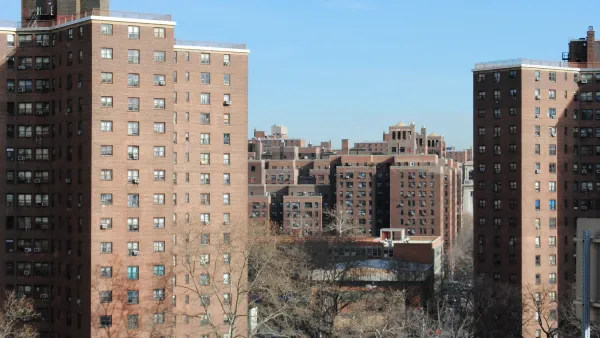
Report: Hundreds of Vacant NYC Public Housing Units ‘Taken Over’ by Squatters
The city’s housing authority says it often takes months to renovate apartments for new tenants, leading to hundreds of empty units that pose safety risks to neighbors.
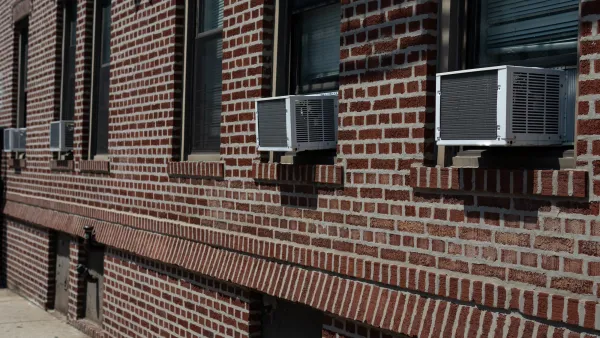
New NYC Law Requires Landlords to Provide AC Units — But not in Public Housing
Building owners are required to install AC units for tenants who request them in the next four years, but tenants are on the hook for electricity costs.

Planetizen Federal Action Tracker
A weekly monitor of how Trump’s orders and actions are impacting planners and planning in America.

The state-sanctioned urbicide of Austin
People don’t kill cities. Freeways do.

US to reduce Colorado River water deliveries to Mexico
A new Colorado Treaty amendment reduces Mexico’s Colorado River water allocation by 250,000 acre feet.

Mamdani overhauls NYC's Vision Zero plan with 100 new policy goals
The overhaul aims to reduce traffic deaths and make streets safer for pedestrians, cyclists and drivers through lower speed limits, new safety infrastructure and more.

Amtrak not solely to blame for New Jersey commuter rail's unreliability, report finds
A new study from the Garden State Initiative found that NJ Transit’s budget grew 20% across a 4 year period, but reliability declined significantly over the same period.

EPA erases limits on planet-warming pollution from power plants
Under Monday’s plan, power plants would still have some limits on how much mercury, arsenic and other contaminants they can emit.

FREE Course: Walkable City 1: Why Walkability?
After describing his path towards focusing on walkability as the essence of good planning, Jeff Speck marches through his five principal reasons for making more walkable places.
Reinventing Malls: Planning Alchemy—Turning Gray Fields Into Gold
The course focuses on the opportunities and imperatives that shape reinvention of mall sites.

Eagle County Government
Harvard University Graduate School of Design
Nashville Planning Department
The Architects Foundation
University of Cincinnati Online
The Pocatello Development Authority
The Urban Renewal Agency of the City of Pocatello
Journal of the American Planning Association