Building owners are required to install AC units for tenants who request them in the next four years, but tenants are on the hook for electricity costs.


A new New York City law requires apartment building owners to install and maintain AC units for tenants that request them by 2030, reports Cassidy Jensen in Brick Underground. “Renters can begin opting-in by requesting air conditioning from their landlord on March 1st, 2028, according to a process that hasn’t yet been fully worked out by the Department of Housing Preservation and Development.”
The law was passed to protect tenants — around 500 people die from heat-related causes in New York City each summer. “During the summer, from June 15th through September 15th, rooms where tenants sleep must be no higher than 78 degrees when the outdoor temperature exceeds 82 degrees.” However, Jensen points out that renters are still responsible for the cost of electricity.
The law exempts the New York City Housing Authority (NYCHA), only requiring it to create a “comprehensive cooling plan” for 25 percent of its units by January 2028. The law also allows landlords to apply to raise rent on rent-stabilized units after installing AC units.
FULL STORY: Cool homes for all: A guide to NYC’s new AC mandate for rentals

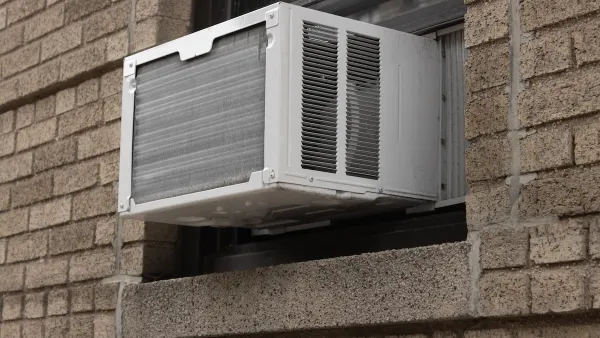
Thousands of NYC Shelter Residents Lack Air Conditioning
Even in the depths of extreme heat, many shelters prohibit residents from installing AC units.
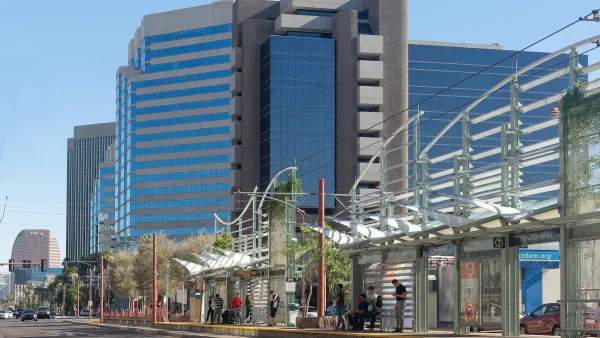
Cool Routes app plots shady walks in arid Arizona
Alternate routes provided by the app reduced the heat experienced during the walk by an average of 4.5 degrees.
The Pacific Northwest is an unlikely front in the fight for cooling
A 2021 heat dome killed over 250 people in the Pacific Northwest, bringing into sharp focus the potential of extreme heat to have deadly consequences even in historically cool climates.

Planetizen Federal Action Tracker
A weekly monitor of how Trump’s orders and actions are impacting planners and planning in America.

The state-sanctioned urbicide of Austin
People don’t kill cities. Freeways do.

US to reduce Colorado River water deliveries to Mexico
A new Colorado Treaty amendment reduces Mexico’s Colorado River water allocation by 250,000 acre feet.

Baltimore to break ground on $50 million Transit Priority Project
The project will bring faster bus trips, safer streets and better bike connections to Baltimore.

Airbnb launches $250 million 'last-dollar financing' housing accelerator, makes first investment in Austin
The company will put $6.4 million towards affordable housing development in Texas’ capital.

Guerilla urbanists are building DIY bus stop benches in Chicago
A before-and-after of one of the bus stops with a new bench. The new benches are not officially sanctioned or permitted, but the residents who placed them hope they will be the start of a network of DIY benches across the city.

FREE Course: Walkable City 1: Why Walkability?
After describing his path towards focusing on walkability as the essence of good planning, Jeff Speck marches through his five principal reasons for making more walkable places.
Reinventing Malls: Planning Alchemy—Turning Gray Fields Into Gold
The course focuses on the opportunities and imperatives that shape reinvention of mall sites.

Eagle County Government
Harvard University Graduate School of Design
Nashville Planning Department
The Architects Foundation
University of Cincinnati Online
The Pocatello Development Authority
The Urban Renewal Agency of the City of Pocatello
Journal of the American Planning Association