Experts expect the 2020 Census to reveal some potentially startling trends of population decline in rural parts of the country.


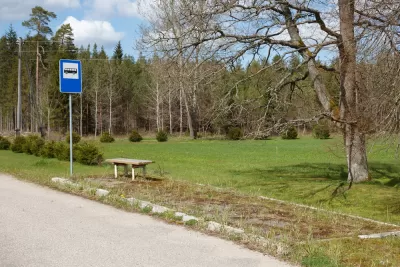
"Rural counties — particularly in the Midwest and Northeast of the U.S. — are losing people due to higher death rates than birth rates and more people moving away than moving in," according to an article by Stef W. Knight.
Knight is reporting findings of a May report by the Pew Research Center [pdf], authored by Kim Parker, Juliana Horowitz, Anna Brown, Richard Fry, D’Vera Cohn and Ruth Igielnik. The report has inspired news posts picked up by Planetizen twice already, in an article discussing commonalities among urban, suburban, and rural communities, as well as another examining the growth of suburban poverty.
Knight's frame for the report's findings focuses on demographic decline, however. "Overall, non-metro areas increased in population between 2000 and 2015, but a majority of rural counties saw their populations dwindle, including 54% of rural counties in the Northeast and 68% of those in the Midwest," according to Knight.
The article breaks down the causes of declining populations (i.e., loss of jobs and youth, birth rates vs. death rates, immigrants and minorities, and opioids).
FULL STORY: Why rural counties are dying in America


Five Takeaways From California’s 2022 Demographic Changes
California’s recent population losses could provide an opportunity for state leaders to address the challenges facing the state.
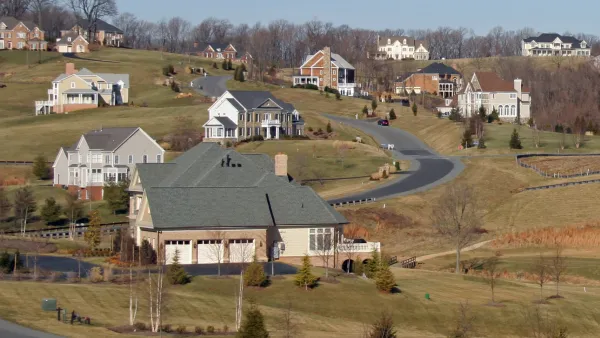
Grim Demographics for Outer Suburbs in the East and Midwest
While migration bolsters the populations of outer suburbs in the West and the South, their counterparts in the East and the Midwest show signs of decline. That includes well-off areas.

Planning Trends to Watch in 2021
The nation is now tasked with the challenge of changing course in the middle of multiple, global crises. The necessity of finding a way to overcome the failures of the past and lay the groundwork for a new kind of future has never been more clear.

Planetizen Federal Action Tracker
A weekly monitor of how Trump’s orders and actions are impacting planners and planning in America.

The state-sanctioned urbicide of Austin
People don’t kill cities. Freeways do.

US to reduce Colorado River water deliveries to Mexico
A new Colorado Treaty amendment reduces Mexico’s Colorado River water allocation by 250,000 acre feet.

5 New England states march closer to 800 megawatt wind energy project
Securing federal approval for the project may be complicated under the Trump administration, which has historically been hostile towards domestic wind power.

Baltimore to break ground on $50 million Transit Priority Project
The project will bring faster bus trips, safer streets and better bike connections to Baltimore.

Airbnb launches $250 million 'last-dollar financing' housing accelerator, makes first investment in Austin
The company will put $6.4 million towards affordable housing development in Texas’ capital.

FREE Course: Walkable City 1: Why Walkability?
After describing his path towards focusing on walkability as the essence of good planning, Jeff Speck marches through his five principal reasons for making more walkable places.
Reinventing Malls: Planning Alchemy—Turning Gray Fields Into Gold
The course focuses on the opportunities and imperatives that shape reinvention of mall sites.

Eagle County Government
Harvard University Graduate School of Design
Nashville Planning Department
The Architects Foundation
University of Cincinnati Online
The Pocatello Development Authority
The Urban Renewal Agency of the City of Pocatello
Journal of the American Planning Association