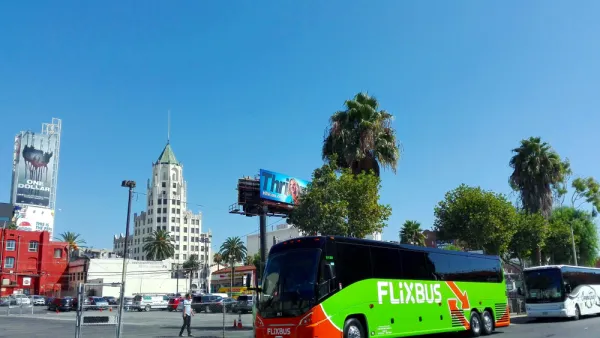
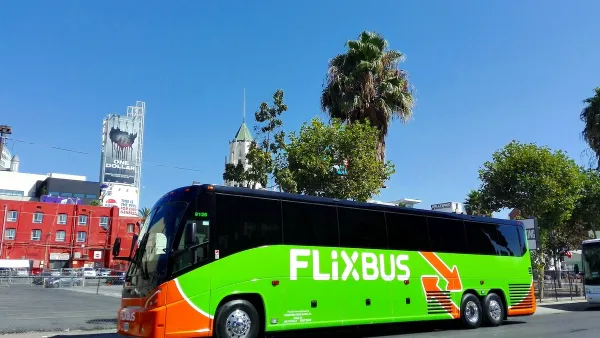
Flixbus is launching in Los Angeles, aiming for the kind of fast success they've had in Europe where they quickly became the continent’s largest bus provider after being founded in 2013.


Flixbus, the European bus giant, launched service in the United States this month, with a hub in Los Angeles. "Since launching in Germany in 2013, FlixBus has exploded into the largest bus network in Europe, transporting 40 million passengers last year, and stealing business away from national train services," Jill Petzinger writes for Quartz.
The company's CEO and USA managing director, Pierre Gourdin, thinks that the changing transit landscape, with the rise of ride hailing and ride-share services, makes now the perfect time to enter the US market. "Gourdin added that the '…new generation does not want to drive anymore' as it’s not an efficient use of time. The bus giant’s overarching ambition is to revamp the shoddy image of bus travel in the US," Petzinger writes. But if Flixbus is to take over the long-distance bus industry they'll have to contend with the more than 100-year-old Greyhound service, a company that also happens to be owned by a European conglomerate.
FULL STORY: Germany’s FlixBus wants to take over the US by making long-distance bus travel cool

Op-Ed: Looking for Efficiency? Fund Intercity Buses
Much less expensive than rail, intercity buses serve millions of Americans every year, but public subsidies are lacking.
Intercity Bus Ridership Grows Despite Service Cuts
Passengers continue to rely on intercity bus lines, even as cities shutter bus terminals and bus companies restructure to avoid financial failure.

Chicago Bus Travelers Could Lose Downtown Terminal — and Winter is Coming
As the loss of intercity bus services and stations continues, Chicago could become the largest city in the developed world without a major downtown bus terminal.

Planetizen Federal Action Tracker
A weekly monitor of how Trump’s orders and actions are impacting planners and planning in America.

The state-sanctioned urbicide of Austin
People don’t kill cities. Freeways do.

US to reduce Colorado River water deliveries to Mexico
A new Colorado Treaty amendment reduces Mexico’s Colorado River water allocation by 250,000 acre feet.

5 New England states march closer to 800 megawatt wind energy project
Securing federal approval for the project may be complicated under the Trump administration, which has historically been hostile towards domestic wind power.

Baltimore to break ground on $50 million Transit Priority Project
The project will bring faster bus trips, safer streets and better bike connections to Baltimore.

Airbnb launches $250 million 'last-dollar financing' housing accelerator, makes first investment in Austin
The company will put $6.4 million towards affordable housing development in Texas’ capital.

FREE Course: Walkable City 1: Why Walkability?
After describing his path towards focusing on walkability as the essence of good planning, Jeff Speck marches through his five principal reasons for making more walkable places.
Reinventing Malls: Planning Alchemy—Turning Gray Fields Into Gold
The course focuses on the opportunities and imperatives that shape reinvention of mall sites.


Eagle County Government
Harvard University Graduate School of Design
Nashville Planning Department
The Architects Foundation
University of Cincinnati Online
The Pocatello Development Authority
The Urban Renewal Agency of the City of Pocatello
Journal of the American Planning Association