An article originally posted on Mobility Lab, written by Owain James, looks for lessons from Nashville's failed transit referendum.


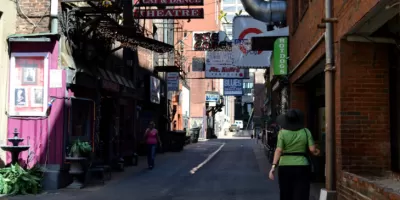
On Tuesday, voters handed a major defeat to transit supporters in Nashville, rejecting a $5.2 billion referendum to construct a city-wide light rail network.
But this shouldn’t deter city officials from trying again.
One of the most important lessons from successful transit referendums is that many were not successful on their first try. Key to the success of referendums is persistence. Measures that failed before can pass given different circumstances and adapting the plan based on voter preferences.
Seattle’s Sound Transit, one of the inspirations for Nashville’s light rail system, failed in its first ballot measure in 1995. Planners of the new regional system adjusted the proposal and were successful at the ballot box the next year.
Voters in Kansas City, another car-oriented city of similar density to Nashville, rejected an expansion of the streetcar starter line in 2014, but streetcar backers were able to successfully convince voters to endorse a more modest expansion of the main line in 2017.
Tuesday may have been both the best and worst time for the transit referendum in Nashville. The city is on the shortlist for Amazon’s second headquarters, yet former mayor Megan Barry resigned in disgrace just months before the vote. With the Amazon bid as a powerful incentive this time, the conservative state legislature might not give Nashville another chance at this for a while.
But Nashville shouldn’t lose hope entirely. The Amazon HQ2 bid has shown that transit investments make business and fiscal sense, and as cities continue to grow and congestion worsens, transit will only become more attractive.
If Nashville gets another chance at transit, the city should learn from this failure. It is a mistake to pin the blame entirely on the mayoral scandal, or on the Koch brothers’ “dark money.” Though these were no doubt contributing factors, dismissing the results as due to outside forces shirks responsibility and dismisses legitimate critique of the plan.
For one, the project is quite expensive, costing more than $5.4 billion for initial construction. The cost per mile of light rail, the flagship of the plan, costs nearly $125 million per mile, while “gold standard” BRT (bus rapid transit) comes in at less than half that amount. Light rail is often worth the extra cost, allowing for far greater capacity and providing greater value outside of the downtown core where land is valuable. But Nashville’s plan would have spread its 26 miles of track across four lines intersecting in the city center.
Proponents of the plan defended< the added expense of light rail as worth the price because of the permanency that would have given businesses and developers the confidence to invest in the high-density corridors. This is not incorrect, but the end goal of increased development is one that should be interrogated.
While opponents of this proposal included the usual tax critics and suburban car owners, there were also detractors who thought the plan would increase displacement. This debate has played out in Nashville before, when the city attempted to pitch the AMP bus rapid transit. Wealthy homeowners and low-income residents found themselves on the same side against AMP, though they opposed it for different reasons.
The next plan should be focused on mobility, not on development. While the rejected plan included a massive investment in bus frequency and routing, this policy should be at the heart of the next proposal. Indianapolis, which recently held a successful referendum to increase transportation, asked for only a fraction of the money that Nashville did in a proposal that emphasized the increased connectivity for residents in ballot language, and messaging to voters in the lead up to the election.
Light rail can still work in Nashville, but future proposals should focus on intercity connection, concentrating on one or two longer lines. If successful, more lines can always be added in further referendums, following the example of Seattle’s Sound Transit, which started modestly, but ramped up over time.
If Nashville gets the chance, transit proponents should not be afraid to try again with a new plan and a new pitch to voters. A more modest plan focused on bus service and segmented light rail could better appeal both to fiscal conservatives and residents concerned about development.
FULL STORY: Nashville’s next transit referendum must focus on mobility, not development


Nashville Transit Referendum Soundly Beaten at the Ballot Box
Transit advocates suffered a resounding defeat in Nashville yesterday. The Let's Move Nashville plan does not have the funding to build-out its ambitiously pro-transit agenda.
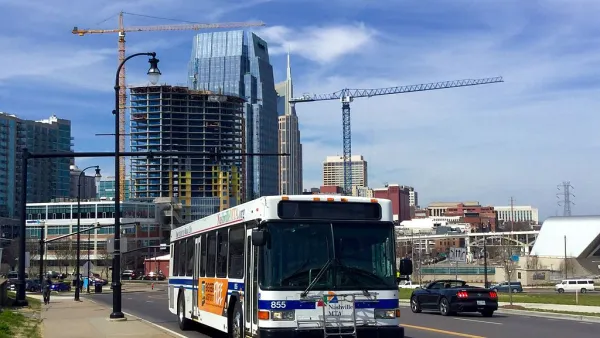
'Better Bus' Is Nashville's Latest Attempt at Transit Upgrades
The Better Bus plan is the latest effort at rethinking public transit in Nashville.
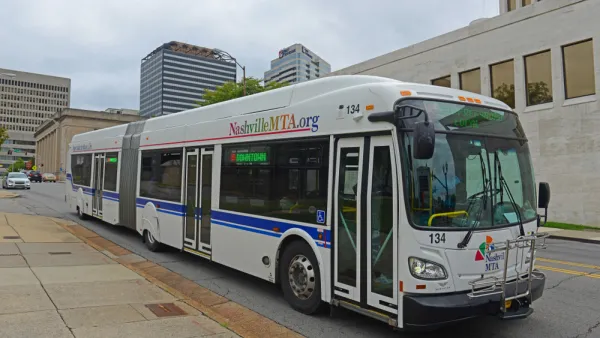
A New Transit Hub Pitched in Nashville
The city of Nashville is trying to get back on track with some of the projects proposed in the 2016 nMotion plan—even without the massive pot of transit tax money it could have won at the ballot box.

Planetizen Federal Action Tracker
A weekly monitor of how Trump’s orders and actions are impacting planners and planning in America.

The state-sanctioned urbicide of Austin
People don’t kill cities. Freeways do.

US to reduce Colorado River water deliveries to Mexico
A new Colorado Treaty amendment reduces Mexico’s Colorado River water allocation by 250,000 acre feet.

5 New England states march closer to 800 megawatt wind energy project
Securing federal approval for the project may be complicated under the Trump administration, which has historically been hostile towards domestic wind power.

Baltimore to break ground on $50 million Transit Priority Project
The project will bring faster bus trips, safer streets and better bike connections to Baltimore.

Airbnb launches $250 million 'last-dollar financing' housing accelerator, makes first investment in Austin
The company will put $6.4 million towards affordable housing development in Texas’ capital.

FREE Course: Walkable City 1: Why Walkability?
After describing his path towards focusing on walkability as the essence of good planning, Jeff Speck marches through his five principal reasons for making more walkable places.
Reinventing Malls: Planning Alchemy—Turning Gray Fields Into Gold
The course focuses on the opportunities and imperatives that shape reinvention of mall sites.

Eagle County Government
Harvard University Graduate School of Design
Nashville Planning Department
The Architects Foundation
University of Cincinnati Online
The Pocatello Development Authority
The Urban Renewal Agency of the City of Pocatello
Journal of the American Planning Association