A set of zoning changes under consideration in New York City promises to be controversial; the de Blasio Administration is already onboard.


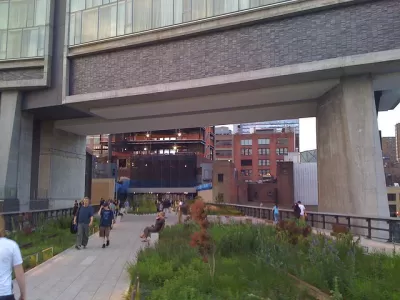
"[New York City] has begun moving forward on a zoning change that would make it more difficult for developers to build hotel projects on land zoned for manufacturing," reports Daniel Geiger.
According to Geiger, the City Planning Commission recently "began the months-long public review process for legislation, endorsed by City Hall, that would require hotels to seek a special permit in those industrial areas."
Opponents of the zoning change credit hotel development on parcels zoned for manufacturing with revitalization successes in neighborhoods like Madison Square Park, the Meatpacking District, and Williamsburg. Proponents of the proposed zoning changes frame the issue as a matter of preserving industrial jobs. "They argue that industrial businesses provide higher-paying jobs and offer upward mobility to people without college degrees," according to Geiger.
Read the full story: City advances plan to stop hotel development in industrial zones

Special Permits Could Be Required to Develop a Hotel in New York City
It could become a lot harder to develop a hotel in New York City, even in areas where hotel developments are zoned as-of-right and even after the pandemic has ravaged the industry.
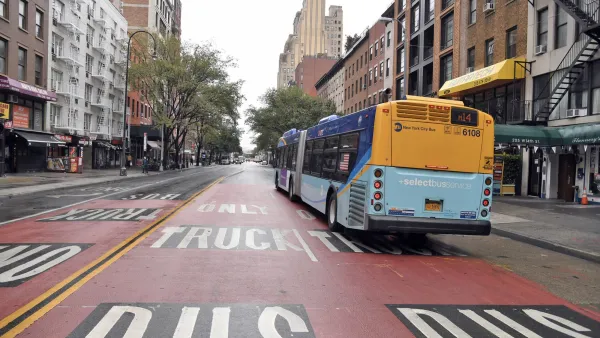
How New York City's Appearance Changed Under de Blasio
The former mayor's administration oversaw several major changes in the city's skyline, streets, and public spaces.

New York City Mayor Goes Out With a (Covid Policy) Splash
Mayor Bill de Blasio's second term ends on New Year's Eve. On Dec. 6, he announced the nation's strictest COVID mandate: All workers in New York City must be at least partially vaccinated by Dec. 27. Did he consult with his successor, Eric Adams?

Planetizen Federal Action Tracker
A weekly monitor of how Trump’s orders and actions are impacting planners and planning in America.

The state-sanctioned urbicide of Austin
People don’t kill cities. Freeways do.

Colorado’s Largest Data Center Could Rise Next to Homes — Without a Public Hearing
The proposed campus would consume 11 times the power of Denver International Airport; as it has across the country, opposition mounts.

Judges permit Denver to divert 77,000 acre feet from the Colorado River for reservoir expansion
Overuse and climate change have caused the Colorado River’s water levels to plummet.

Amtrak, CN end decades-long dispute with eight-year agreement
The new operating agreement establishes an updated framework for the companies to work together, including processes to resolve disputes.

Raised interest rates may kill financially vulnerable construction projects
The chief economist at ConstructConnect warns that if construction project owners are negatively impacted by the raised rates, it could result in delayed payments to contractors.

FREE Course: Walkable City 1: Why Walkability?
After describing his path towards focusing on walkability as the essence of good planning, Jeff Speck marches through his five principal reasons for making more walkable places.
Reinventing Malls: Planning Alchemy—Turning Gray Fields Into Gold
The course focuses on the opportunities and imperatives that shape reinvention of mall sites.

KFH Group Inc.
Greater Baltimore Committee
Eagle County Government
The Architects Foundation
University of Cincinnati Online
The Pocatello Development Authority
The Urban Renewal Agency of the City of Pocatello