The Sri Lankan tourist destinations of Ella and Galle are microcosms of urban trends worldwide: one is a boomtown and the other is a boutique city.


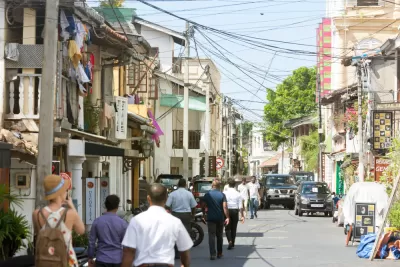
"Galle is the delightful, and predictable, result of history and density. The irony of contemporary city planning is that, of course, our contemporary accumulation of knowledge and technology mean nearly nothing. Galle could not be built today. It wouldn’t have enough parking. It would be too dense. The walls would block someone’s ocean view. And so we treat places like Galle as rare, precious jewels, as if they can arise only from the furnaces of the Earth."
"On face, Ella is ugly, corny, and as congested as it is remote. People go there largely for a circular but powerful reason: other people. It is a classic backpacker town, where tourists gather to meet strangers, swap stories, have drinks, and, yes, engage in the sort of revelry on which locals might frown. But its human density gives it a spirit that belies the cinder blocks."
"As Charles Mudede wrote recently in The Stranger, Seattle’s alt weekly, all cities are either Seattle or Detroit: “A city losing capital or attracting it. There is no alternative.” True as it may be, that dichotomy is incomplete. There are variations among those two poles. In the “Seattle” category, there are the Seattles and there are also the Houstons. Even in Sri Lanka, this process of urban development plays out in microcosm."
Read the full story: A Tale of Two Cities: Tourism and Imperialism in Sri Lanka

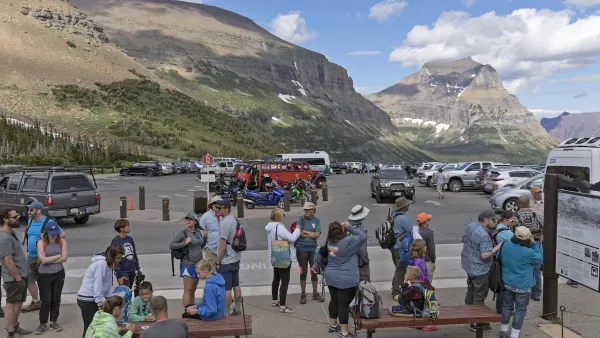
Glacier National Park drops reservation requirement, plans to double down on shuttle network
Since 2021, visitors with cars have had to make a reservation to access the park.
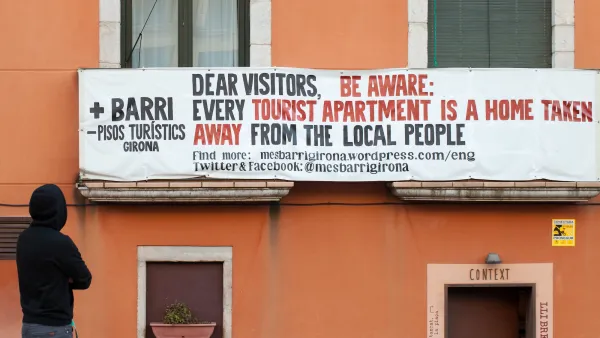
Spain Fines Airbnb $75 Million After Crackdown on Unlicensed Rentals
The government took action after residents in tourist centers protested, blaming tourist rentals for a growing housing crisis.
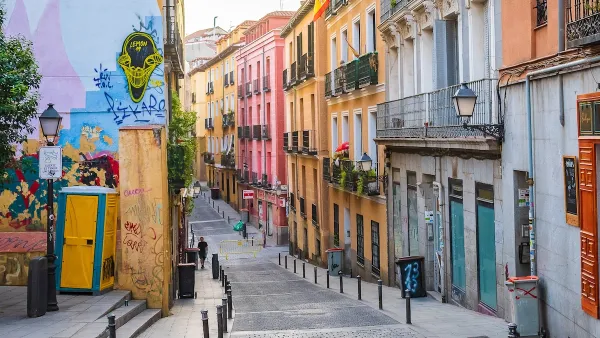
Spain Moves to Ban 66,000 Airbnbs
The national government is requiring the short-term rental operator to remove thousands of illegal listings from its site as part of an effort to stem a growing housing crisis.

Planetizen Federal Action Tracker
A weekly monitor of how Trump’s orders and actions are impacting planners and planning in America.

The state-sanctioned urbicide of Austin
People don’t kill cities. Freeways do.

Colorado’s Largest Data Center Could Rise Next to Homes — Without a Public Hearing
The proposed campus would consume 11 times the power of Denver International Airport; as it has across the country, opposition mounts.

Nation's most wind-powered state turns to coal as data centers increase energy demand
For the first time in decades, Iowa has increased its generation of coal power.

NYC cools commuters with city's first rain garden above a bus stop
New York City officials say the plants in the rain garden can absorb 16 gallons of rainwater during heavy storms.

Brightline West’s future may rely on $6 billion federal loan
The company has until Nov. 2 to make a $400 million equity investment into its proposed high-speed rail line.

FREE Course: Walkable City 1: Why Walkability?
After describing his path towards focusing on walkability as the essence of good planning, Jeff Speck marches through his five principal reasons for making more walkable places.
Reinventing Malls: Planning Alchemy—Turning Gray Fields Into Gold
The course focuses on the opportunities and imperatives that shape reinvention of mall sites.

Greater Baltimore Committee
Eagle County Government
Harvard University Graduate School of Design
The Architects Foundation
University of Cincinnati Online
The Pocatello Development Authority
The Urban Renewal Agency of the City of Pocatello
Journal of the American Planning Association