Five years ago, Minneapolis rolled back parking requirements near transit. Since then, construction is up, rents are down, and the look of projects in these places has changed.



According to an article on Nick Magrino's blog, a 2013 change to parking regulations has lead to big changes in the city. "Housing projects outside of downtown and the University district generally required one parking space for each housing unit. After the changes, projects near high-frequency transit with 50 or fewer units had their parking requirement reduced to zero, and projects with more than 50 units had it cut in half, to one parking space for every two units," Magrino reports.
The changes to the affected neighborhoods are visible in the buildings going up. "When you're building that type of smaller project that, importantly, doesn’t require quite so much parking, one thing you can do that cuts down on costs substantially is not dig a gigantic hole. You can instead build some parking on the back side of the first floor where it's often tricky to put housing units anyway," Magrino writes. Besides changing the looks, this change in the law also changed the rents. "Underground parking spaces cost tens of thousands of dollars apiece. It's no coincidence that we've been starting to see market rate, new construction housing units renting for under $1,000/month."
Read the full story: What Happens When You Ease Parking Requirements for New Housing


Minneapolis as a Model for Housing Affordability
Through a combination of policies, the city has managed to limit the severity of the nationwide housing crisis.
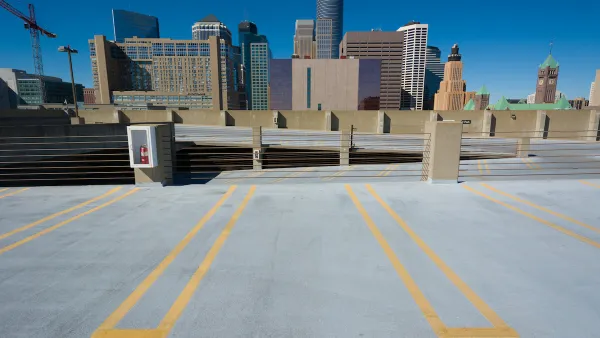
Twin Cities Parking Reform Shows Promising Results
Minneapolis and St. Paul both eliminated parking minimums, paving the way for less parking and more housing.
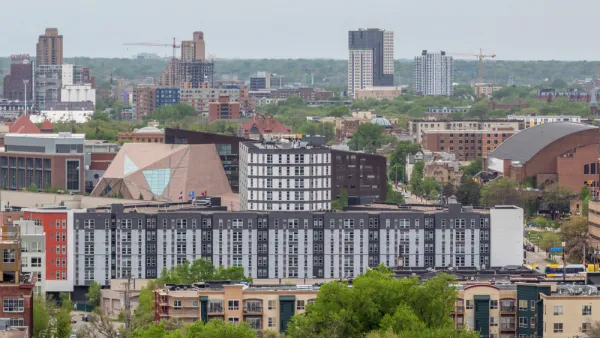
Minneapolis Eliminates Parking Requirements Citywide
Minneapolis joins the avant garde of cities implementing a dramatic overhaul of the parking requirement status quo that has been a primary determinant of the form and function of cities for nearly a century.

Planetizen Federal Action Tracker
A weekly monitor of how Trump’s orders and actions are impacting planners and planning in America.

Amtrak, CN end decades-long dispute with eight-year agreement
The new operating agreement establishes an updated framework for the companies to work together, including processes to resolve disputes.

Judges permit Denver to divert 77,000 acre feet from the Colorado River for reservoir expansion
Overuse and climate change have caused the Colorado River’s water levels to plummet.

NYC DOT wants faster, more permanent street upgrades
The city is examining ways to build more concrete infrastructure without getting entangled in 'decades-long' projects.

'Something we’ve never seen before:' rising utility rates could strain city finances nationwide
Data centers, climate change and other factors have caused utility rates in the United States to increase by 38% since 2020.

Trump to overrule local leaders, lease millions of acres of America’s Pacific Island territories’ seafloors to mining companies
International law says that the Indigenous people of America’s territories have a right to prior and informed consent regarding projects that impact their countries.

FREE Course: Walkable City 1: Why Walkability?
After describing his path towards focusing on walkability as the essence of good planning, Jeff Speck marches through his five principal reasons for making more walkable places.
Reinventing Malls: Planning Alchemy—Turning Gray Fields Into Gold
The course focuses on the opportunities and imperatives that shape reinvention of mall sites.


Harvard University Graduate School of Design
KFH Group Inc.
Greater Baltimore Committee
The Architects Foundation
University of Cincinnati Online
The Pocatello Development Authority
The Urban Renewal Agency of the City of Pocatello