As the climate warms, the world's glaciers and ice sheets are melting, but sea level increase will be greater in some places due to the earth's rotation and gravity, according to a newly released study by the NASA Jet Propulsion Laboratory.


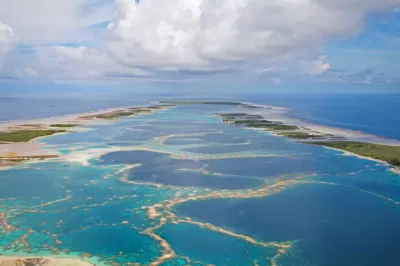
How much can you expect rising sea levels to threaten your coastal city? The answer lies in part in knowing which glacial ice melts affect it, so planners can determine how much of an increase to prepare for.
"NASA's Jet Propulsion Lab has mapped how changes in these giant ice fields influence sea levels both nearby and thousands of miles away," reports Christopher Joyce, science correspondent for NPR (audio available). "They published their results in the journal Science Advances."
It turns out that in New York City, the sea level would be affected more by melting ice on the northern end of Greenland than much closer ice in southern Greenland, or even ice in Canada.
Scientists are now using this information to predict the future for American cities, but they're also building in a lot of local geographical information.
"The National Oceanic and Atmospheric Administration (NOAA) is putting together a sea level rise grid for the country, one that will factor in local conditions as well as the effects of faraway melting ice," adds Joyce.
Sea level decrease?
Yes, melts in the eastern Greenland ice sheet could cause a minor drop in sea level in Norway while raising sea levels off Tokyo by several inches, writes Joyce.
============================================================================================================================
Jeff Goodell’s new book, The Water Will Come: Rising Seas, Sinking Cities, and the Remaking of the Civilized World was reviewed by Jennifer Senior for The New York Times on Nov. 22. While Joyce of NPR indicates that sea level has risen an average of eight inches over the last century, Senior writes that the authors of climate reports for the 2015 Paris agreement estimate sea level rise at over three feet by 2100.
Now many scientists believe that estimate is too low. Some say the sea could rise as much as six feet; others say even more than that.
“For anyone living in Miami Beach or South Brooklyn or Boston’s Back Bay or any other low-lying coastal neighborhood,” Goodell writes, “the difference between three feet of sea level rise by 2100 and six feet is the difference between a wet but livable city and a submerged city.”
"Of all the American cities in this book, Miami seems least equipped to handle a rise in sea level, founded as it is on pleasure, real estate and the inalienable right to not pay state income taxes," adds Senior.
FULL STORY: The Sea Level Threat To Cities Depends On Where The Ice Melts — Not Just How Fast

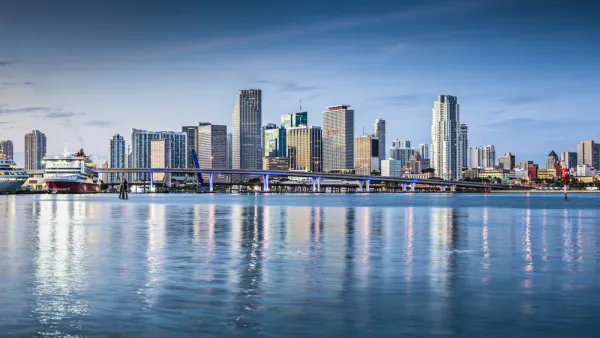
Miami's Looming Climate Change Disaster
Many experts believe that a property crash, as a result of Hurricanes or sea level rise, on the coast of South Florida is inevitable. But that hasn't deterred the suppliers or the consumers in the Miami real estate market.
Miami Lets Developers Buy Double Density with Climate Fund Contributions
City officials are close to passing a law that would give major density bonuses to developers in exchange for funding for seawalls, pump stations, and other climate resilience projects.
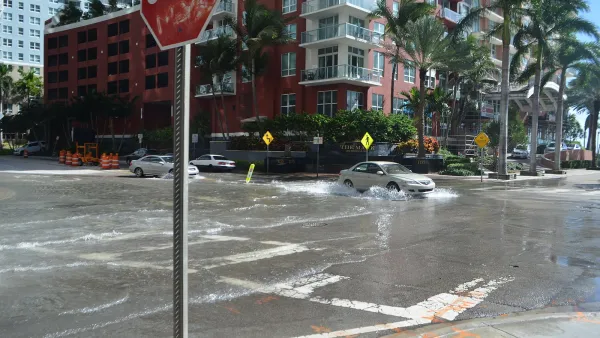
Miami Residents Resist the Idea of a 20-Foot Seawall
As climate change accelerates sea level rise and flooding in South Florida, locals hope to mitigate the impacts with less dramatic interventions.

Planetizen Federal Action Tracker
A weekly monitor of how Trump’s orders and actions are impacting planners and planning in America.

The state-sanctioned urbicide of Austin
People don’t kill cities. Freeways do.

US to reduce Colorado River water deliveries to Mexico
A new Colorado Treaty amendment reduces Mexico’s Colorado River water allocation by 250,000 acre feet.

5 New England states march closer to 800 megawatt wind energy project
Securing federal approval for the project may be complicated under the Trump administration, which has historically been hostile towards domestic wind power.

Baltimore to break ground on $50 million Transit Priority Project
The project will bring faster bus trips, safer streets and better bike connections to Baltimore.

Airbnb launches $250 million 'last-dollar financing' housing accelerator, makes first investment in Austin
The company will put $6.4 million towards affordable housing development in Texas’ capital.

FREE Course: Walkable City 1: Why Walkability?
After describing his path towards focusing on walkability as the essence of good planning, Jeff Speck marches through his five principal reasons for making more walkable places.
Reinventing Malls: Planning Alchemy—Turning Gray Fields Into Gold
The course focuses on the opportunities and imperatives that shape reinvention of mall sites.

Eagle County Government
Harvard University Graduate School of Design
Nashville Planning Department
The Architects Foundation
University of Cincinnati Online
The Pocatello Development Authority
The Urban Renewal Agency of the City of Pocatello
Journal of the American Planning Association